
Berlin in 2026 stands as one of Europe’s most dynamic capitals, where history collides with cutting-edge culture in the most electrifying ways. This city never stops reinventing itself, and 2026 promises to be a landmark year with new attractions, restored monuments, and cultural events that will shape the city’s future for decades to come.
Whether you’re drawn to the sobering history of the Berlin Wall, the pulsing techno beats echoing through underground clubs, or the innovative food scene that’s redefining German cuisine, Berlin delivers experiences you won’t find anywhere else. The city offers an unparalleled mix of free attractions, world-class museums, green spaces, and neighborhood explorations that cater to every type of traveler.
This comprehensive guide covers everything you need to plan your 2026 Berlin adventure. From timeless historical sites to brand-new experiences opening specifically for 2026, we’ve curated the definitive list of things to do in Berlin. Get ready to explore a city where every street corner tells a story, every neighborhood has its own personality, and every visit reveals something unexpected.
Historic Landmarks and Monuments: Berlin's Living History
Berlin’s historical sites are not just tourist attractions—they are powerful testimonies to the city’s turbulent 20th century. Walking through these monuments, you’ll encounter the weight of World War II, the Cold War division, and the ultimate triumph of reunification. In 2026, several of these sites have undergone restoration, offering enhanced visitor experiences while preserving their profound historical significance.
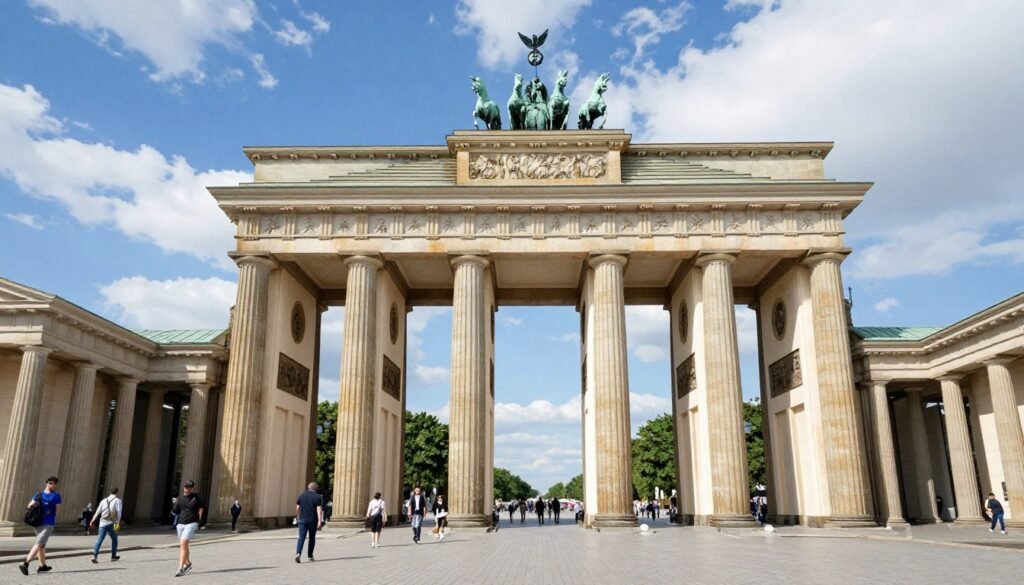
Brandenburg Gate: The Symbol of Unity
No visit to Berlin is complete without standing beneath the majestic Brandenburg Gate. This neoclassical monument has witnessed Napoleon’s armies, Nazi torchlight parades, Cold War division, and the euphoric celebrations when the Berlin Wall fell in 1989. Today, the Brandenburg Gate stands as the ultimate symbol of German reunification and European unity.
The gate’s 12 Doric columns support the Quadriga, a chariot drawn by four horses driven by Victoria, the Roman goddess of victory. Visit early in the morning to avoid crowds and capture stunning photographs with the soft light illuminating the sandstone structure. At night, the Brandenburg Gate transforms into a spectacular sight with artistic illuminations that change seasonally.
2026 Tip: The renovated visitor center beneath Pariser Platz now features an immersive augmented reality experience showing the gate throughout different historical periods. Free admission, but book your 20-minute time slot online to avoid queues.
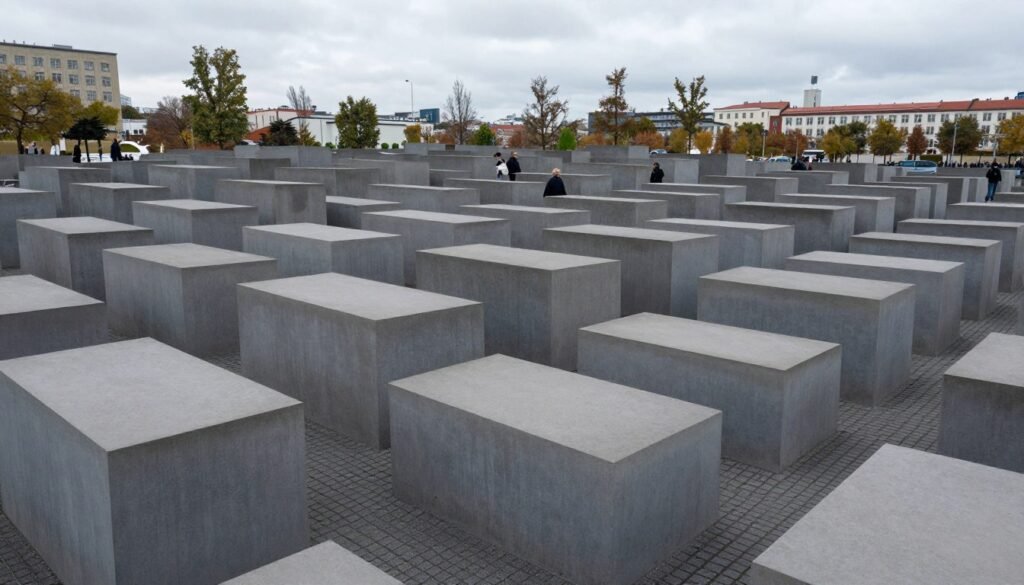
Memorial to the Murdered Jews of Europe
Just south of the Brandenburg Gate, 2,711 concrete slabs of varying heights create a disorienting, wave-like field that serves as the Memorial to the Murdered Jews of Europe. Architect Peter Eisenman designed this Holocaust memorial to evoke feelings of confusion and isolation, mirroring the experiences of Holocaust victims.
Walking through the memorial, the ground undulates and the slabs grow taller, eventually towering above you. The abstract design allows for personal interpretation and reflection. Beneath the memorial, an underground information center presents the names and stories of Jewish victims, along with family photographs and letters that humanize the staggering statistics.
The memorial is open 24 hours a day, allowing for contemplative visits at any time. Many visitors find evening visits particularly moving when the memorial takes on a different character under artificial lighting. The information center operates from 10 AM to 7 PM Tuesday through Sunday, with the last entry at 6:15 PM.
Respectful Visiting: This is a memorial to 6 million murdered people. Photography is permitted, but climbing, jumping, or playing on the stelae is deeply disrespectful. Many visitors have been rightfully criticized for inappropriate behavior here.
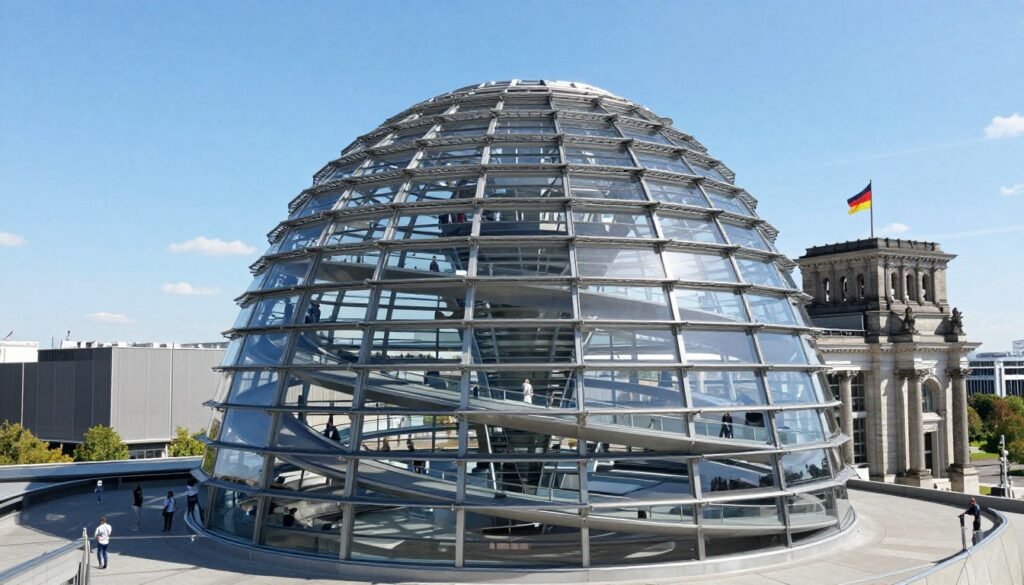
Reichstag Building: Democracy's Home
The Reichstag Building serves as the home of Germany’s parliament, the Bundestag, and stands as one of Berlin’s most significant architectural landmarks. Built in 1894, it was famously set on fire in 1933—an event the Nazis exploited to consolidate power. Soviet soldiers raised their flag over its ruins in 1945, marking the end of World War II in Europe.
After German reunification, British architect Sir Norman Foster transformed the Reichstag with a striking glass dome that symbolizes transparency in government. Visitors can climb the spiral ramp inside the dome for 360-degree views over Berlin while learning about parliamentary processes through an audio guide available in 11 languages.
The Reichstag’s rooftop terrace offers one of the best vantage points in Berlin, with views stretching across the Tiergarten to the Brandenburg Gate and beyond. Inside the building, you can observe parliamentary sessions from the public gallery when the Bundestag is in session.
2026 Tip: Free admission, but advance registration is mandatory. Book your visit at least 2-3 weeks ahead through the official Bundestag website. Bring valid photo ID and arrive 15 minutes before your time slot. Security screening is thorough, so avoid bringing large bags.
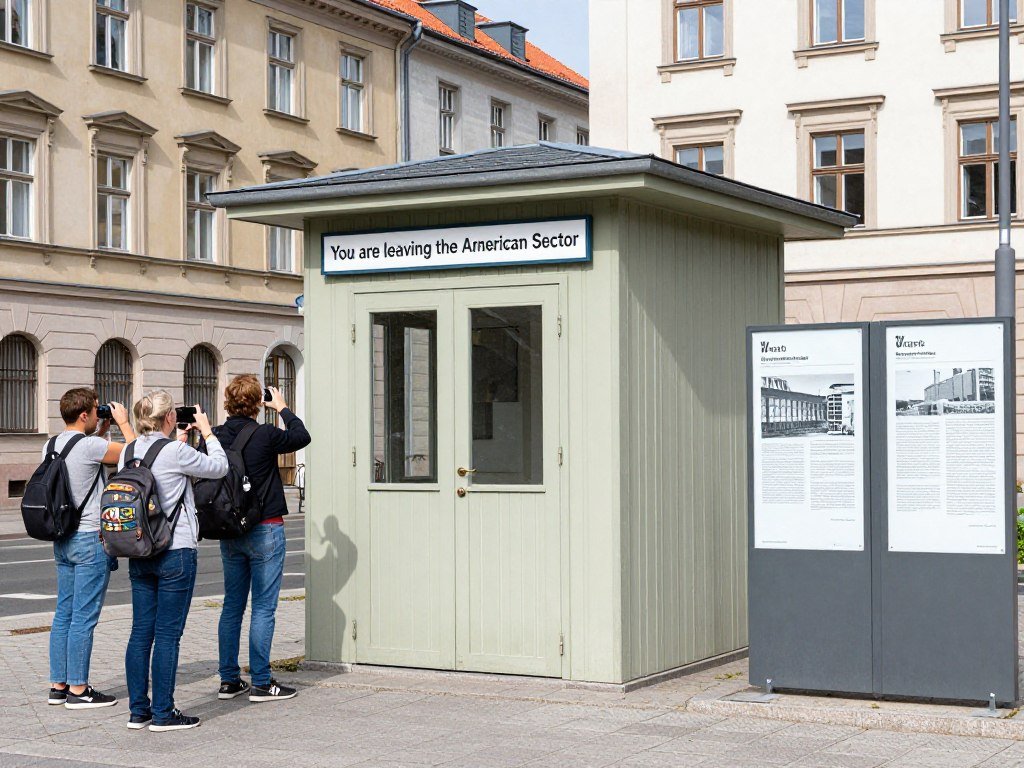
Checkpoint Charlie: Cold War Crossing Point
Checkpoint Charlie was the most famous crossing point between East and West Berlin during the Cold War. The name comes from the NATO phonetic alphabet—it was the third checkpoint established by the Allies (after Alpha and Bravo). This spot witnessed tense standoffs, daring escape attempts, and became a symbol of the ideological divide that split the world.
Today, a replica of the original American guard house stands at the site, complete with actors in period military uniforms (photo opportunities cost a few euros, optional but they’re good sports about it). Large photographs mounted on posts show American and Soviet soldiers who once faced each other across this line.
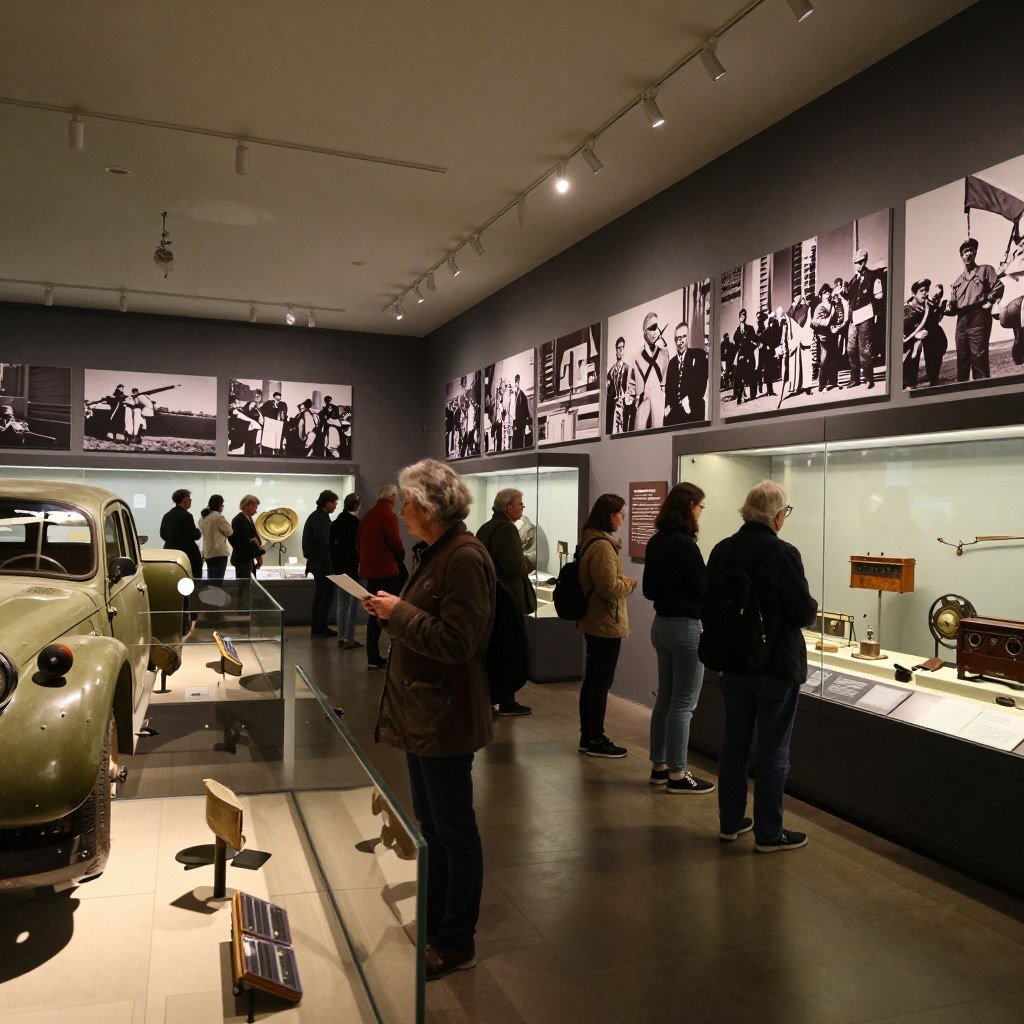
The nearby Checkpoint Charlie Museum (Mauermuseum) presents a comprehensive exhibition of Cold War history with emphasis on escape attempts from East to West Berlin. Original escape vehicles, forged documents, and personal stories bring this era vividly to life. Some of the most ingenious escape methods included hot air balloons, hidden car compartments, and even a miniature submarine.
Visiting Information
- Open 24 hours (outdoor checkpoint)
- Museum hours: 9 AM – 10 PM daily
- U-Bahn: Kochstraße station
- Allow 1-2 hours for museum visit
- Audio guides available in 14 languages
Berlin TV Tower: Sky-High Perspectives
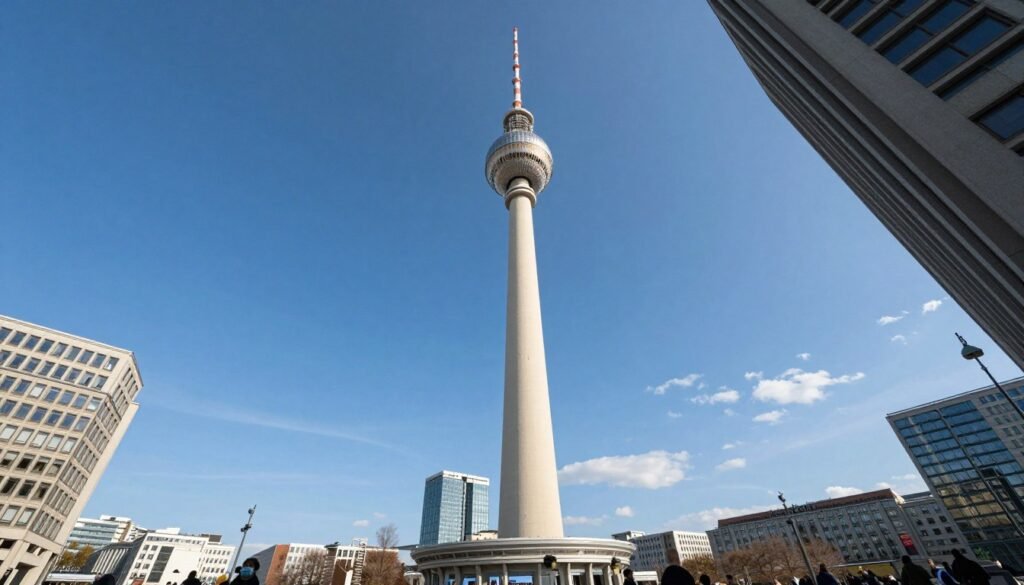
Soaring 368 meters above Alexanderplatz, the Berlin TV Tower (Berliner Fernsehturm) is Germany’s tallest structure and the most recognizable feature of Berlin’s skyline. East Germany constructed this tower in the 1960s as a symbol of communist achievement and technological prowess. The distinctive sphere houses an observation deck and rotating restaurant.
The high-speed elevator whisks you to the observation deck at 203 meters in just 40 seconds. On clear days, visibility extends up to 80 kilometers, offering spectacular panoramas across Berlin and into the surrounding Brandenburg countryside. Interactive displays help identify landmarks below, including the Reichstag Building, Brandenburg Gate, and the snaking path of the Spree River.
The sphere’s rotating restaurant completes a full revolution every 30 minutes, allowing diners to enjoy constantly changing views without leaving their seats. While prices are higher than typical Berlin restaurants, the experience of dining at 207 meters elevation makes it memorable. Reservations are essential for the restaurant, especially for sunset dining.
Fast Track Tickets
Skip the often 60-90 minute queues with fast-track tickets. Available online only, these tickets cost €5-8 more but save hours of waiting. Absolutely worth it during peak summer season.
- Book 2-3 days in advance minimum
- Specific time slot entry
- No refunds for missed slots
- Best times: Early morning or late evening
Photography Tips
The observation deck offers 360-degree views perfect for photography enthusiasts. The glass is generally clean, though reflections can be challenging. Best photo times are golden hour and blue hour.
- Sunset views face west over Tiergarten
- Night photography captures city lights
- Use a polarizing filter for daytime shots
- Tripods not permitted (crowd management)
Bar 203
The observation level also features Bar 203, where you can enjoy a drink while taking in the views. Cocktails, German beers, and light snacks are available. No restaurant reservation needed for the bar.
- Standing room only at bar
- Prices slightly elevated (tourist area)
- Happy hour: 4-6 PM weekdays
- Champagne at sunset is popular
Topography of Terror: Confronting the Nazi Past
Located on the former site of the Gestapo and SS headquarters, the Topography of Terror presents one of the most comprehensive examinations of Nazi terror and persecution. This outdoor and indoor exhibition stands on ground where some of the Third Reich’s most heinous crimes were planned and executed.
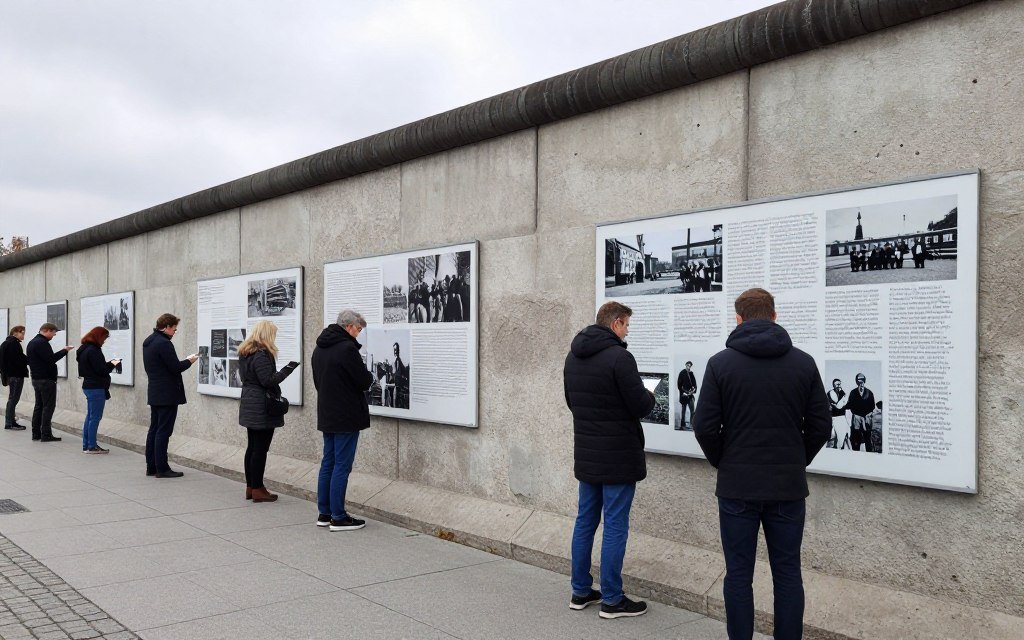
The outdoor exhibition runs along a preserved 200-meter section of the Berlin Wall, juxtaposing two of Germany’s darkest chapters. Inside the documentation center, chronologically organized exhibits trace the Nazi rise to power, the establishment of the police state, the persecution of Jews and other groups, and the horrific implementation of the Final Solution.
Unlike many museums, photography is permitted throughout the exhibition (without flash), allowing visitors to document this important history. The exhibition uses historical photographs, documents, and personal testimonies to create a sobering narrative. Audio guides provide additional context, though the extensive English translations make them optional for English speakers.
Free Admission: The Topography of Terror is completely free and open daily from 10 AM to 8 PM (last entry 7:30 PM). Allow at least 2 hours for a thorough visit. The outdoor exhibition is accessible 24/7. Guided tours in English run daily at 3:30 PM (small fee) and provide valuable context to the exhibits.
The Berlin Wall: Fragments of Division
The Berlin Wall stood for 28 years, dividing the city and symbolizing the Iron Curtain that split Europe. Today, only fragments remain, but these sections serve as powerful reminders of the city’s divided past. Visiting these Berlin Wall sites offers insight into daily life under separation and the courage it took to seek freedom.
East Side Gallery: The World's Longest Open-Air Gallery
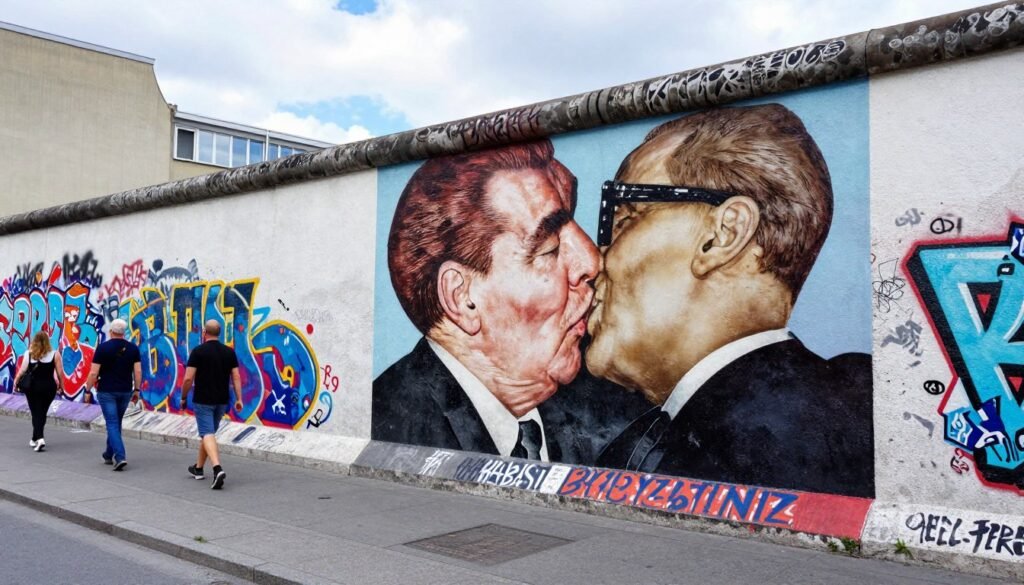
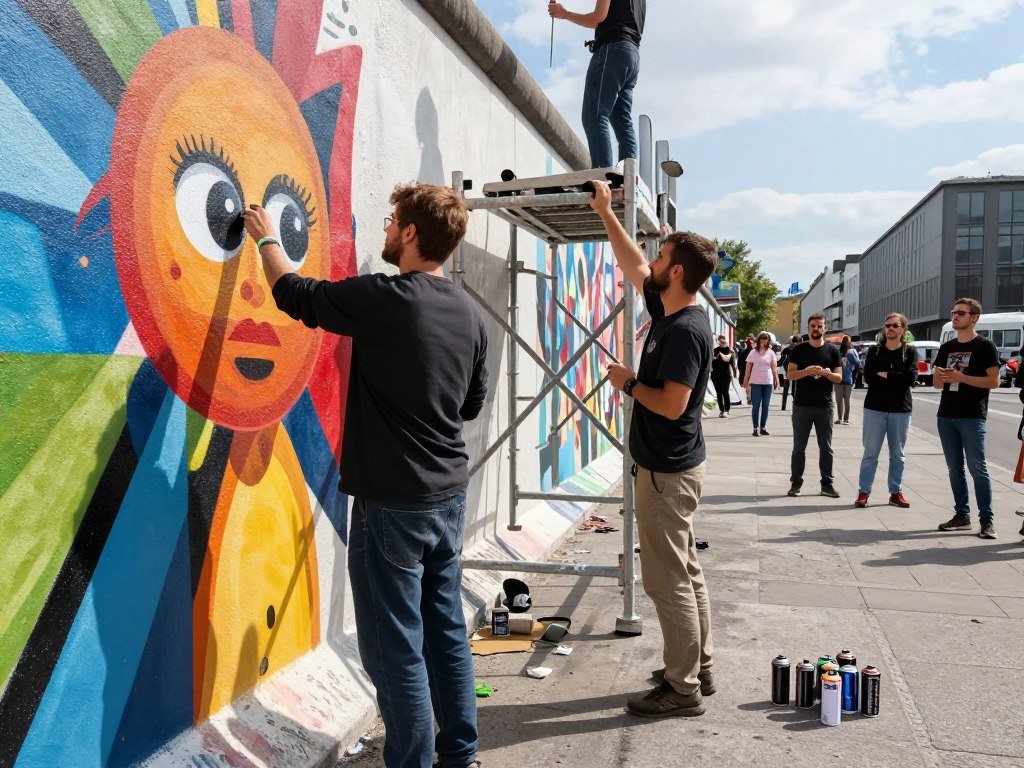
Stretching 1.3 kilometers along the Spree River, the East Side Gallery is the longest remaining section of the Berlin Wall. In 1990, over 100 artists from around the world transformed this Cold War barrier into the world’s largest open-air gallery, creating murals that celebrate freedom, critique authoritarianism, and express hope for the future.
The most iconic image is Dmitri Vrubel’s “Fraternal Kiss,” depicting Soviet leader Leonid Brezhnev kissing East German leader Erich Honecker. This painting has become one of the most photographed sections of the wall. Other notable works include Birgit Kinder’s “Test the Rest” showing a Trabant car bursting through the wall, and Gerhard Lahr’s “Vaterland.”
The East Side Gallery has undergone several restorations, most recently in 2022-2023, to preserve the artwork from weathering and vandalism. The murals stand as artistic testimonies to the triumph of freedom over oppression, creativity over destruction. The gallery is accessible 24 hours and admission is free, though donations to support ongoing preservation are appreciated.
Getting There
The East Side Gallery runs between Ostbahnhof and Warschauer Straße stations. Both are served by S-Bahn lines S3, S5, S7, and S9. From Ostbahnhof, walk south toward the river—you’ll see the wall immediately. The area is best explored on foot, though bike rentals are available nearby.
Nearby Attractions
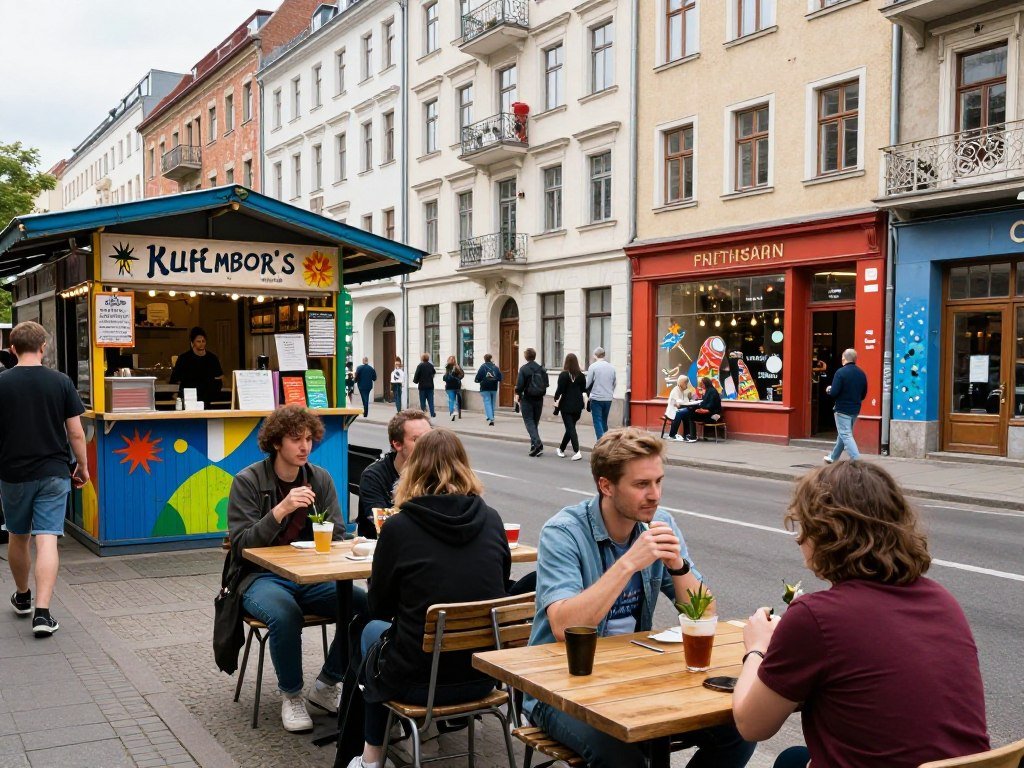
The trendy Friedrichshain neighborhood surrounds the East Side Gallery. After viewing the wall, explore the hip cafés, vintage shops, and street food vendors along Warschauer Straße. The RAW-Gelände, a former train repair complex turned cultural center, is just 5 minutes away with bars, clubs, and weekend flea markets.
Berlin Wall Memorial at Bernauer Straße
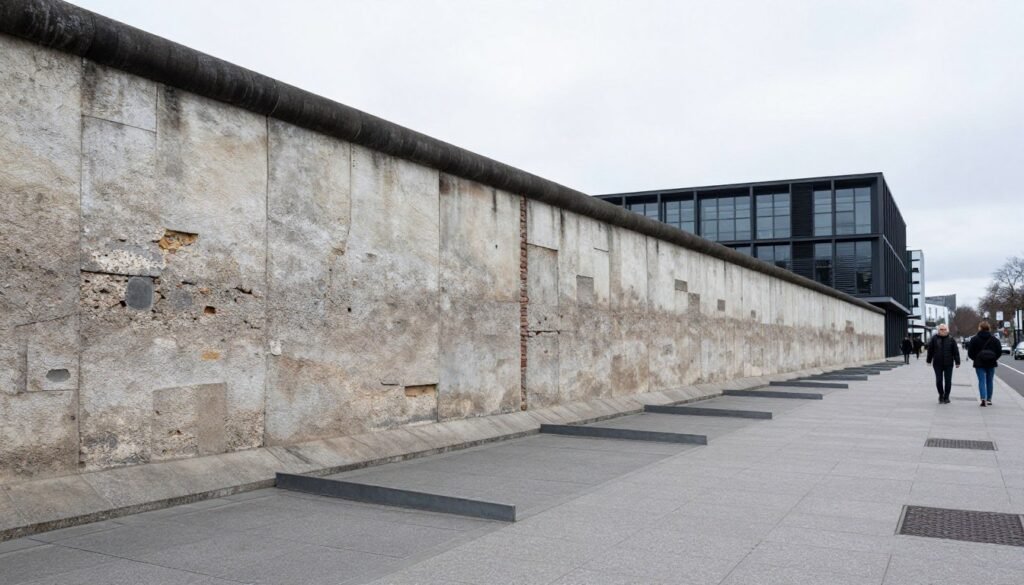
For the most comprehensive understanding of how the Berlin Wall functioned and what it meant to divided families, the Berlin Wall Memorial at Bernauer Straße is essential. This 1.4-kilometer memorial site preserves the last piece of the Berlin Wall in its complete depth, showing both the inner and outer walls, the death strip between them, guard towers, and the sophisticated alarm systems.
The memorial includes four distinct elements: the outdoor exhibition with preserved wall sections, a documentation center with permanent exhibits and viewing platform, the Chapel of Reconciliation, and the Window of Remembrance honoring the 140 people who died attempting to cross the wall. The viewing platform provides the only opportunity to see the wall’s full barrier system from above.
Bernauer Straße was particularly dramatic during the wall’s existence. When construction began in August 1961, the street marked the border—buildings on the south side were in East Berlin, while the sidewalk belonged to the West. Desperate East Berliners jumped from windows into firefighter nets on the western sidewalk. The Tunnel 57 escape, where 57 people crawled to freedom through a 145-meter tunnel dug beneath the wall, began near here.
2026 Tip: The memorial now offers an enhanced augmented reality app that overlays historical footage and photographs onto the present-day memorial site. Download the free app before visiting. Guided tours in English run daily at 2 PM (free, but donations welcome). The memorial site is always open; the documentation center operates Tuesday-Sunday, 10 AM-6 PM.
Mauerpark: Where the Wall Became a Park
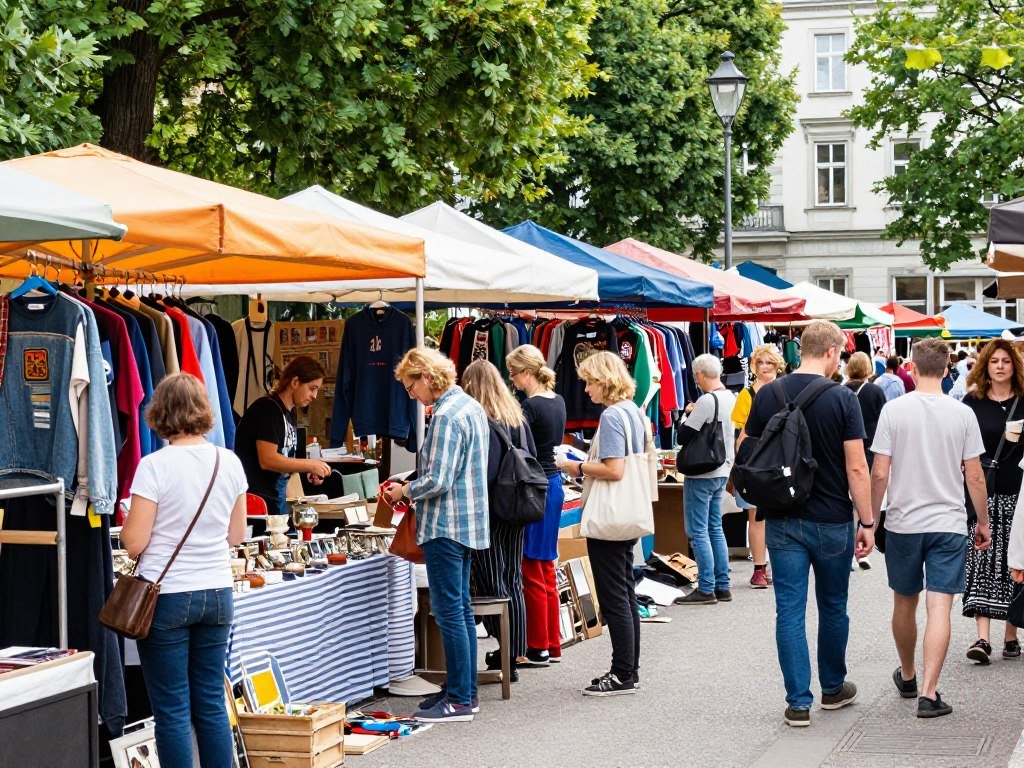
Mauerpark, which translates to “Wall Park,” occupies land that was once part of the Berlin Wall’s death strip. Today, this popular park in Prenzlauer Berg hosts one of Berlin’s most famous flea markets every Sunday and is home to the city’s beloved outdoor karaoke sessions that draw hundreds of spectators and brave performers.
The Sunday flea market runs from 9 AM to 6 PM and features over 250 vendors selling everything from vintage clothing and vinyl records to handmade jewelry and GDR memorabilia. Arrive early (before 10 AM) for the best selection and fewer crowds. Bargaining is expected and part of the fun—start at 50-60% of the asking price and negotiate from there.
At 3 PM every Sunday, the outdoor karaoke begins in the park’s amphitheater. Performer Joe Hatchiban has hosted these sessions since 2009, creating a uniquely Berlin experience where anyone can grab the microphone and belt out their favorite songs to an enthusiastic crowd of hundreds. The atmosphere is supportive, quirky, and thoroughly entertaining even if you’re just watching.
- Sunday mornings (8-11 AM) for flea market shopping
- Sunday afternoons (3-5 PM) for karaoke entertainment
- Weekday evenings for quiet park relaxation
- Avoid rainy Sundays (flea market may close)
Best Time to Visit
- Cash (most flea market vendors don’t accept cards)
- Reusable shopping bags for flea market finds
- Picnic blanket for karaoke viewing
- Snacks and drinks (vendors available but pricey)
What to Bring
- The best vintage clothing is gone by 11 AM
- Bargain confidently—vendors expect it
- Visit the graffiti wall for legal street art
- Nearby cafés offer bathrooms for customers
Insider Tips
World-Class Museums: Culture and Collections
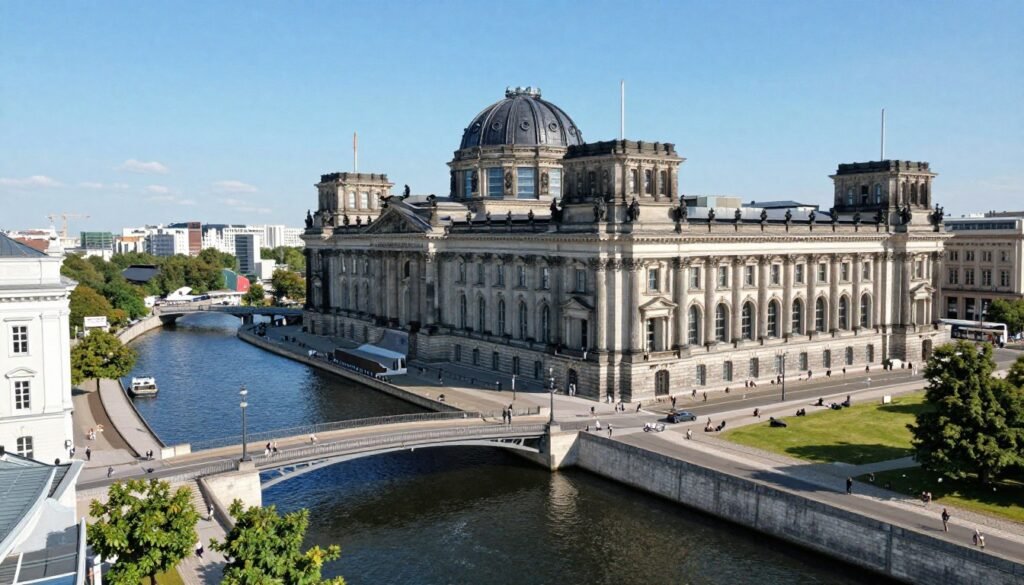
Berlin’s museum landscape is extraordinary in both scope and quality. The city houses over 170 museums covering everything from ancient civilizations to contemporary art, from natural history to industrial design. Museum Island alone contains five world-renowned museums, while specialized collections throughout the city cater to nearly every conceivable interest.
Museum Island: Five Museums in One UNESCO Site
Museum Island (Museumsinsel) occupies the northern tip of Spree Island in central Berlin and houses five extraordinary museums, all designated as UNESCO World Heritage Sites. This museum complex represents one of the most important collections of art and archaeology in the world, spanning 6,000 years of human history.
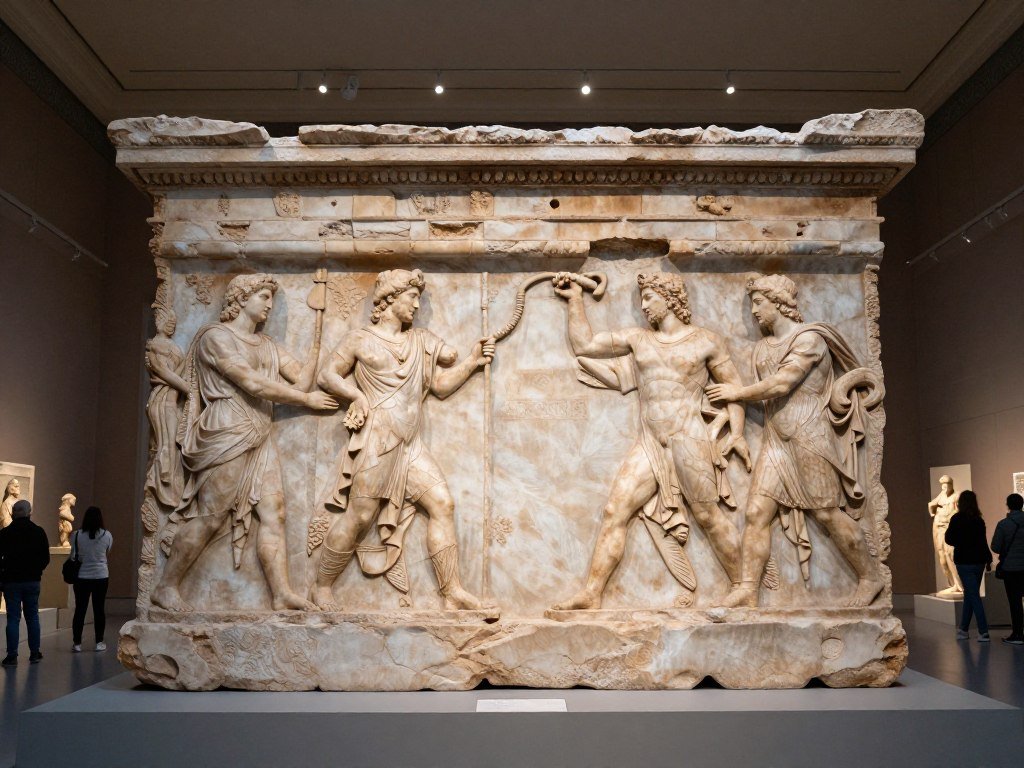
The Pergamon Museum, though partially closed for renovations through 2027, remains Berlin’s most visited museum. Its collection of monumental architecture from the ancient world is unparalleled. The Ishtar Gate of Babylon, reconstructed from original glazed bricks, creates a stunning first impression with its deep blue tiles decorated with golden lions, bulls, and dragons.
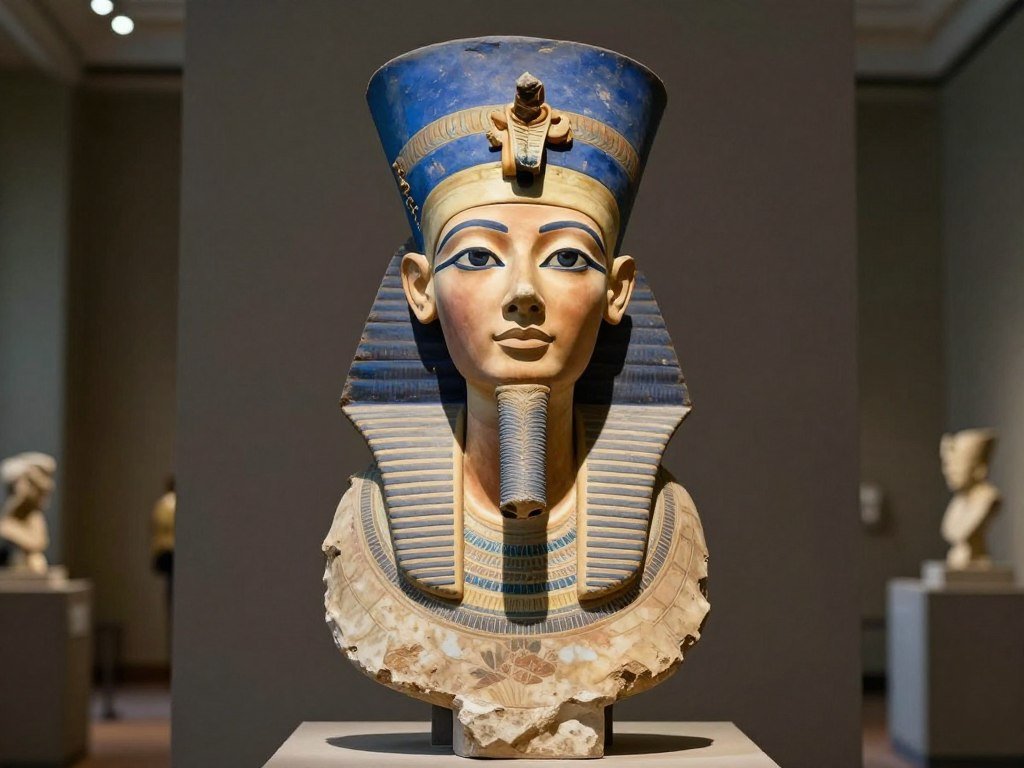
The Neues Museum houses Egyptian treasures, including the famous bust of Nefertiti. This 3,400-year-old limestone sculpture is breathtakingly beautiful and perfectly preserved, showcasing the artistic mastery of ancient Egypt. The Nefertiti bust resides in its own room with special lighting—photography is strictly prohibited to preserve the delicate pigments.
Pergamon Museum
Though under renovation, the Pergamon Museum continues to display portions of its collection. The Museum of Islamic Art and the Market Gate of Miletus remain open. The complete reopening in 2027 will reveal a transformed visitor experience.
- Ishtar Gate and Processional Way
- Market Gate of Miletus (Roman)
- Islamic Art collection with prayer niches
- Timed entry tickets required
Neues Museum
The Neues Museum combines stunning architecture with world-class Egyptian and prehistoric collections. The building itself, reconstructed by David Chipperfield, is a masterpiece that intentionally preserves war damage alongside modern restoration.
- Bust of Nefertiti (star attraction)
- Egyptian mummies and papyrus texts
- Bronze Age collections from Europe
- Allow 2-3 hours for full visit
Alte Nationalgalerie
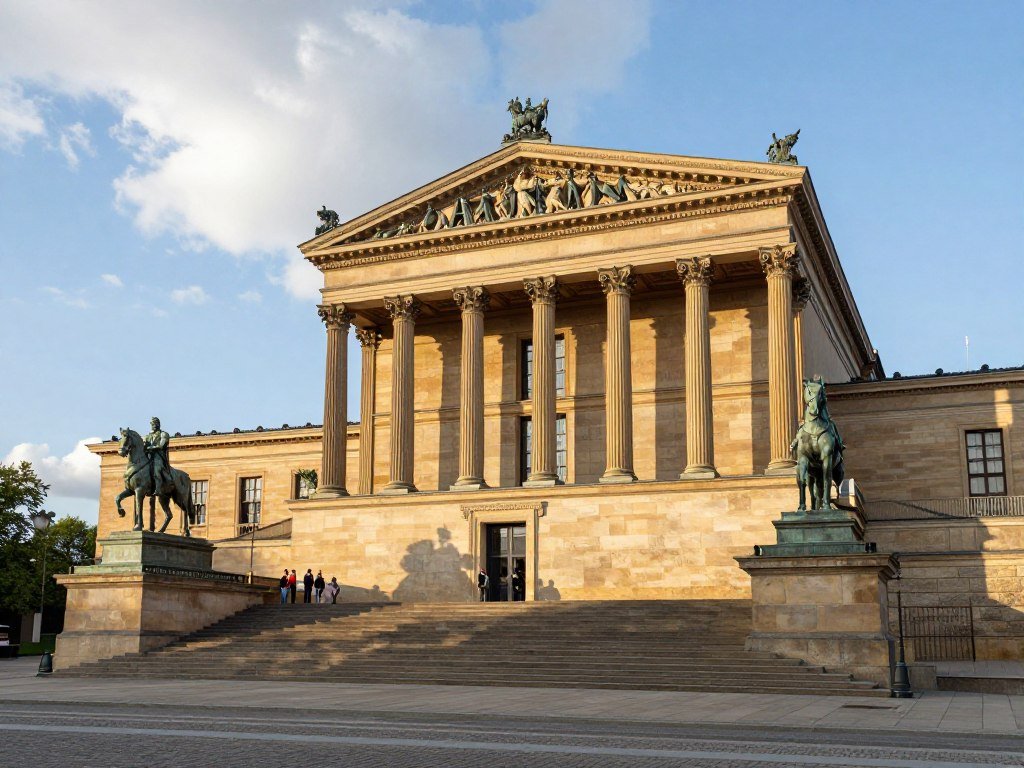
This temple-like building showcases 19th-century European art, including German Romantic paintings, French Impressionist works, and sculptures. The collection includes masterpieces by Monet, Renoir, Caspar David Friedrich, and Adolph Menzel.
- Caspar David Friedrich’s Romantic landscapes
- French Impressionist gallery (Monet, Manet)
- Sculpture collection spanning the century
- Beautiful interior with grand staircase
Museum Island Pass (2026): Save money with the Museum Island Pass, granting same-day access to all five museums for €19 (€9.50 reduced). Individual museum tickets cost €12 each, so the pass saves €41 if visiting all five. Book online to skip ticket queues. Alternatively, the 3-day Museum Pass Berlin (€32) covers 30+ museums citywide.
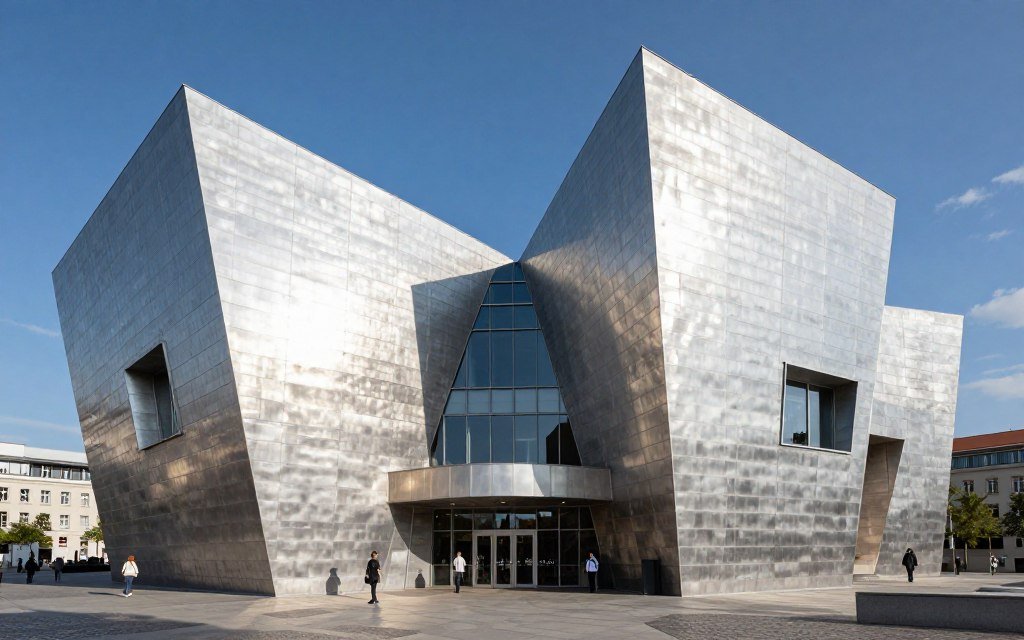
Jewish Museum Berlin: Architecture as Narrative
The Jewish Museum Berlin is Germany’s largest Jewish museum and one of the most visited museums in the city. The building itself, designed by architect Daniel Libeskind, is a powerful architectural statement. Its zinc-clad, zigzagging structure with irregular windows creates an intentionally disorienting experience that reflects the fractured history of German Jews.
The museum presents two millennia of German-Jewish history through documents, photographs, interactive displays, and personal stories. The permanent exhibition challenges visitors to think critically about identity, migration, tradition, and the devastating impact of the Holocaust. Particularly moving is the “Memory Void” installation featuring 10,000 hand-cut faces scattered on the floor—walking across them creates haunting metallic sounds.
The Garden of Exile consists of 49 concrete pillars filled with earth, tilted at various angles, creating physical disorientation that mirrors the emotional dislocation of exile. The Holocaust Tower, a stark concrete void with only a distant slash of light, evokes feelings of isolation and darkness. These spaces use architecture itself to communicate emotions that words cannot fully capture.
Visiting Details: Open daily 10 AM-7 PM (closed on Jewish holidays). Admission €8, reduced €3, children under 6 free. Audio guides included with admission. Allow minimum 2-3 hours. The museum café, Liebermann’s, serves excellent kosher-style food. U-Bahn Hallesches Tor (U1, U6) is the nearest station.
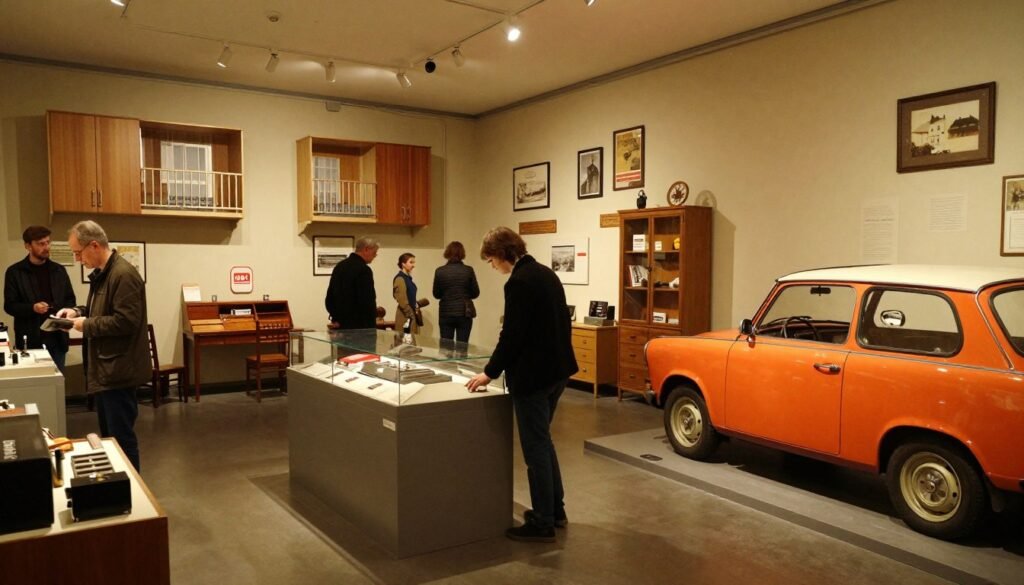
DDR Museum: Life Behind the Iron Curtain
The DDR Museum offers an interactive journey through everyday life in the German Democratic Republic (East Germany). Unlike traditional museums with “do not touch” policies, this museum encourages hands-on exploration. Open drawers, sit in a recreated living room, “drive” a Trabant car in a simulated ride, and explore what ordinary East Germans experienced day to day.
The museum covers the surveillance state run by the Stasi secret police, the planned economy that led to constant shortages, the education system that indoctrinated children from kindergarten, and the peculiar consumer culture that developed in isolation from Western products. You can search through a recreated Stasi office, complete with hidden cameras and bugging devices.
One highlight is the simulated Plattenbau apartment—the standardized concrete housing blocks where millions of East Germans lived. The apartment shows the cramped spaces, the long wait lists for basic appliances like washing machines, and the ingenuity people employed to make these identical apartments feel like homes. Touch the furniture, open cabinets, and turn on the television to watch original East German programming.
Interactive Experiences
- Trabant driving simulator (queue during busy times)
- Try on East German clothing and take photos
- Vote in a “democratic” GDR election booth
- Test your knowledge with quiz stations
- Watch original TV propaganda programming
- Explore a full-size recreated apartment
- Experience interrogation room atmosphere
- Handle everyday GDR products and packaging
The museum gift shop sells authentic GDR products, reproduction propaganda posters, and quirky souvenirs. The museum restaurant serves traditional East German dishes like Soljanka soup and Jägerschnitzel—hearty, simple, and historically accurate.
Museum Details:
- Open daily 9 AM-9 PM
- Admission €13.50 (€9 reduced)
- Right on the Spree River in Mitte
- Audio guides included
- Family-friendly museum
- Plan 2-3 hours minimum
Sachsenhausen Concentration Camp Memorial: Bearing Witness
Located about 35 kilometers north of Berlin, the Sachsenhausen Concentration Camp Memorial serves as one of the most important Holocaust memorial sites in Germany. This former Nazi concentration camp operated from 1936 to 1945, holding over 200,000 prisoners—political opponents, Jews, homosexuals, Roma, Soviet POWs, and others deemed enemies of the Nazi state. More than 30,000 people died here from forced labor, medical experiments, starvation, disease, and systematic murder.
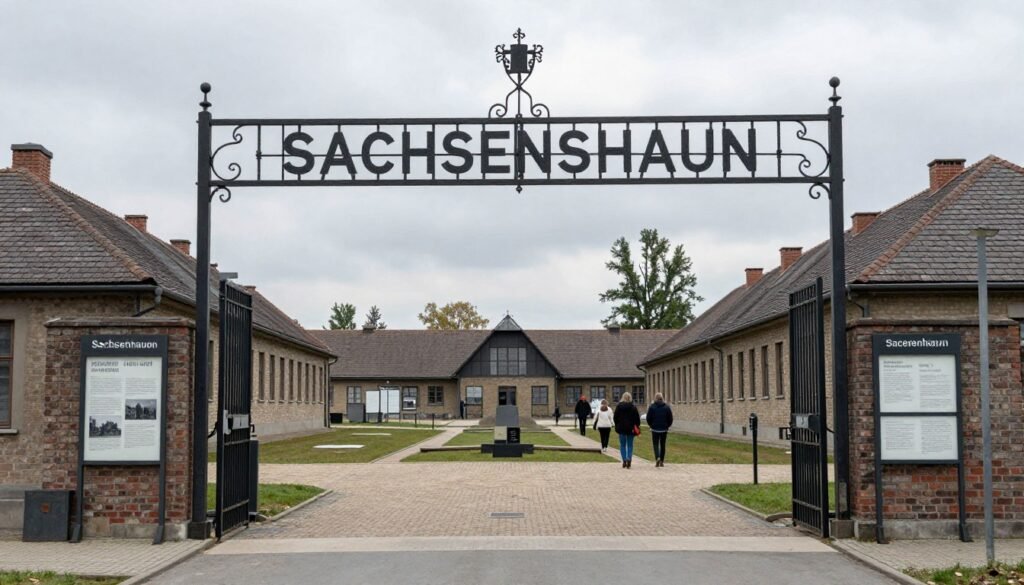
Sachsenhausen was designed by SS architects to be a model concentration camp, with a triangular layout that allowed guards in a central tower to surveil the entire complex. The design was later copied for other camps. After the war, Soviet forces used the site as a special camp until 1950, and it became a memorial in 1961.
The memorial preserves original camp buildings, including barracks, the punishment cells, the camp prison, the industrial yards where prisoners performed slave labor, and the execution grounds. The museum exhibitions document the camp’s history through photographs, survivor testimonies, confiscated personal belongings, and detailed explanations of the Nazi camp system.
Walking through Sachsenhausen is emotionally challenging but historically essential. The scale of suffering and the systematic nature of Nazi brutality become viscerally clear. The camp’s location—just 35 kilometers from Berlin—also underscores how the Holocaust happened not in some distant, hidden place, but right beside German cities where ordinary people went about their daily lives.
Visiting Independently
Take the S-Bahn S1 from Berlin to Oranienburg (45 minutes), then walk 25 minutes or take bus 804/821 to the memorial. The walk is straightforward—signs point the way from the station. The memorial is open daily except Mondays, 8:30 AM-6 PM (April-October) and 8:30 AM-4:30 PM (November-March). Admission is free.
Audio guides (€3) are available in multiple languages and highly recommended for understanding the site’s history. Allow minimum 3-4 hours. Wear comfortable walking shoes—the site is large with mostly outdoor areas. Bring water and snacks, as the on-site café has limited hours.
Guided Tours from Berlin
Many visitors prefer guided tours for the detailed historical context expert guides provide. Tours include round-trip transportation from Berlin, skip any navigation concerns, and typically last 6 hours total. Groups are usually limited to 15-20 people.
English-language walking tours depart daily at 10 AM from central Berlin. The guide provides context during the train journey, then leads a comprehensive 3-hour tour of the memorial site. Tours cost €30-40 per person and include transportation and guide services.
Book Sachsenhausen Memorial Tour
Expert historians lead these small-group tours to Sachsenhausen, providing essential context about the Nazi camp system, life as a prisoner, and the memorial’s importance in confronting Germany’s past. Tours include round-trip transportation from central Berlin via S-Bahn.
- Small groups maximum 20 people
- Professional historian guide
- 6 hours total duration including travel
- Free cancellation up to 24 hours before
- Pickup from central Berlin meeting point
- Available in English, German, Spanish
Tour Benefits
- Expert historical interpretation
- No navigation required
- Small group size
- Transportation included
- All logistics handled
Considerations
- Higher cost than independent visit
- Fixed schedule (less flexible)
- Group moves at set pace
- Early morning departure time
Important Considerations: Visiting Sachsenhausen is emotionally intense. The memorial does not sensationalize or dramatize—the historical facts are devastating enough. This is not appropriate for young children. The site is largely outdoors, so check weather and dress accordingly. Many visitors find the experience deeply moving and necessary to understand the full scope of Nazi atrocities.
Food Scene: Berlin's Culinary Revolution
Berlin’s food scene has undergone a remarkable transformation over the past decade. Once known primarily for currywurst and döner kebabs, the city now boasts Michelin-starred restaurants, innovative vegan cafés, bustling food markets, and a street food culture that rivals any major city. The culinary landscape reflects Berlin’s diversity, creativity, and willingness to experiment.
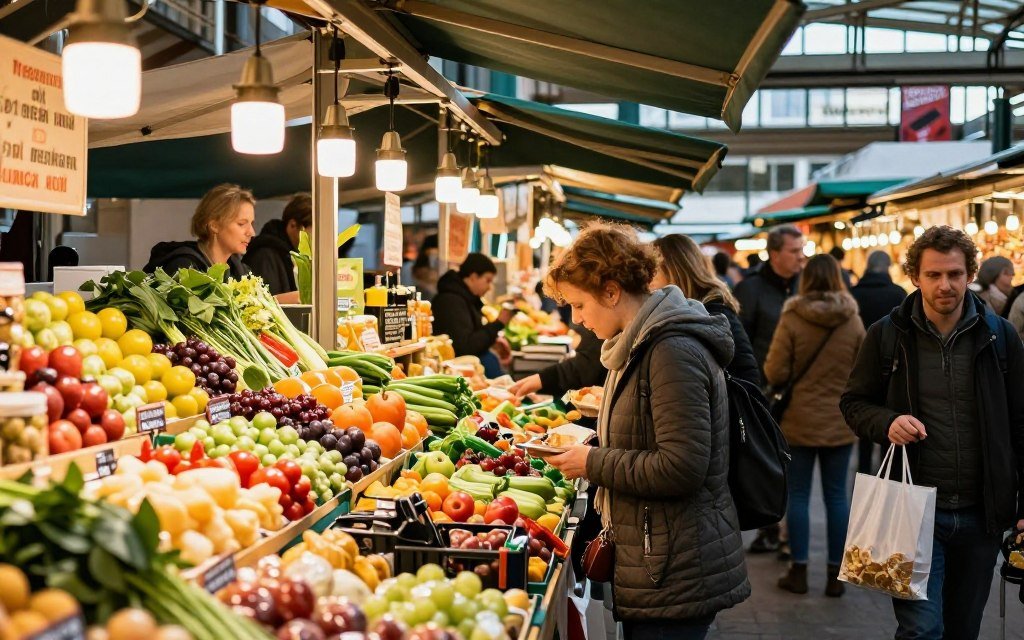
Street Food Thursday at Markthalle Neun
Every Thursday evening, Markthalle Neun in Kreuzberg transforms into Berlin’s premier street food gathering. From 5 PM to 10 PM, over 30 food vendors set up stalls serving dishes from around the world—authentic Korean bibimbap, Venezuelan arepas, Vietnamese bánh mì, Mexican tacos, Italian pasta, Japanese ramen, and countless other options alongside craft beers and creative cocktails.
The atmosphere is lively and social, with long communal tables where strangers become friends over shared meals. Live music adds to the festive vibe. Arrive by 6 PM to beat the biggest crowds, though the energy peaks around 7-8 PM. Most dishes cost €5-12, making it possible to sample several different cuisines in one evening.
Beyond Street Food Thursday, Markthalle Neun operates as a traditional market hall Tuesday through Saturday, with permanent vendors selling fresh produce, artisan bread, specialty cheeses, sustainable fish, and organic meats. The “Breakfast Market” every Saturday morning features regional farmers and producers. The hall’s restaurant, Kantine Neun, serves seasonal German cuisine in a casual setting.
2026 Tip: Markthalle Neun has expanded its programming in 2026 to include “World Dumpling Wednesday” (5-9 PM) featuring dumplings from every culture imaginable—Polish pierogi, Chinese jiaozi, Italian ravioli, Japanese gyoza, and more. Cash or card accepted at all vendors now, though cash speeds up transactions.
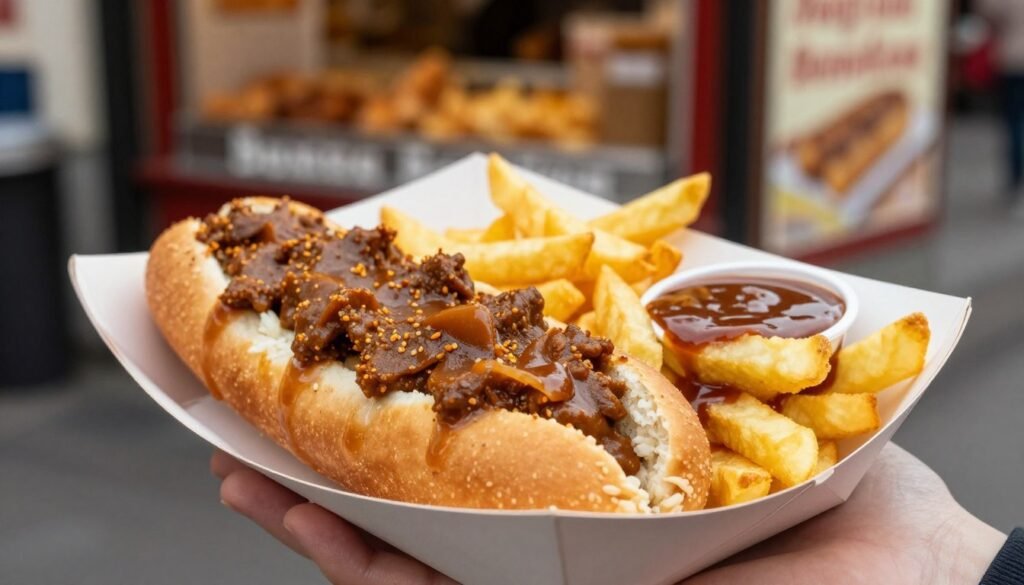
Currywurst: Berlin's Signature Street Food
No visit to Berlin is complete without trying currywurst—sliced pork sausage smothered in curry-spiced ketchup sauce and dusted with curry powder, typically served with fries or bread roll. This iconic Berlin creation was invented in 1949 by Herta Heuwer and has since become the city’s most famous fast food. Berliners consume an estimated 70 million currywursts annually.
Konnopke’s Imbiss, operating since 1930 beneath the U-Bahn tracks at Eberswalder Straße, is arguably Berlin’s most famous currywurst stand. The family recipe for the curry sauce remains a closely guarded secret. Order the “currywurst mit darm” (with natural casing) for the traditional snap when you bite through the skin. Open Monday-Saturday until 8 PM (Sunday until 6 PM), expect queues but they move quickly.
Other currywurst institutions include Curry 36 in Kreuzberg (open until 5 AM on weekends, perfect for post-club cravings) and Curry & Chili near the East Side Gallery. Each stand has devoted fans who argue passionately about whose sauce recipe reigns supreme. At around €3-4 for currywurst with fries, it’s both delicious and budget-friendly.
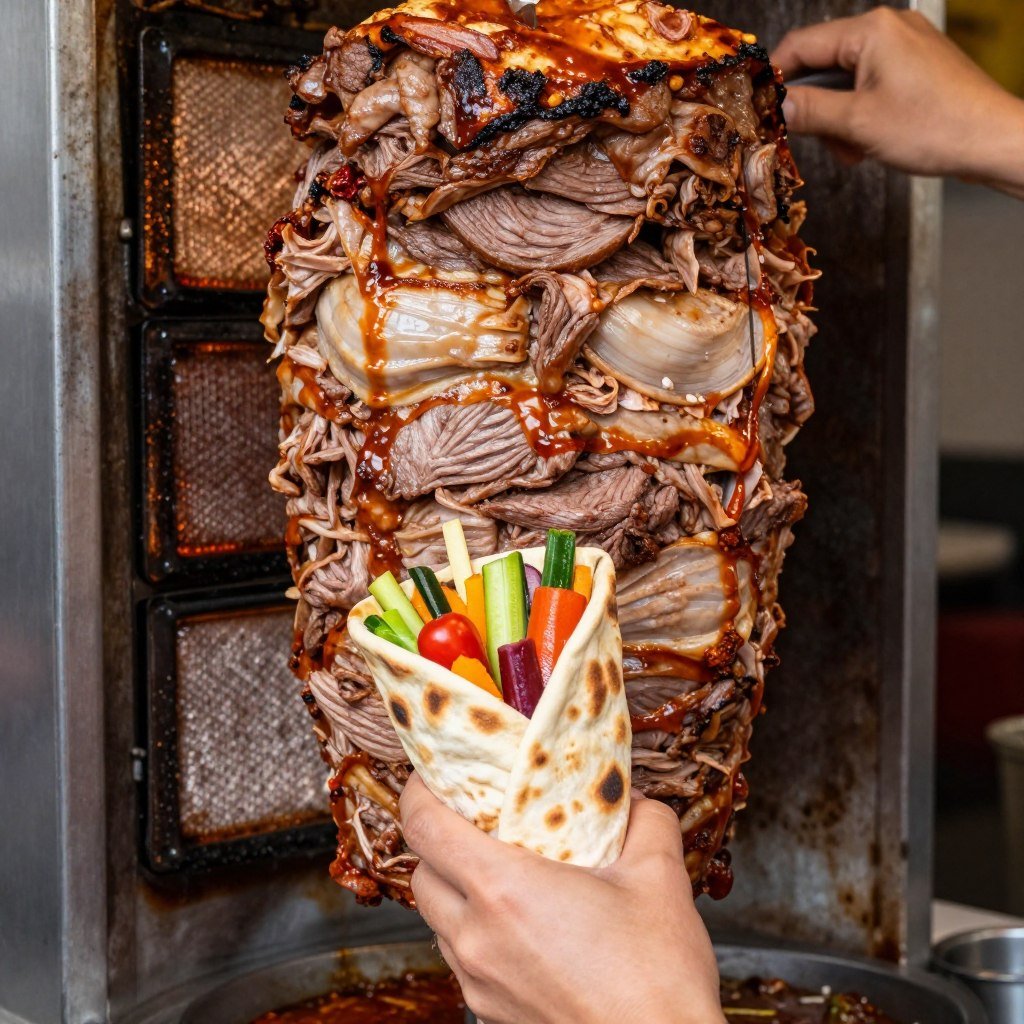
Döner Kebab Culture
Berlin is döner kebab capital outside Turkey. Turkish immigrants introduced this beloved street food in the 1970s, and it’s now as quintessentially Berlin as currywurst. The best döner shops are fiercely debated topics.
- Mustafa’s Gemüse Kebap (be prepared for 45+ minute queue)
- Imren Grill (locals’ favorite in Kreuzberg)
- Rüyam Gemüse Kebap (excellent vegetarian options)
- Cost: €5-7, extremely filling
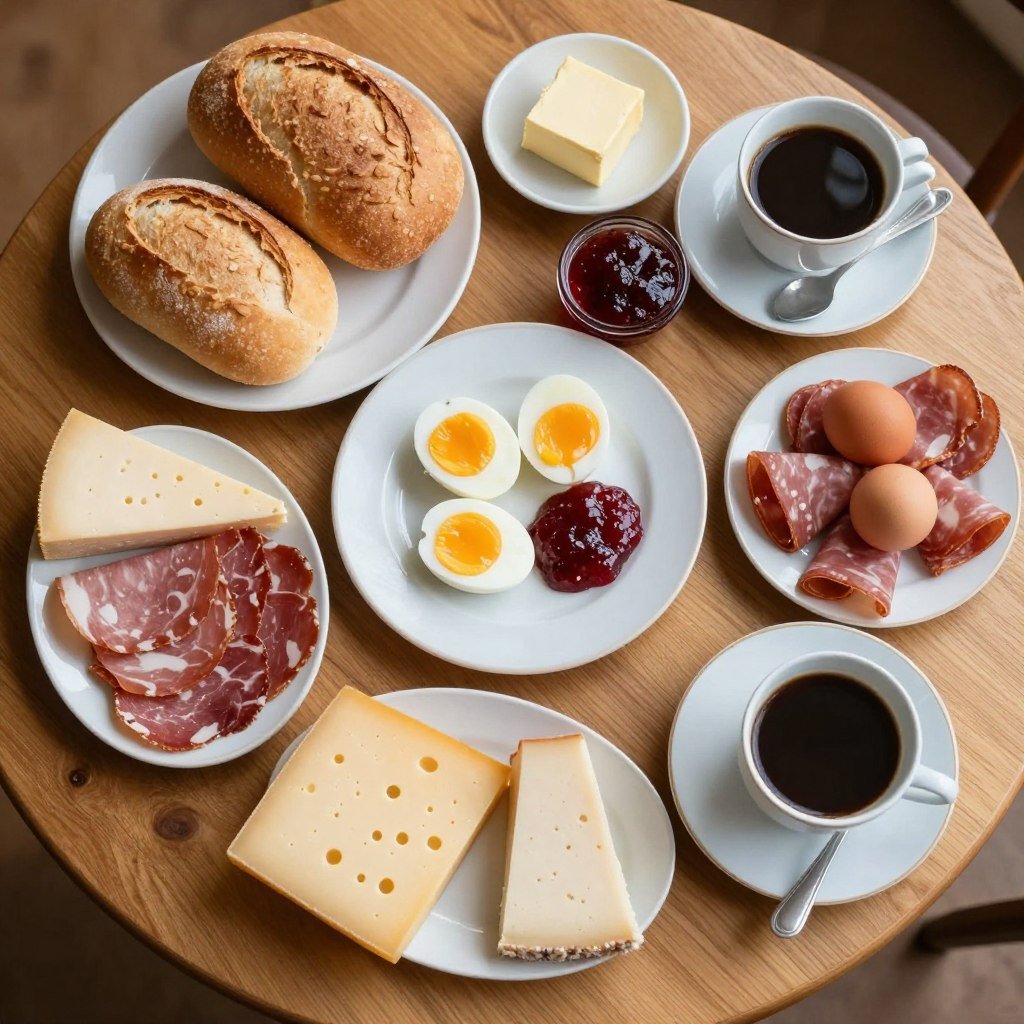
Berlin Breakfast Tradition
Berliners take their breakfast seriously, especially the weekend brunch ritual. Cafés serve extensive breakfast buffets with fresh bread, cold cuts, cheeses, eggs prepared multiple ways, fresh fruit, and excellent coffee.
- Café Bilderbuch (cozy atmosphere, book early)
- Silo Coffee (specialty coffee and creative dishes)
- Benedict (all-day breakfast menu)
- Sunday Breakfast Market at Markthalle
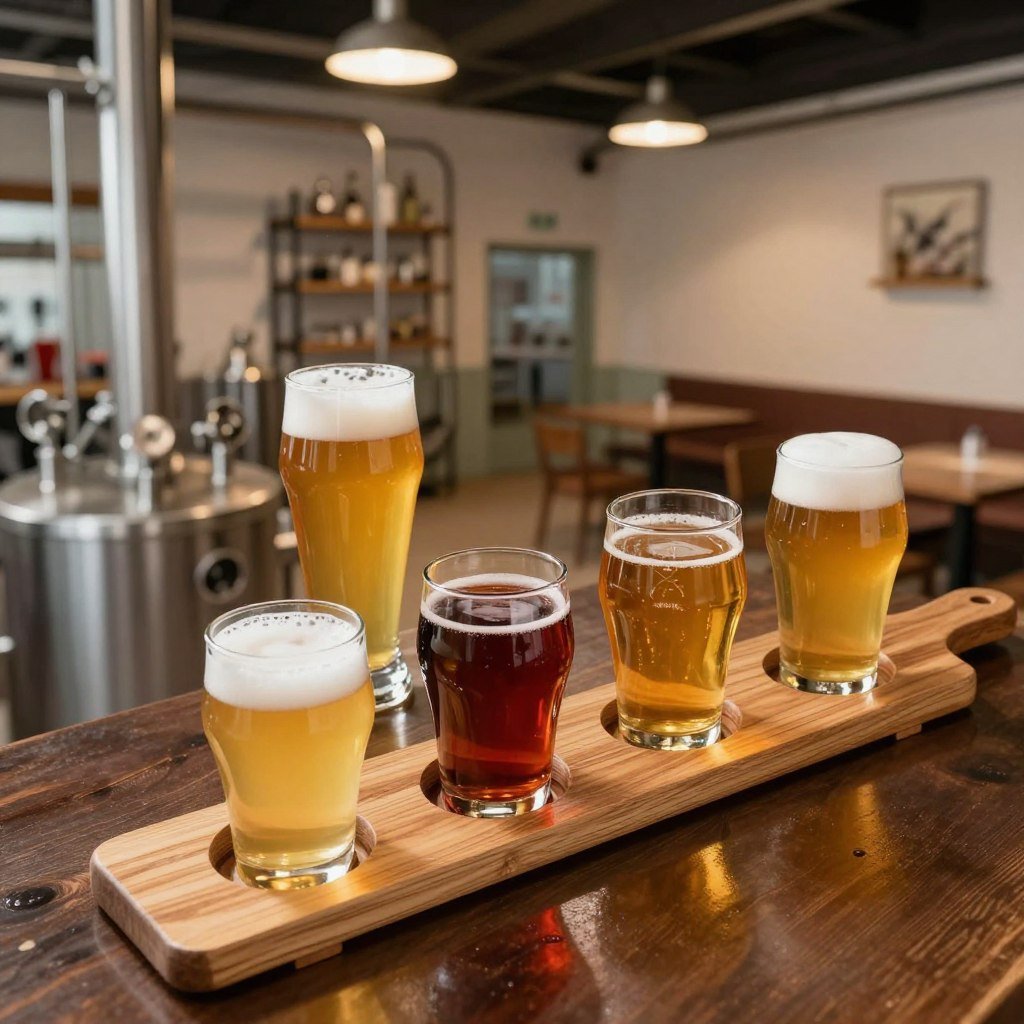
Craft Beer Revolution
Berlin’s craft beer scene has exploded, with dozens of microbreweries and specialty beer bars challenging traditional German beer culture with experimental brews, IPAs, sours, and seasonal specialties.
- BRLO Brwhouse (brewery with beer garden)
- Heidenpeters (traditional German styles reinvented)
- Vagabund Brauerei (English-style ales)
- Muted Horn (extensive bottle selection)
Berlin Food Tours: Eat Like a Local
Food tours offer an efficient and delicious way to sample Berlin’s diverse culinary scene while learning about neighborhoods, history, and culture from knowledgeable guides. These guided walking tours typically visit 6-8 food stops over 3-4 hours, providing generous tastings that add up to a full meal.
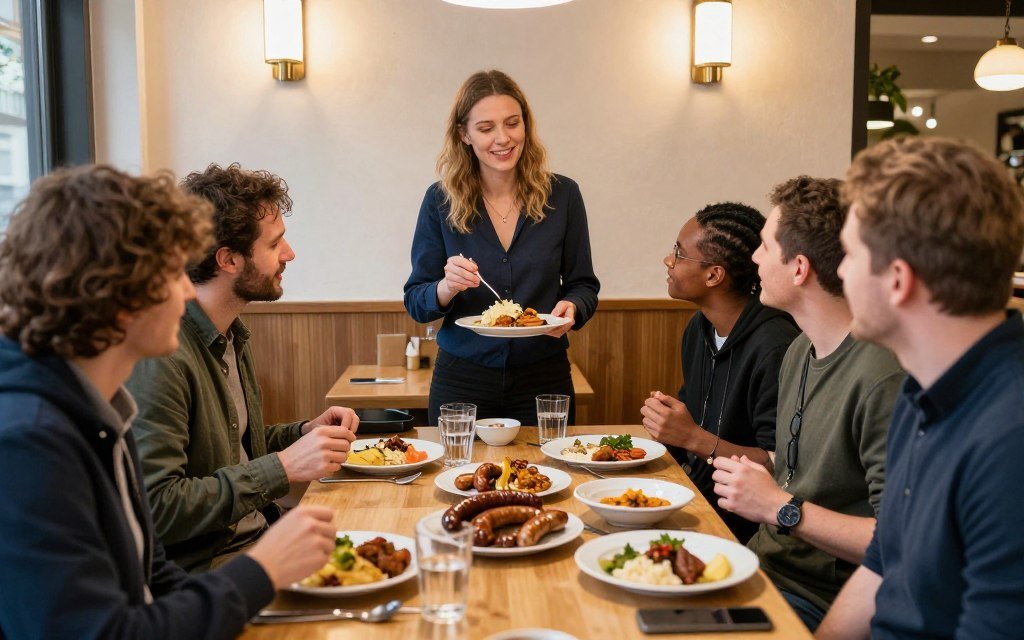
Berlin Center Food Tour with 8+ Local Tastings
This popular food tour explores Berlin’s Mitte district with stops at traditional German restaurants, international eateries, artisan shops, and hidden culinary gems. Taste currywurst, döner kebab, German sausages, local beers, fresh pretzels, specialty chocolates, and more while learning about Berlin’s food culture evolution.
What's Included
- 8+ food and drink tastings
- Expert local guide
- Small groups (max 12 people)
- 3-hour walking tour
- Vegetarian options available
- Neighborhood insights and history
Tour Highlights
- Traditional German sausages
- Authentic currywurst
- Local craft beers
- Fresh pretzels from bakery
- Artisan chocolates
- Surprise specialty items
“This tour was the highlight of our Berlin trip! Our guide was incredibly knowledgeable about both food and history. We tried things we never would have found on our own. The tastings were generous—I was completely full by the end. Highly recommend booking this early in your trip so you can go back to your favorite spots!”— Sarah M., Toronto, Canada
Neighborhood Explorations: Berlin's Diverse Districts
Berlin’s neighborhoods each possess distinct personalities shaped by unique histories, demographics, and subcultures. Exploring these diverse districts reveals the city’s authentic character beyond the major tourist attractions. Each neighborhood offers its own mix of bars, restaurants, shops, galleries, and street life that make Berlin endlessly fascinating.
Kreuzberg: The Rebel Heart
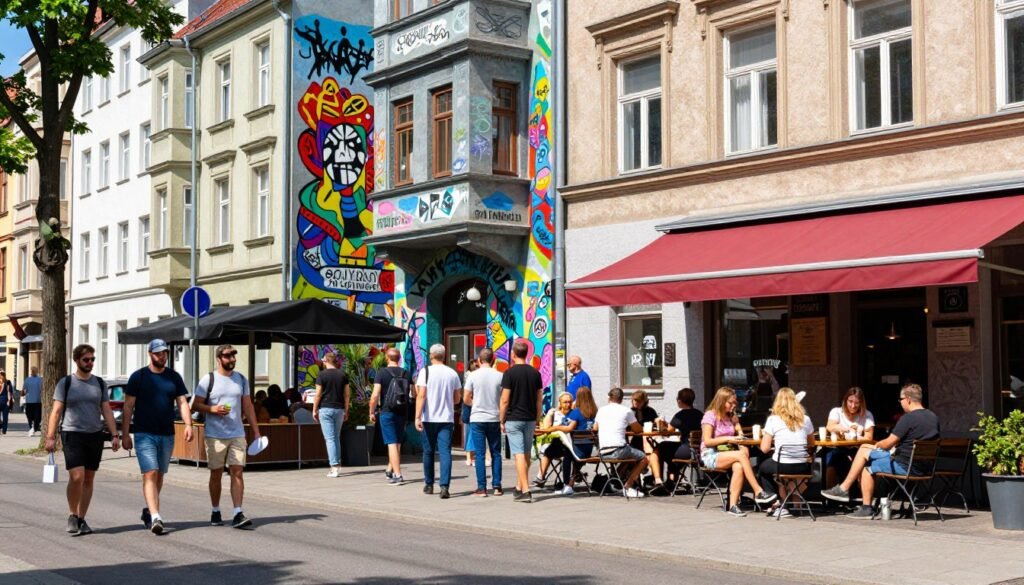
Kreuzberg embodies Berlin’s countercultural spirit. This historically working-class, immigrant-heavy neighborhood became a hotbed of squatting, punk culture, and political activism in the 1970s and 80s. Today, while gentrification has changed some areas, Kreuzberg remains delightfully rough around the edges with a fierce independent streak and a thriving creative scene.
The Turkish community forms the backbone of Kreuzberg’s identity, particularly around Kottbusser Tor. The weekly Turkish Market along the Landwehr Canal (Tuesdays and Fridays, 11 AM-6:30 PM) is a sensory explosion of fresh produce, spices, olives, cheese, and prepared foods. Come hungry and sample gözleme (stuffed flatbread), fresh falafel, and Turkish pastries.
Kreuzberg’s nightlife centers around Schlesisches Tor and the RAW-Gelände, a former train repair depot converted into a nightlife and culture complex. Graffiti covers every surface, makeshift bars occupy old industrial buildings, and the atmosphere is intentionally gritty. Watergate, one of Berlin’s most famous techno clubs, sits directly on the Spree River nearby.
- Görlitzer Park (people-watching central)
- Markthalle Neun food market
- Bergmannstraße (charming shopping street)
- Prinzessinnengärten urban garden
- SO36 legendary punk venue
Must-See Spots
- Street art and graffiti
- Turkish and Middle Eastern food
- Alternative nightlife
- Vintage shopping
- Multicultural atmosphere
Best For
- Visit Turkish Market on Fridays
- Avoid Kottbusser Tor at night (drug activity)
- Best kebab shops near Görlitzer Bahnhof
- Cash preferred at small businesses
- Graffiti tours run daily
Local Tips
Friedrichshain: East Berlin's Creative Hub
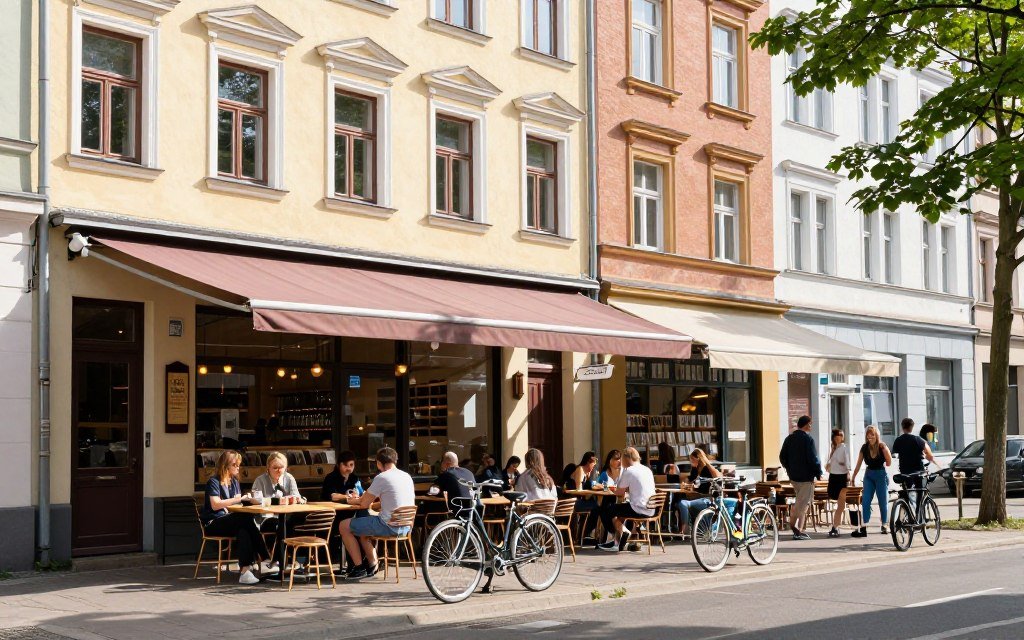
Friedrichshain represents the creative, youthful energy of former East Berlin. After reunification, this district became a magnet for artists, musicians, and young people drawn by cheap rents and abandoned buildings ripe for transformation. Today, Friedrichshain balances hip cafés and galleries with reminders of its GDR past and a legendary nightlife scene.
The East Side Gallery runs along Friedrichshain’s southern border, but venture deeper into the neighborhood to discover Boxhagener Platz. This leafy square hosts a Sunday flea market and is surrounded by excellent brunch cafés and bars. Saturday mornings bring a farmers market with organic produce, fresh bread, and artisan products.
Simon-Dach-Straße exemplifies Friedrichshain’s transformation from working-class district to nightlife destination. This pedestrian-friendly street is lined with bars, restaurants serving international cuisines, and outdoor beer gardens. It’s popular with both tourists and locals, though locals increasingly seek out quieter side streets as Simon-Dach has become quite crowded.
RAW-Gelände
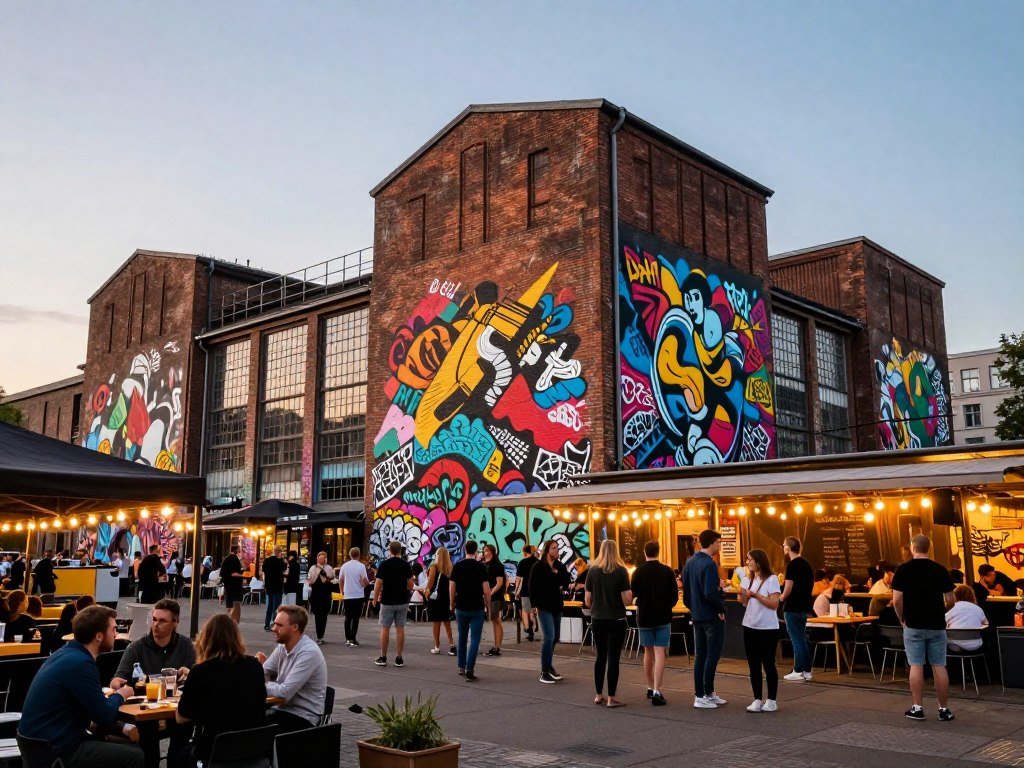
The RAW-Gelände (RAW site) occupies a former train repair yard that’s been converted into an alternative cultural space. The crumbling industrial buildings now house clubs, bars, galleries, a climbing gym, skate park, and open-air flea markets. The deliberately unpolished aesthetic is very Berlin.
Come Sunday for the flea market (vintage clothing, vinyl records, handmade items), or weekend evenings when the clubs come alive. Cassiopeia hosts concerts and club nights, while Suicide Circus is known for uncompromising techno.
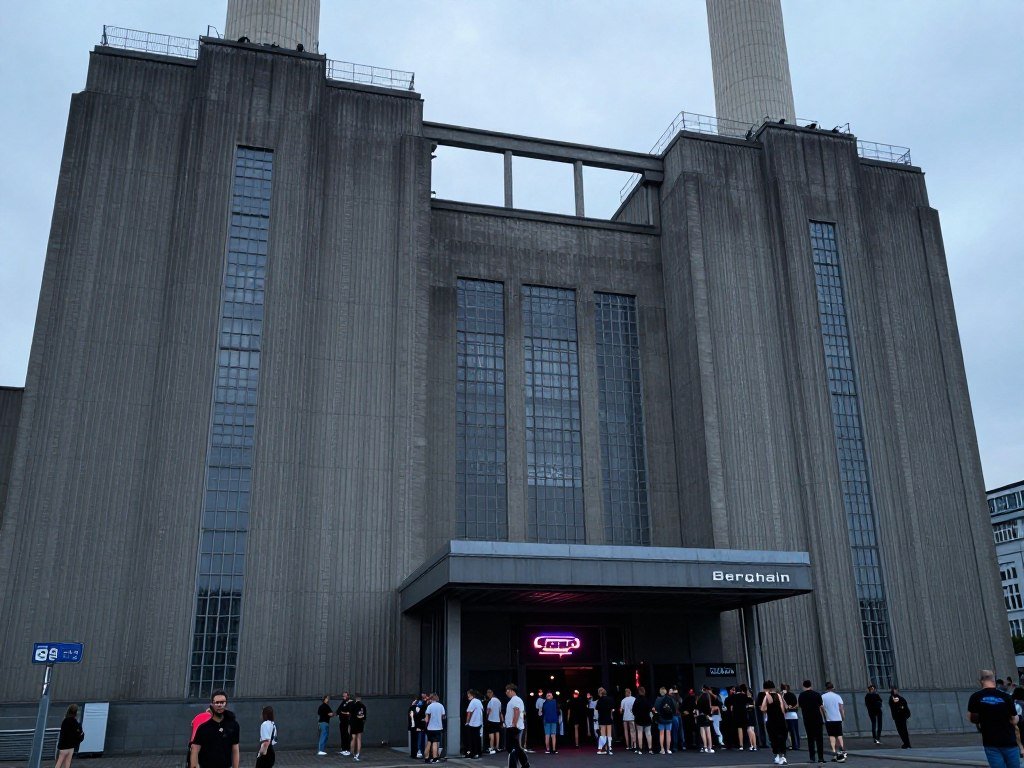
Berghain: Techno Temple
The legendary Berghain nightclub occupies a former power plant and represents the pinnacle of Berlin’s techno scene. The club is notoriously selective—the door policy is unpredictable, and rejection is common. If you get in, expect world-class DJs, a phenomenal sound system, and a hedonistic atmosphere.
Entry tips: Dress in black, arrive after midnight, be patient in queue (waits of 2-3 hours are normal), don’t speak English loudly, and accept that rejection is part of the experience. Most importantly, no photos inside—cameras are taped over at the door.
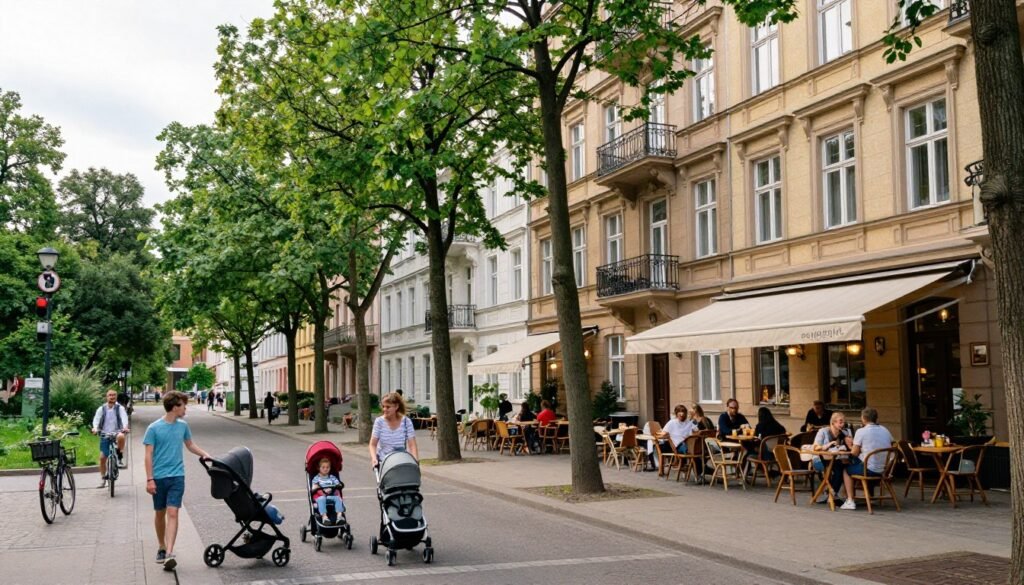
Prenzlauer Berg: Family-Friendly and Polished
Prenzlauer Berg underwent dramatic transformation from crumbling East Berlin district to Berlin’s most gentrified neighborhood. Today, it’s populated by young families, professionals, and the highest concentration of organic grocery stores and artisan coffee shops in the city. The streets are cleaner, the buildings beautifully restored, and the atmosphere decidedly upscale compared to Kreuzberg or Friedrichshain.
Kollwitzplatz anchors the neighborhood with a Saturday organic farmers market that draws crowds for fresh produce, artisan cheeses, homemade jams, and excellent coffee. The square is surrounded by top-notch restaurants, wine bars, and designer boutiques. Sunday flea markets at Mauerpark and Arkonaplatz offer vintage finds and people-watching opportunities.
Despite criticism about gentrification erasing the neighborhood’s original character, Prenzlauer Berg remains lovely for leisurely exploration. The tree-lined streets feature beautifully restored Altbau (old building) apartments, hidden courtyards, independent bookshops, and an easygoing café culture perfect for lingering over breakfast or afternoon coffee and cake.
2026 Tip: The newly opened Kulturbrauerei expansion in Prenzlauer Berg features additional exhibition spaces, a renovated beer garden, and regular live music events. The complex now hosts over 200 cultural events annually. Check their program for concerts, theater performances, and seasonal festivals.
Green Spaces: Berlin's Urban Oases
Berlin is one of Europe’s greenest capitals, with over 2,500 public parks, gardens, and green spaces covering nearly 30% of the city area. These spaces provide essential breathing room in the urban environment and serve as gathering places where Berliners relax, exercise, barbecue, sunbathe, and socialize throughout the warmer months.
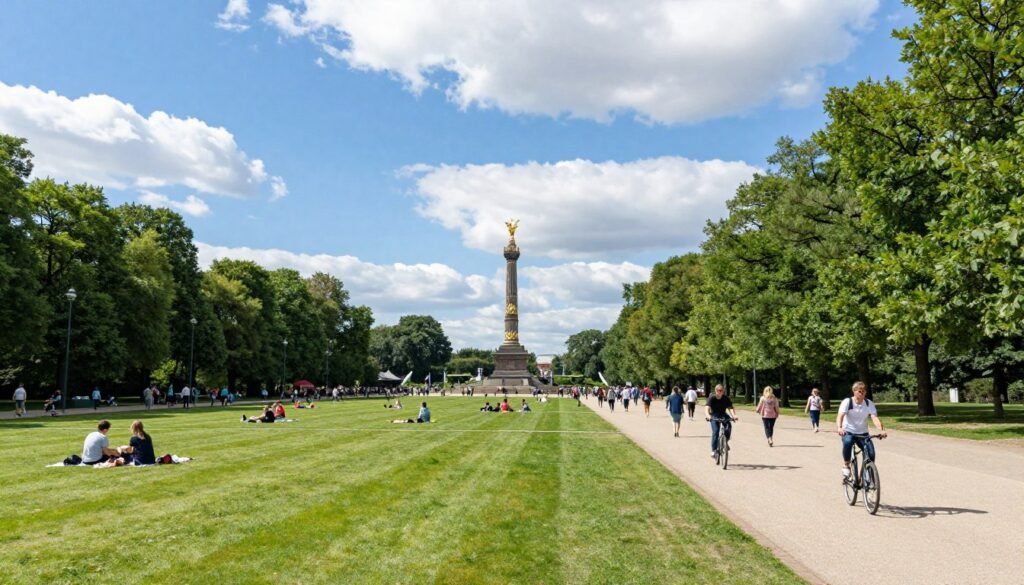
Tiergarten: Berlin's Central Park
The Tiergarten is Berlin’s most famous park, covering 210 hectares in the heart of the city. Originally a royal hunting ground, it became a public park in the 18th century. Today, Tiergarten provides a massive green refuge from urban intensity, with winding paths, shaded groves, open meadows, ornamental gardens, and several monuments including the Victory Column.
The park stretches from the Brandenburg Gate westward to the Zoo, and from the Reichstag southward to Potsdamer Platz. You can easily spend hours exploring the meandering paths—intentionally designed to create a sense of wandering through wilderness despite being surrounded by city. Bring a blanket for picnicking, or rent a bike to cover more ground.
Popular spots within Tiergarten include the Café am Neuen See, a charming lakeside café with beer garden perfect for summer afternoons. You can rent rowboats and paddle around the small lake. The English Garden features carefully curated plantings and is especially beautiful in spring when the cherry trees blossom. On warm days, sunbathers claim spots on the lawns, and groups gather for barbecues (open fires are allowed in designated zones).
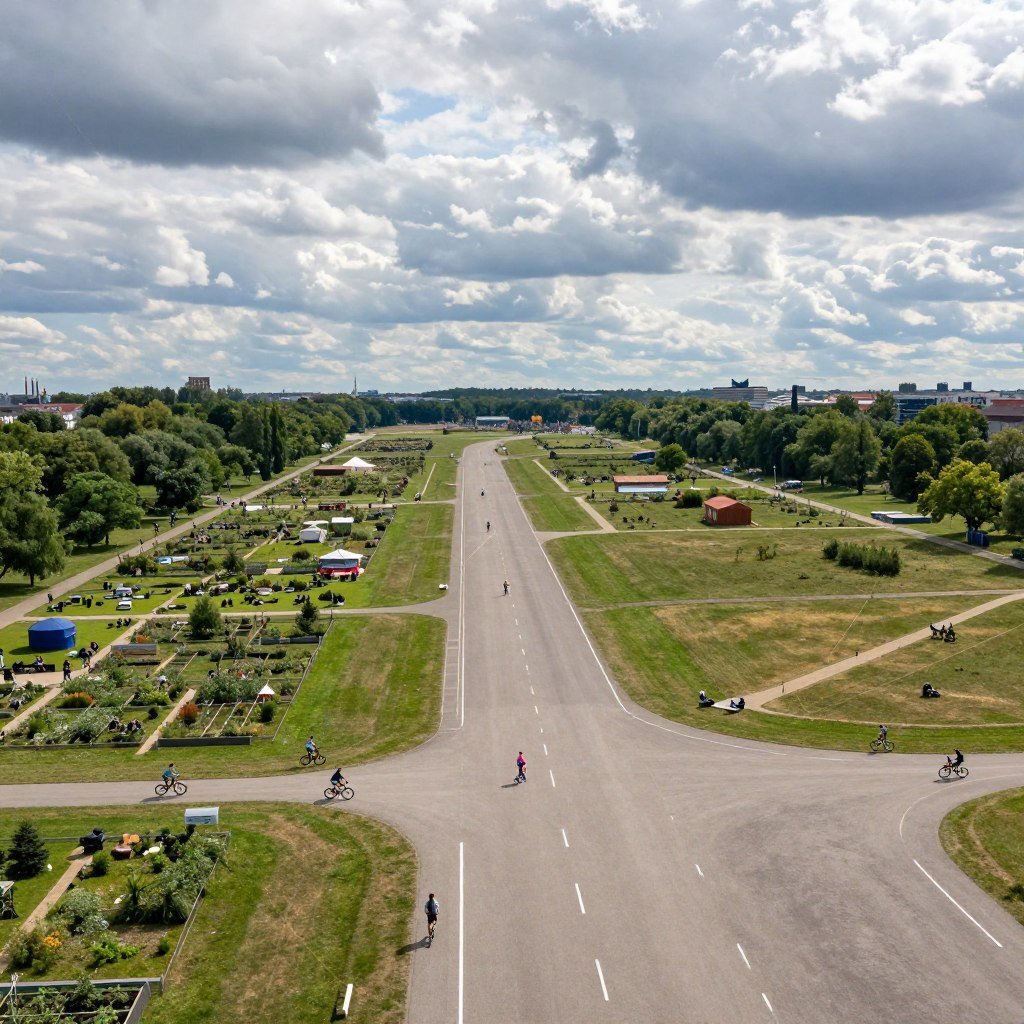
Tempelhofer Feld
This former airport is now one of the world’s most unique public parks. The runways remain intact, creating vast open spaces perfect for cycling, inline skating, kite flying, and watching spectacular sunsets. The sense of space is extraordinary within a dense city.
- 355 hectares of wide-open space
- Original airport runways preserved
- Community gardens at field edges
- Popular for cycling and kite surfing
Grunewald Forest
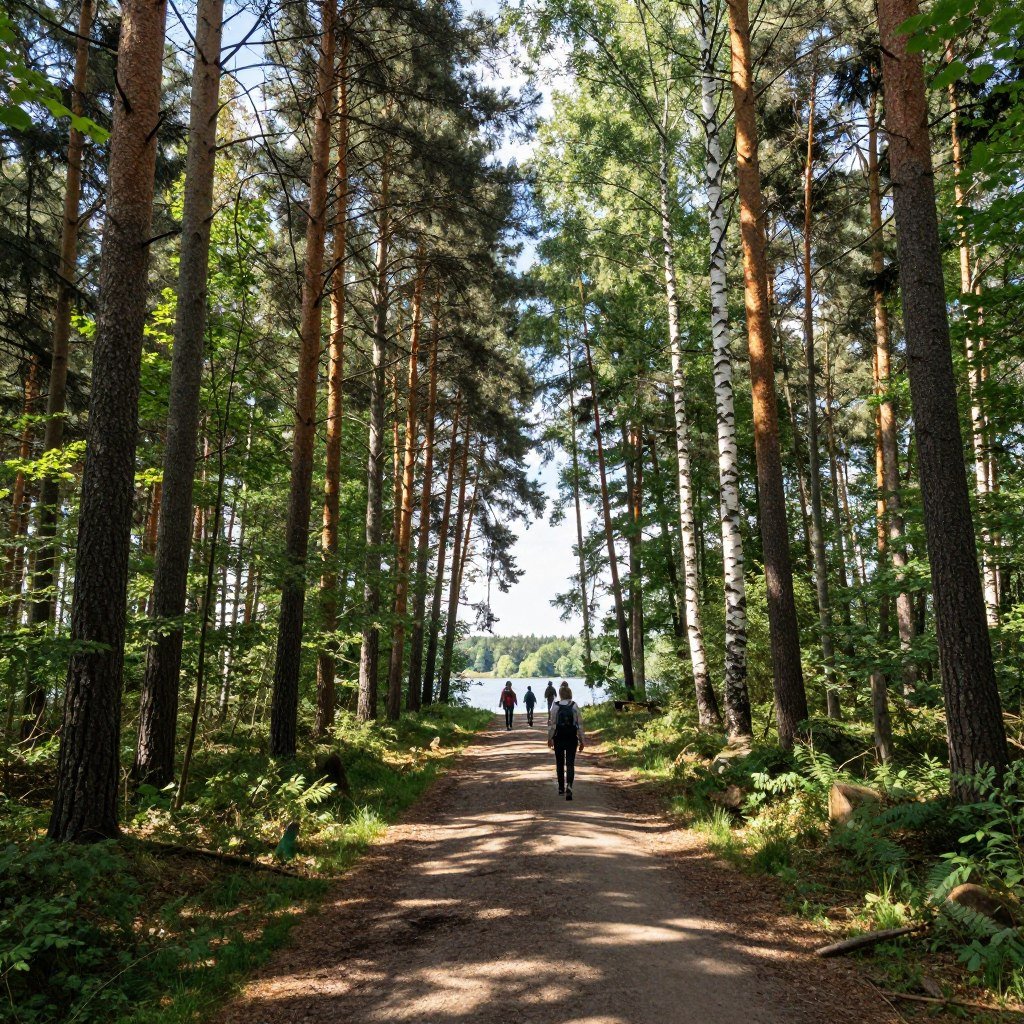
Berlin’s largest forest covers 3,000 hectares on the western edge of the city. Miles of hiking and cycling trails wind through pine and oak forests, past lakes perfect for swimming. Teufelsberg, a man-made hill built from WWII rubble, offers panoramic city views.
- Extensive hiking trail network
- Multiple swimming lakes
- Teufelsberg abandoned spy station
- Wildlife including wild boar
Spree River Activities
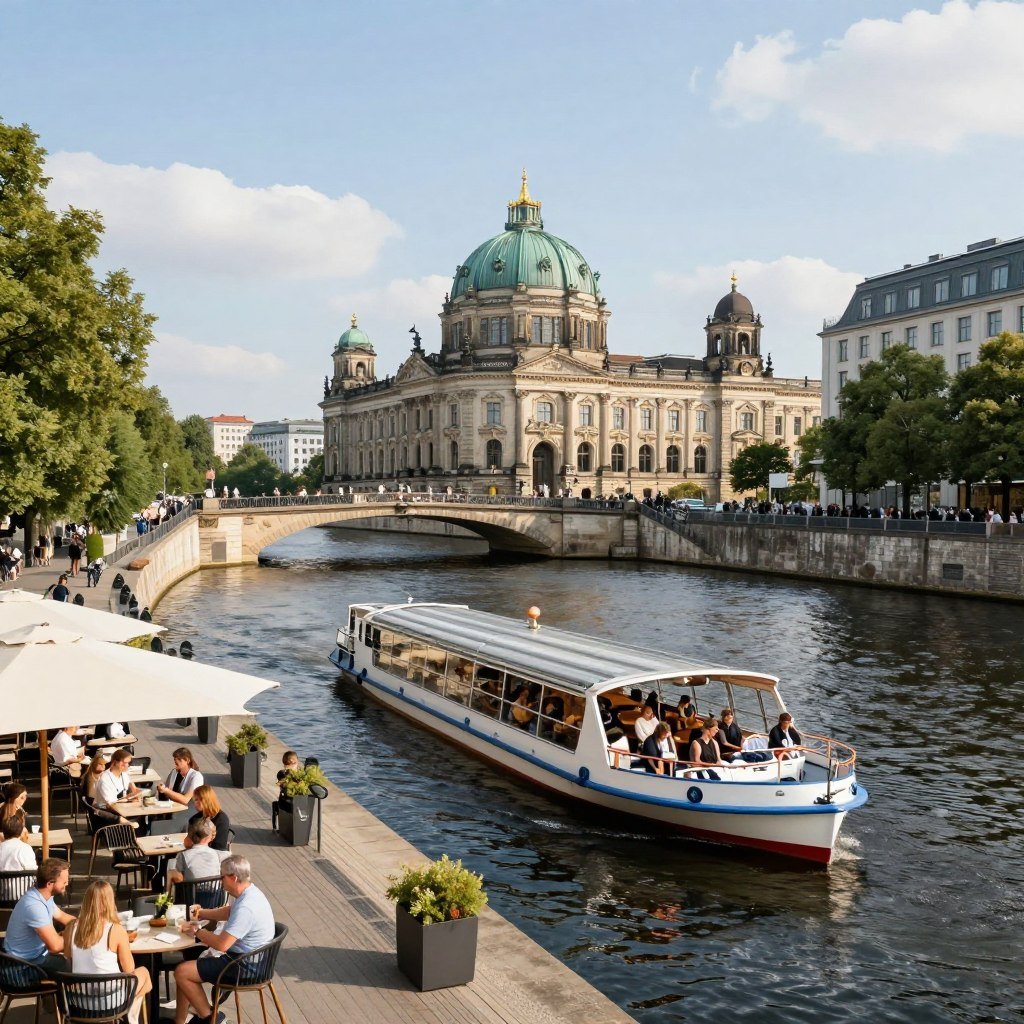
The Spree River flows through Berlin’s center, offering unique perspectives on the city from the water. Boat tours provide relaxing sightseeing, while waterfront paths are popular for walking, jogging, and cycling. Summer brings riverside beaches and floating bars.
- 1-2 hour sightseeing cruises
- Riverside cycling and walking paths
- Urban beaches in summer
- Floating bars and beach clubs
Berlin's Lake Scene: Swimming and Beach Culture
Berlin boasts over 200 lakes within city limits and the surrounding Brandenburg region, many accessible by public transport. When temperatures rise in summer, Berliners flock to these lakes for swimming, sunbathing, and waterside relaxation. The beach culture is surprisingly sophisticated, with many lakes featuring sandy beaches, beach volleyball courts, and waterfront cafés.
Wannsee
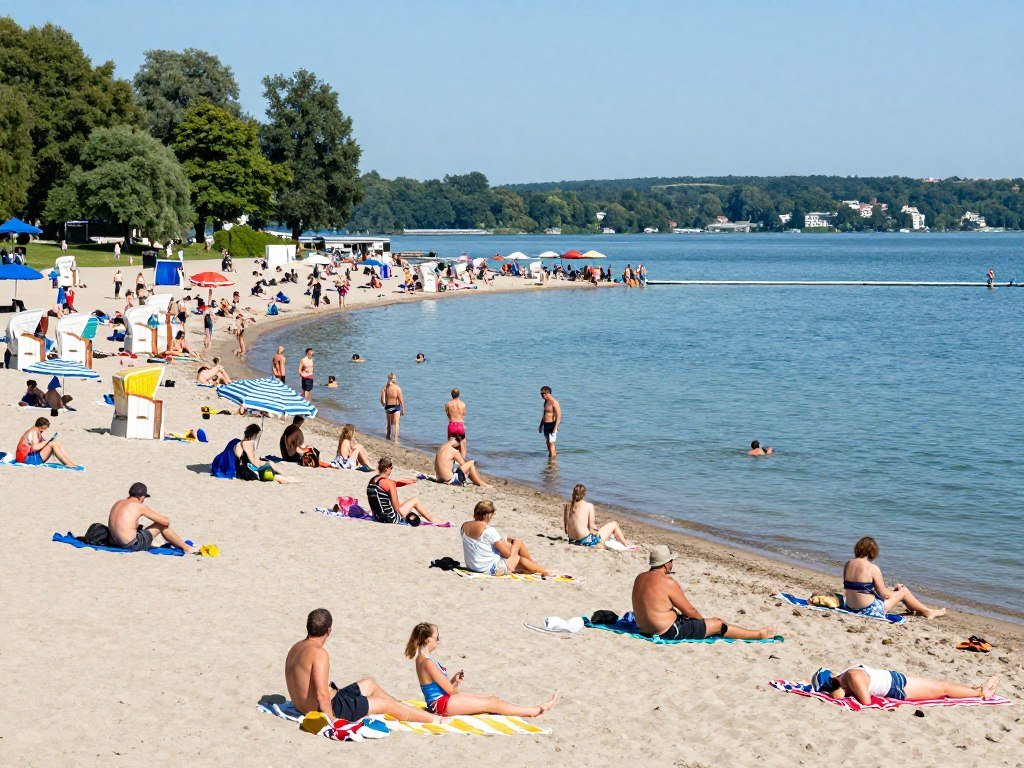
Wannsee is Berlin’s most famous lake and largest inland beach in Europe. The Strandbad Wannsee lido features a 1,275-meter beach with fine sand imported from the Baltic Sea. Facilities include changing rooms, showers, beach chair rentals, playgrounds, and multiple food options.
Take S-Bahn S1 or S7 to Nikolassee station, then walk 15 minutes or take bus 312. Entry fee €6 (€4 reduced). The beach gets extremely crowded on hot summer weekends—arrive before 10 AM for good spots. Alternatively, visit on weekday mornings for a more relaxed experience.
Müggelsee
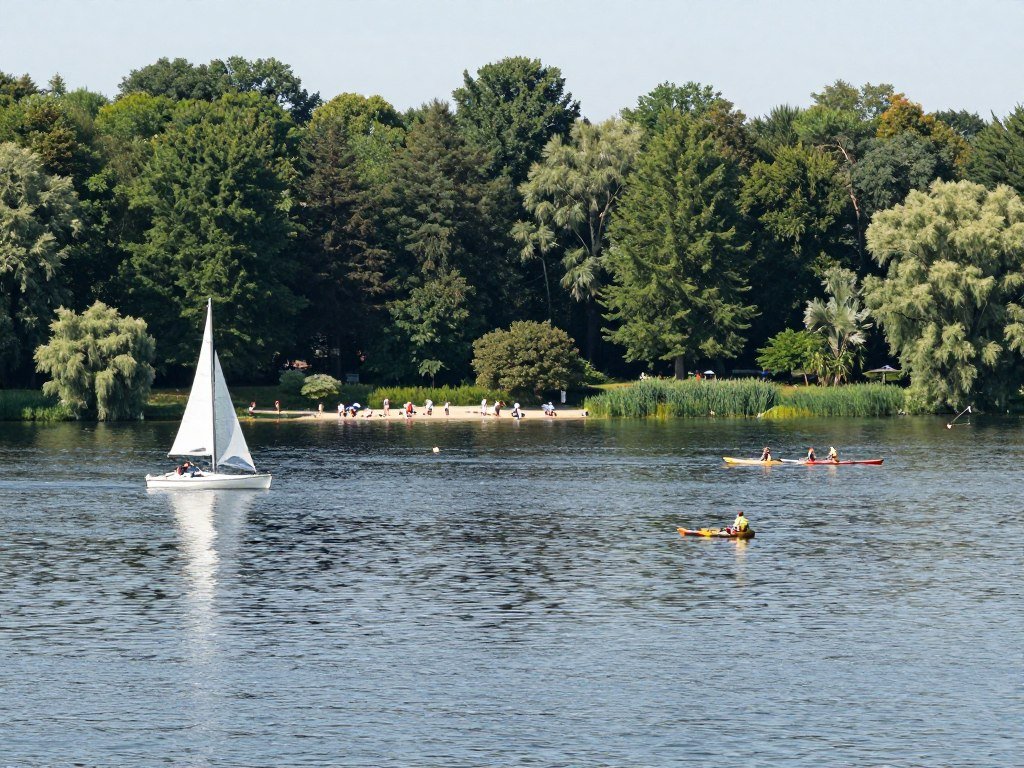
Müggelsee in eastern Berlin offers a less touristy lake experience. As Berlin’s largest lake, it provides ample space even on busy days. The Strandbad Müggelsee features sandy beaches, boat rentals, and a family-friendly atmosphere. The surrounding Müggel forest offers hiking trails.
Reach Müggelsee via S-Bahn S3 to Friedrichshagen, then tram 60/61 to Rübezahl. Free access to public swimming areas; organized beach sections charge €3-5. Boat rentals available (pedal boats €12/hour, kayaks €8/hour). Several lakeside restaurants serve fresh fish from the lake.
Lake Swimming Tips: Most lakes have designated swimming areas marked with buoys. Water quality is monitored regularly—avoid swimming after heavy rains. FKK (nudist) areas exist at many lakes, usually clearly marked. Bring your own towels, sunscreen, and snacks to save money. Glass bottles are prohibited at most beaches. Public transport bikes make getting to lakes easy—many S-Bahn stations have bike rental stands.
Nightlife: The City That Never Sleeps
Berlin’s nightlife is legendary—arguably the best in Europe and among the finest in the world. The city’s club culture emerged from the chaos and freedom following reunification, when abandoned buildings became venues for underground parties that continue to define Berlin’s after-dark identity. Today, clubs operate 24/7, with marathon sessions where Friday night bleeds into Sunday afternoon.
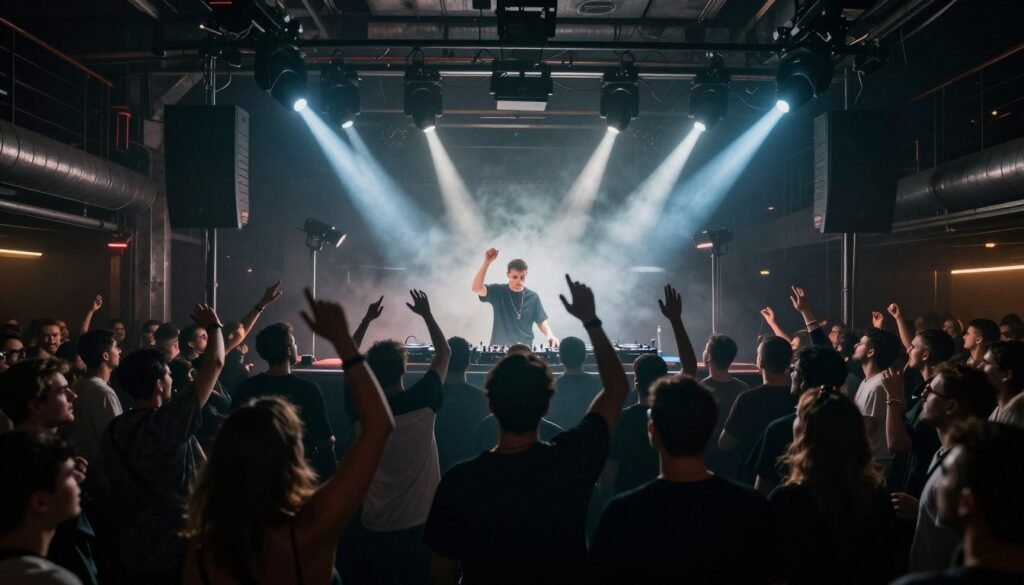
The Techno Scene: Berlin's Beating Heart
Techno music defines Berlin clubbing. The sound emerged from Detroit but found its spiritual home in post-reunification Berlin, where abandoned industrial spaces provided perfect venues for the hypnotic, pulsing beats. Berlin techno clubs are serious about music—minimal decoration, world-class sound systems, and DJs treated with reverence.
Berghain represents the apex of Berlin’s techno scene. Housed in a former power plant, this massive club operates essentially non-stop from Friday night through Monday morning. Getting past the notoriously selective door is a challenge—there’s no guaranteed strategy, but dress in black, be patient, speak German or don’t speak at all, and accept that rejection happens to everyone eventually.
Other essential techno clubs include Watergate (stunning location directly on the Spree River), Tresor (historic club that reopened in a power plant), ://about blank (raw and unpretentious), and Sisyphos (sprawling outdoor and indoor spaces with festival vibes). Most clubs have strict photo bans—cameras are taped over at the door, allowing ravers to lose themselves without social media documentation.
Club Culture Etiquette: Berlin clubs take their culture seriously. Dress in dark colors (no fancy dress or sportswear). Never take photos—this is strictly enforced. Don’t talk during DJ sets. Be respectful to door staff—arguing guarantees rejection. Bring cash (many clubs don’t accept cards). Expect thorough security checks. Most importantly, pace yourself—these are marathons, not sprints.
Berlin Pub Crawl: Social Nightlife Introduction
For those intimidated by Berlin’s serious techno clubs or simply wanting a more social nightlife experience, organized pub crawls offer a fun introduction to the city’s diverse bar scene. These tours visit multiple venues, provide drink specials, and help you meet fellow travelers.
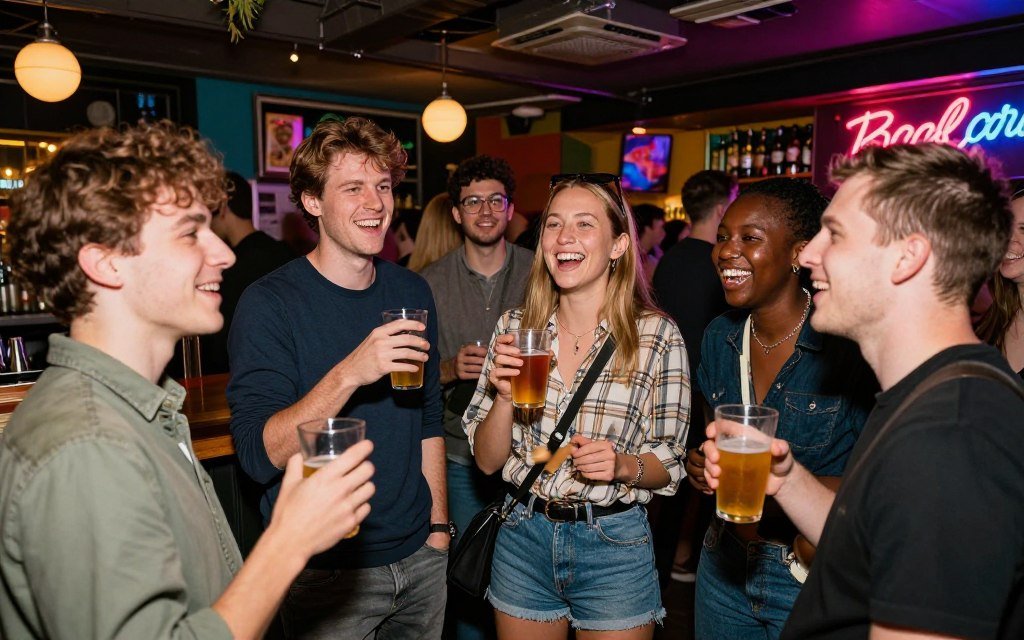
What to Expect
- 4-5 different bars/clubs in one night
- Welcome shots and drink specials
- Skip-the-line club entry
- English-speaking guides
- Groups of 20-50 people
- Meeting point in central Berlin
- Starts 9 PM, ends 2-3 AM
Included Benefits
- Free entrance to all venues
- Discounted drinks at stops
- Professional party photographer
- Drinking games and activities
- Local nightlife tips from guides
- Safe group environment
Pub crawls typically visit alternative bars in Kreuzberg or Friedrichshain, finishing at a popular club where the group enters without queue. This provides a taste of Berlin’s nightlife without the pressure of navigating alone or facing selective door policies.
2026 Tip: Several new pub crawl themes have launched including the “Cold War Bar Tour” (visiting historic bars in former East Berlin with history lessons between drinks) and the “Craft Beer & Street Art Crawl” combining microbrewery visits with graffiti tours.
Beyond Techno: Berlin's Diverse Nightlife
While techno dominates, Berlin’s nightlife encompasses much more. Jazz clubs, cocktail bars, live music venues, karaoke bars, and neighborhood Kneipen (traditional pubs) provide alternatives to the heavy club scene. The diversity ensures everyone can find their nightlife niche.
Cocktail Bars
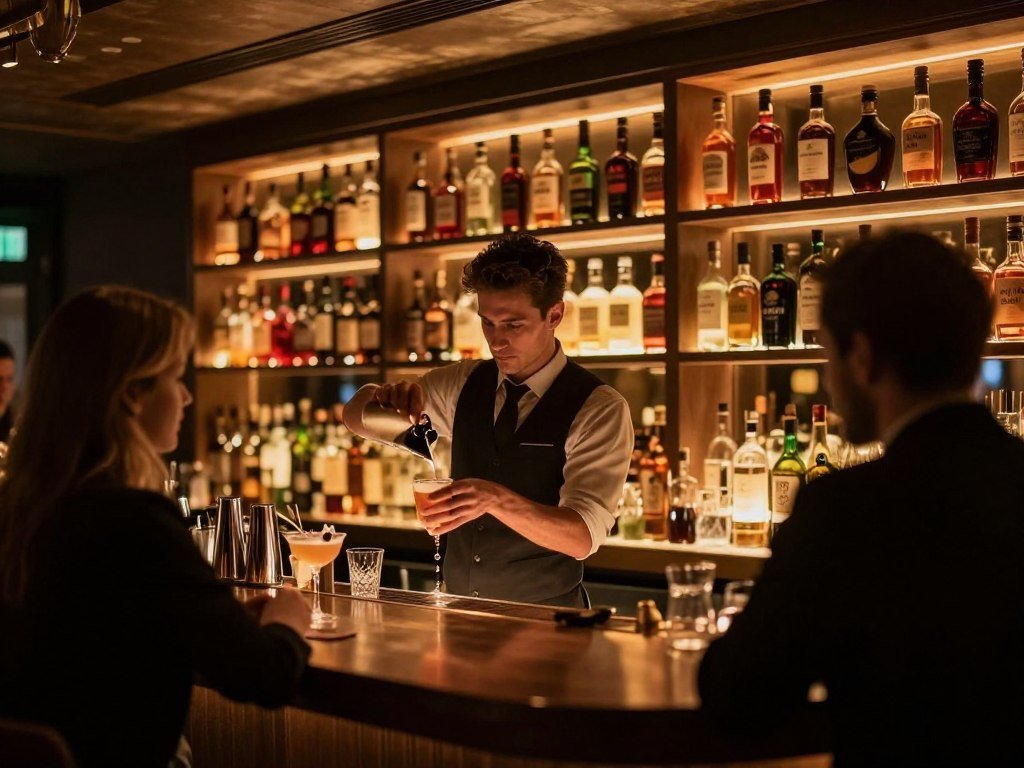
- Buck and Breck (speakeasy requiring reservations)
- Rum Trader (tropical tiki bar)
- Prinzipal (wine bar with natural wines)
- The Curtain Club at Ritz-Carlton
Live Music Venues
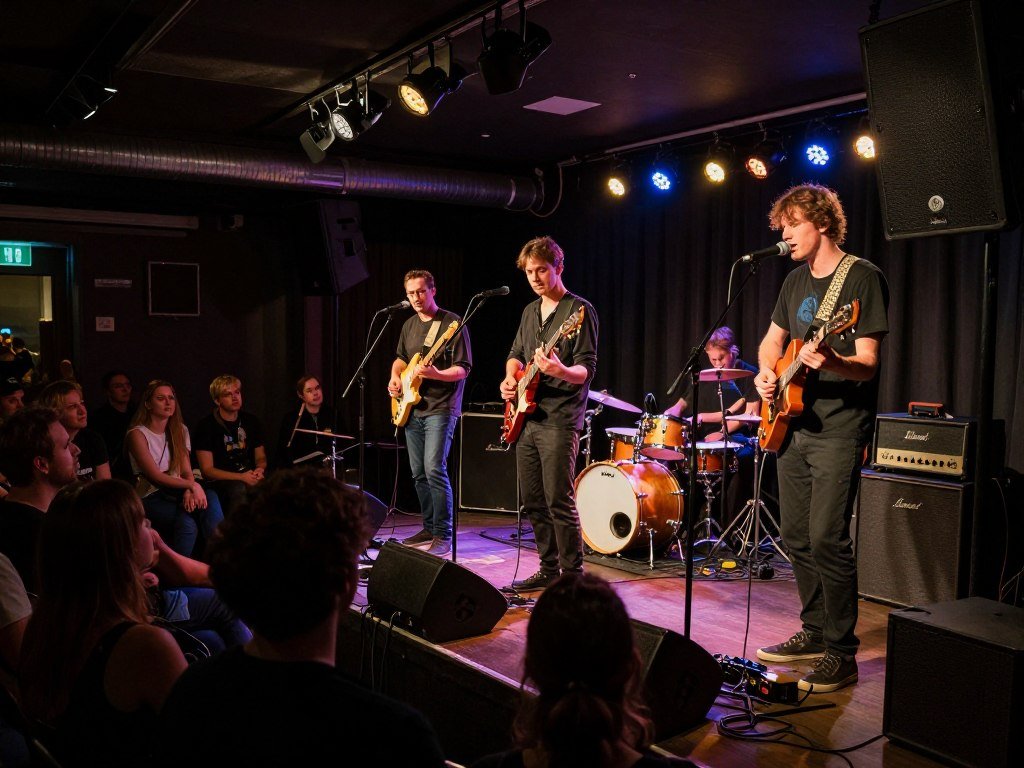
- Astra Kulturhaus (various genres)
- SO36 (punk and alternative)
- A-Trane (traditional jazz club)
- Lido (indie and electronic acts)
Traditional Pubs
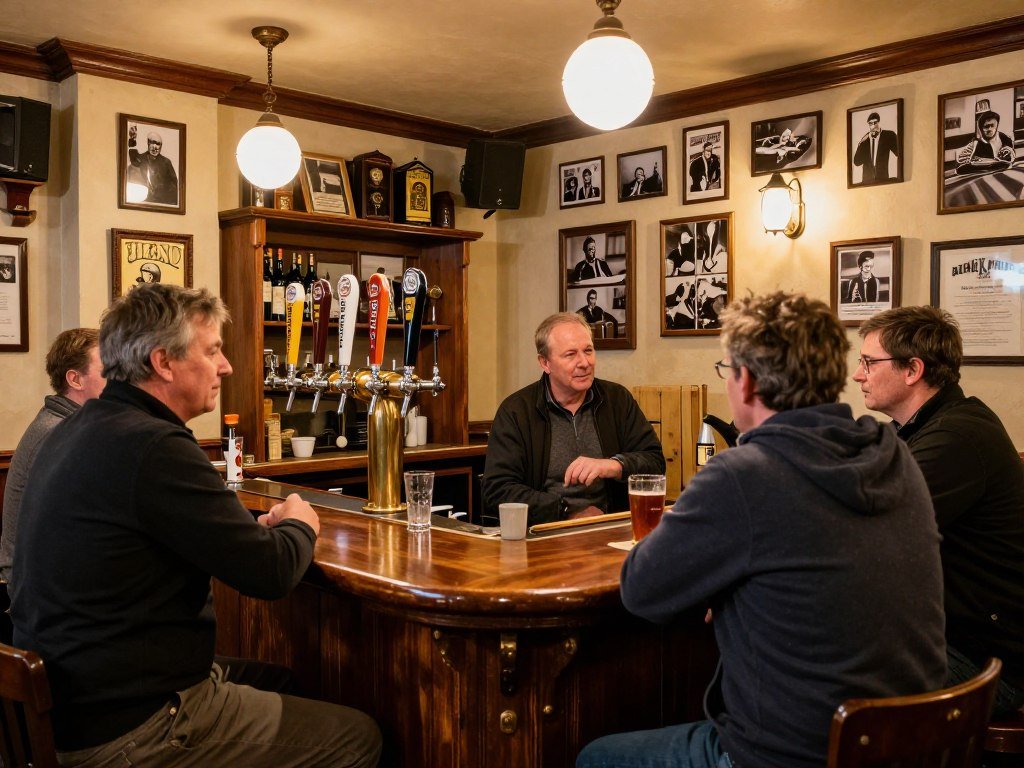
- Zum Schmutzigen Hobby (quirky decor)
- Mein Haus am See (lakeside ambiance)
- Frannz Club (live bands and DJs)
- Zur Kneipe (unpretentious local)
Day Trips from Berlin: Beyond the City
Berlin’s central location makes it an excellent base for day trips to surrounding Brandenburg attractions and even nearby countries. Several historically significant sites, charming towns, and natural areas lie within 30-90 minutes of the city, easily accessible by regional train or organized tour.
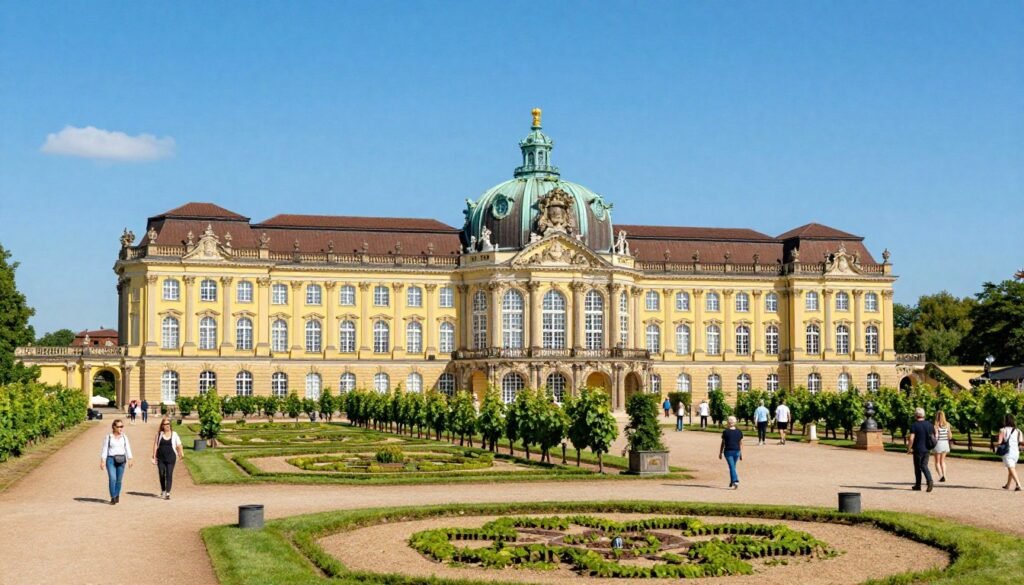
Potsdam: Prussia's Royal Residence
Just 30 minutes southwest of Berlin, Potsdam served as the residence of Prussian kings and German kaisers until 1918. The city is famous for its stunning palaces, manicured parks, and Dutch Quarter. Sanssouci Palace, the “Prussian Versailles,” is the star attraction with its terraced vineyard gardens and rococo interiors.
Sanssouci Park encompasses 290 hectares with multiple palaces, gardens, and follies. Beyond the main palace, explore the New Palace (Neues Palais), the Chinese House, the Roman Baths, and the extensive landscaped grounds. Spring brings tulips and cherry blossoms, while autumn colors are spectacular. Allow a full day to appreciate Potsdam properly.
The historic city center features the Dutch Quarter, where red-brick gabled houses create an Amsterdam-like atmosphere. Cecilienhof Palace, where the Potsdam Conference determined post-WWII Europe’s borders, now operates as a hotel and museum. The Filmmuseum celebrates Potsdam’s history as Germany’s Hollywood during the UFA studio era.
Guided Potsdam Day Tour with Sanssouci Palace
This comprehensive day tour from Berlin includes round-trip transportation, guided tour of Sanssouci Palace with skip-the-line entry, exploration of the palace gardens, and guided walking tour of Potsdam’s historic center including the Dutch Quarter.
- 6 hours total duration
- Small group maximum 20 people
- Skip-the-line palace entry (saves 60+ minutes in peak season)
- Professional English-speaking guide
- Round-trip train tickets from Berlin included
- Guided walk through Sanssouci Park
- Free time in Potsdam city center
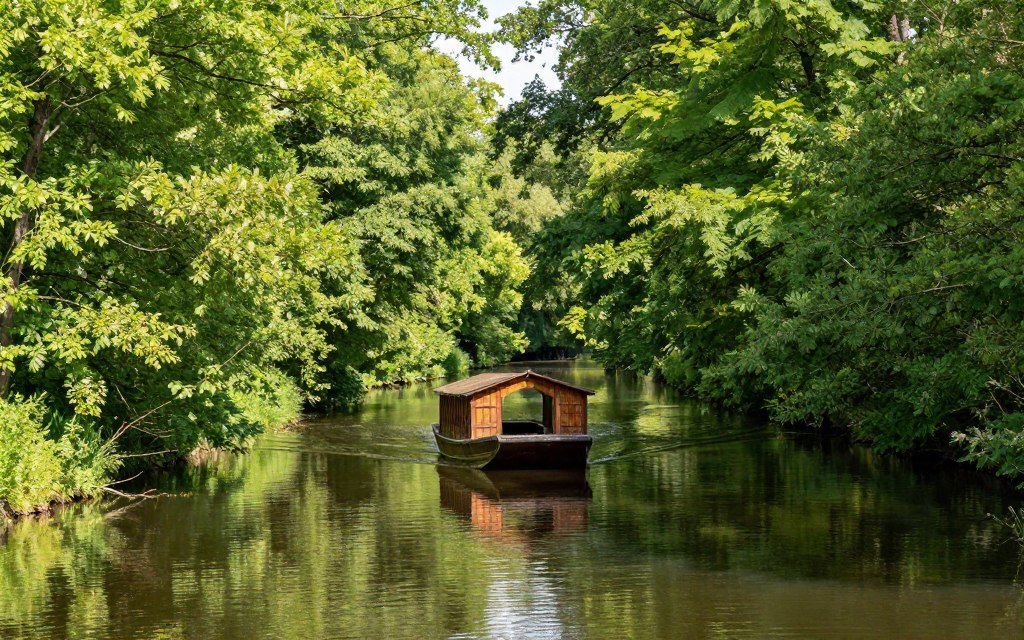
Spreewald: Venice of Brandenburg
The Spreewald, about 100 kilometers southeast of Berlin, is a UNESCO Biosphere Reserve featuring a maze of over 200 waterways winding through dense forest. Traditional flat-bottomed boats called “punts” navigate the narrow canals, delivering mail, transporting tourists, and maintaining the centuries-old way of life of the Sorbian people who inhabit this region.
Take a guided punt tour through the canals, gliding silently under overhanging trees and past traditional wooden houses. Tours last 60-90 minutes and depart from Lübbenau or Lübben. The region is famous for pickled cucumbers—Spreewald gherkins are a protected geographical designation. Sample them at waterside restaurants along with smoked fish and other regional specialties.
Active travelers can rent canoes or kayaks to explore independently. The flat landscape also makes excellent cycling territory, with well-marked trails connecting villages through the forest. Spring and summer are most popular, but autumn brings beautiful colors and fewer crowds. Winter sees parts of the canals freeze, enabling ice skating on selected routes.
Getting There: Regional trains run from Berlin to Lübbenau (90 minutes, €20 return with Brandenburg-Berlin ticket). The Brandenburg-Berlin ticket (€23) allows unlimited regional train and bus travel for one person, or up to 5 people traveling together on weekends. Buy tickets from machines at any station.
Shopping: From Luxury to Flea Markets
Berlin’s shopping scene reflects the city’s diversity, ranging from designer boutiques and department stores to vintage shops, independent designers, and sprawling flea markets. Each neighborhood offers distinct shopping experiences, whether you seek high fashion, unique vintage finds, or locally designed products.
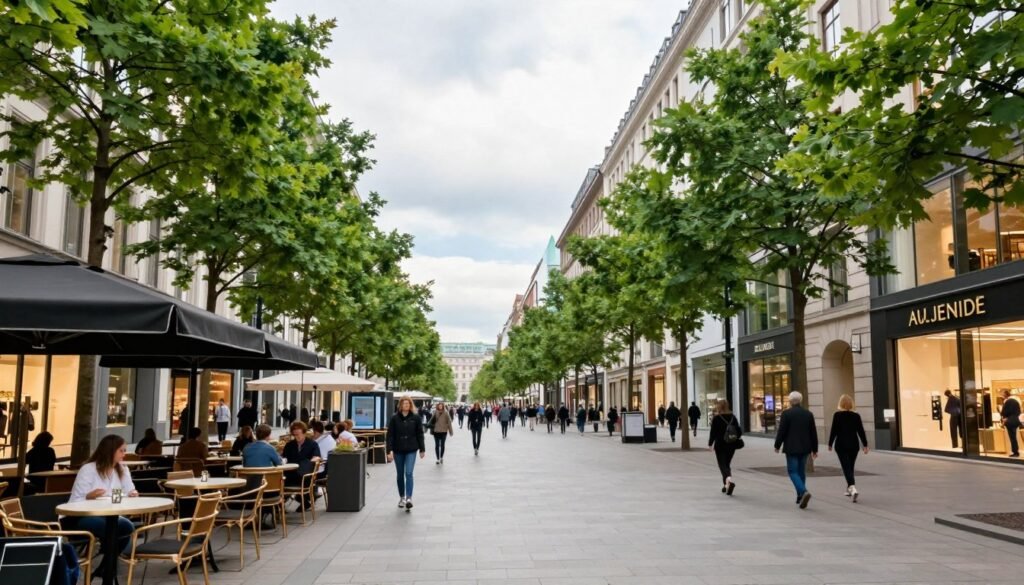
Kurfürstendamm: Luxury Shopping District
Kurfürstendamm, known as Ku’damm, is Berlin’s most famous shopping boulevard. This elegant 3.5-kilometer avenue in western Berlin features international luxury brands, department stores, designer boutiques, and flagship stores. The KaDeWe (Kaufhaus des Westens) department store anchors the district—one of Europe’s largest and most prestigious department stores.
KaDeWe’s sixth floor food hall is legendary, featuring gourmet delicacies from around the world, champagne bars, oyster counters, and a dazzling selection of chocolates, cheeses, and specialty foods. Even if you’re not shopping, the food hall is worth visiting as a culinary experience. The building’s architecture, with its historic facade and modern glass extensions, is impressive.
Beyond KaDeWe, Ku’damm hosts flagship stores for Hermès, Louis Vuitton, Gucci, Apple, and dozens of other international brands. Side streets like Fasanenstraße offer quieter browsing with art galleries, antiquarian bookshops, and jewelry boutiques. The Christmas market along Ku’damm in December is one of Berlin’s most elegant.
Berlin's Flea Market Scene
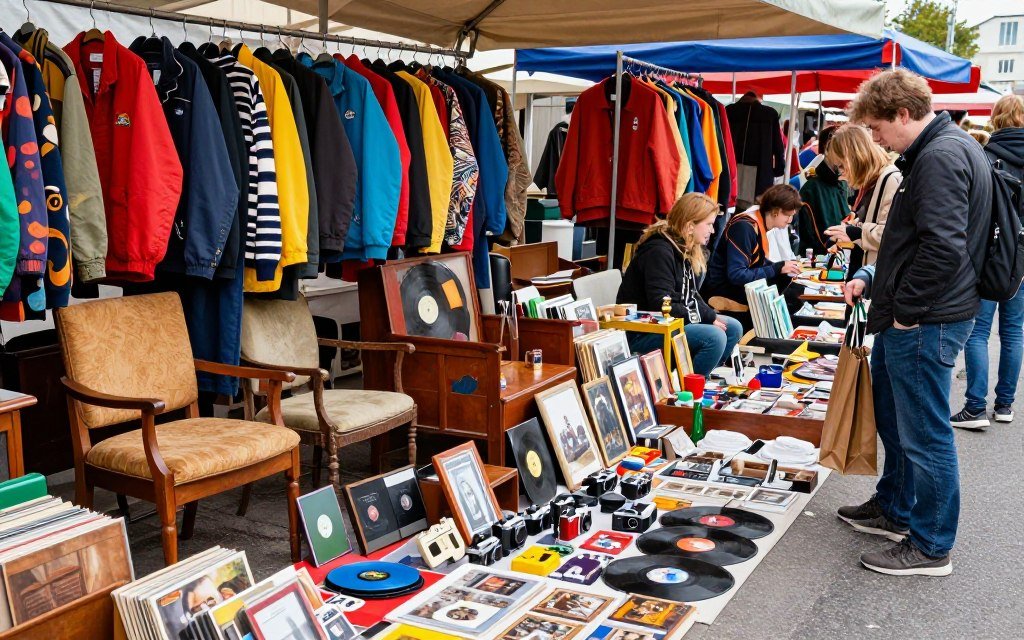
Flea markets are integral to Berlin culture, offering treasure hunting opportunities every weekend across the city. Markets range from high-end antiques to budget-friendly junk, from carefully curated vintage clothing to random household items. The browsing experience and lively atmosphere make flea markets entertaining even if you don’t purchase anything.
| Market Name | Location | When | Specialty | Atmosphere |
| Mauerpark | Prenzlauer Berg | Sunday 9 AM-6 PM | General vintage, clothing, records | Touristy, large, crowded, great people-watching |
| Arkonaplatz | Prenzlauer Berg | Sunday 10 AM-5 PM | Antiques, art, books | Local favorite, relaxed, quality items |
| Boxhagener Platz | Friedrichshain | Sunday 10 AM-6 PM | Clothing, accessories, handmade | Hip, young crowd, affordable prices |
| Nowkoelln Flowmarkt | Neukölln | 4th Sunday monthly | Design, vintage, handmade items | Curated, creative, local designers |
| RAW Flohmarkt | Friedrichshain | Sunday 9 AM-6 PM | Everything from junk to treasure | Raw, authentic, underground vibe |
| Turkish Market | Kreuzberg | Tuesday & Friday 11 AM-6:30 PM | Food, spices, textiles, housewares | Vibrant, multicultural, sensory overload |
Flea Market Tips: Arrive early (9-10 AM) for best selection before picked over. Bring cash—most vendors don’t accept cards. Bargaining is expected—start at 50-60% of asking price. Bring reusable bags for carrying purchases. Check items carefully before buying (no returns). Best finds: vintage cameras, vinyl records, GDR memorabilia, retro clothing, old books and maps.
Independent Boutiques and Local Designers
Berlin’s independent fashion scene thrives in neighborhoods like Mitte, Prenzlauer Berg, and Kreuzberg. Local designers operate small boutiques showcasing Berlin-designed clothing, accessories, and jewelry. These shops offer unique pieces you won’t find elsewhere, often with the designer present to discuss their work.
Mitte Design Shops
- Andreas Murkudis (high-end concept store)
- The Store Berlin (art and fashion)
- Soto Store (minimalist aesthetic)
- Voo Store (streetwear and design)
Kreuzberg Vintage
- Humana (charity vintage chain)
- Vintage Galore (curated selection)
- Made in Berlin (local designers)
- Colours (vintage Levi’s specialist)
Prenzlauer Berg
- Bonbonmacherei (handmade candies)
- Thatchers (curated homeware)
- Kollektiv (local designer collective)
- Lunettes Selection (optical boutique)
Unique Experiences: Only in Berlin
Beyond standard sightseeing, Berlin offers quirky, unusual, and distinctly local experiences that capture the city’s alternative spirit. These activities range from underground tours to unconventional museums, from techno-yoga to dinner in complete darkness. They represent the creativity and willingness to experiment that defines modern Berlin.
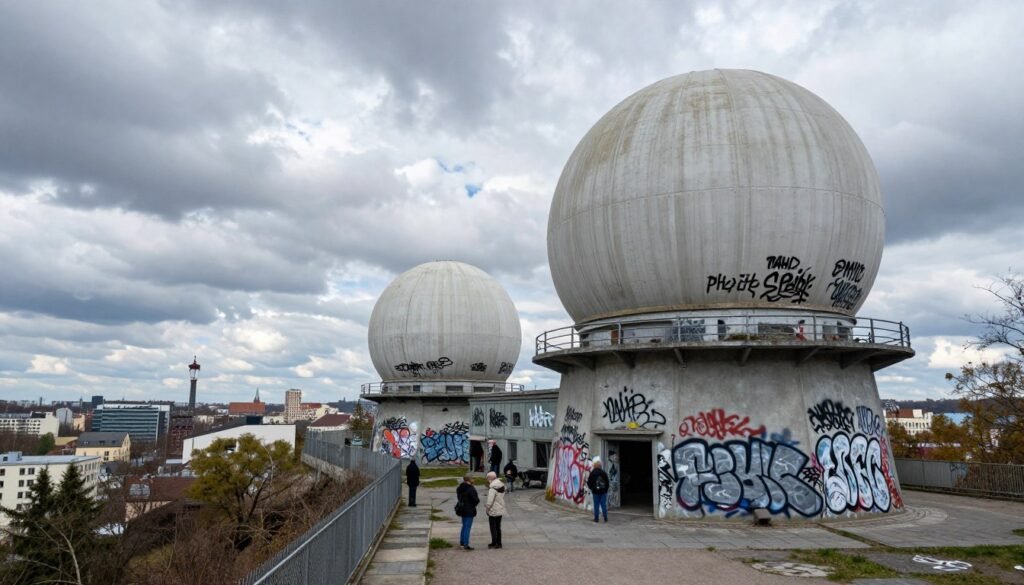
Teufelsberg: Cold War Spy Station Turned Art Space
Teufelsberg (Devil’s Mountain) is an artificial hill in Grunewald forest, built from 25 million cubic meters of WWII rubble. During the Cold War, the US National Security Agency operated a listening station atop the hill, using the massive radomes (radar domes) to intercept Soviet communications. After reunification, the abandoned station became a graffiti paradise and illegal party location.
Today, guided tours explore the derelict buildings, explaining the spy station’s history while showcasing the incredible street art that now covers every surface. From the observation platform, panoramic views extend across Berlin’s skyline and surrounding forests. The juxtaposition of Cold War history and contemporary graffiti art creates a uniquely Berlin experience.
Tours run daily (weather permitting) and last 90 minutes. Wear sturdy shoes—the site involves climbing stairs in deteriorating buildings. Photography is encouraged throughout. Some tours conclude with sunset viewing from the highest radome, offering spectacular golden-hour photo opportunities. Booking ahead is recommended, especially for weekend tours.
2026 Update: Teufelsberg Tours has expanded in 2026 with new “Cold War Technology” specialized tours led by former intelligence analysts, “Street Art Masterclass” workshops with professional graffiti artists, and Friday evening “Sunset & Sounds” tours combining site exploration with live electronic music performances. Tours cost €15-25 depending on type.
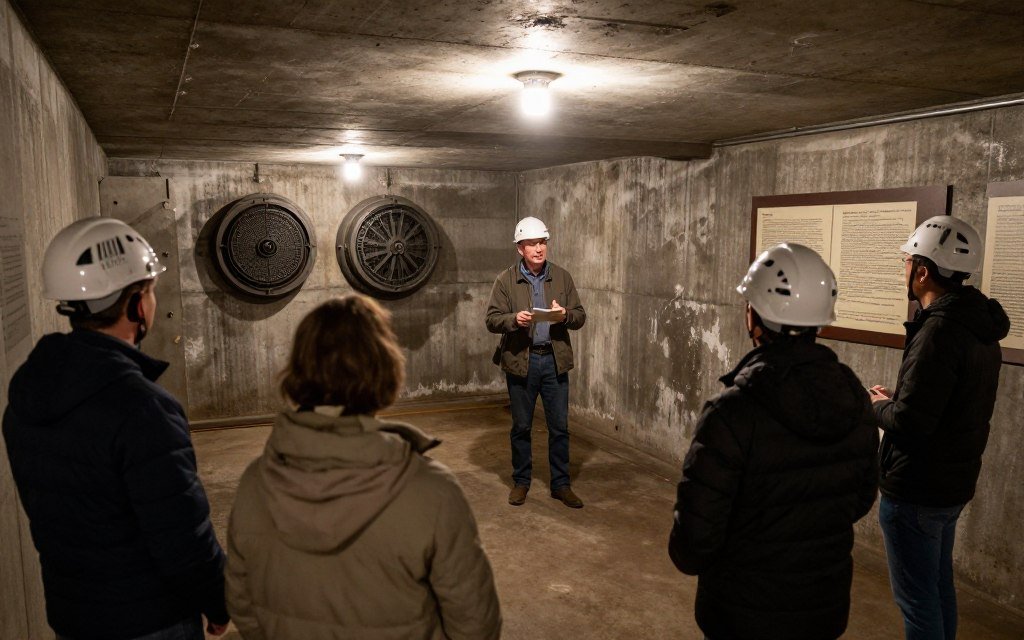
Berliner Unterwelten: Underground Berlin Tours
Berliner Unterwelten (Berlin Underworlds) operates fascinating tours through the city’s extensive underground structures. Berlin’s subterranean world includes WWII air raid shelters, Cold War nuclear bunkers, abandoned subway tunnels, escape tunnels under the Berlin Wall, and historic brewery cellars. These tours reveal hidden layers of history literally beneath your feet.
The most popular tour, “Dark Worlds,” explores a massive WWII air raid bunker beneath Gesundbrunnen U-Bahn station. The guide explains how Berliners sought shelter during Allied bombing raids, the bunker’s design and capacity, and what survival was like in these claustrophobic spaces. Original artifacts, period photographs, and reconstructed scenes bring the history vividly to life.
Other tours include “Subways and Bunkers in the Cold War” (examining nuclear fallout shelters), “Mother and Child Bunker” (exploring protected rooms for pregnant women and young children), and specialized tours about Berlin Wall escape tunnels. All tours are guided-only—you cannot explore independently. Tours run in German and English; advance booking is essential as they sell out days ahead.
Booking Information
- Book online 7-14 days before visit
- Tours €15-17 per person
- Duration: 90 minutes
- Multiple departure times daily
- Meeting point: Gesundbrunnen station
- Tours conducted rain or shine
- Not wheelchair accessible
What to Expect
- Temperature underground: 10-12°C (50-54°F)
- Bring warm jacket even in summer
- Wear sturdy closed-toe shoes
- Some climbing of steep stairs
- Not suitable for claustrophobic individuals
- Photography allowed without flash
- Fascinating and educational experience
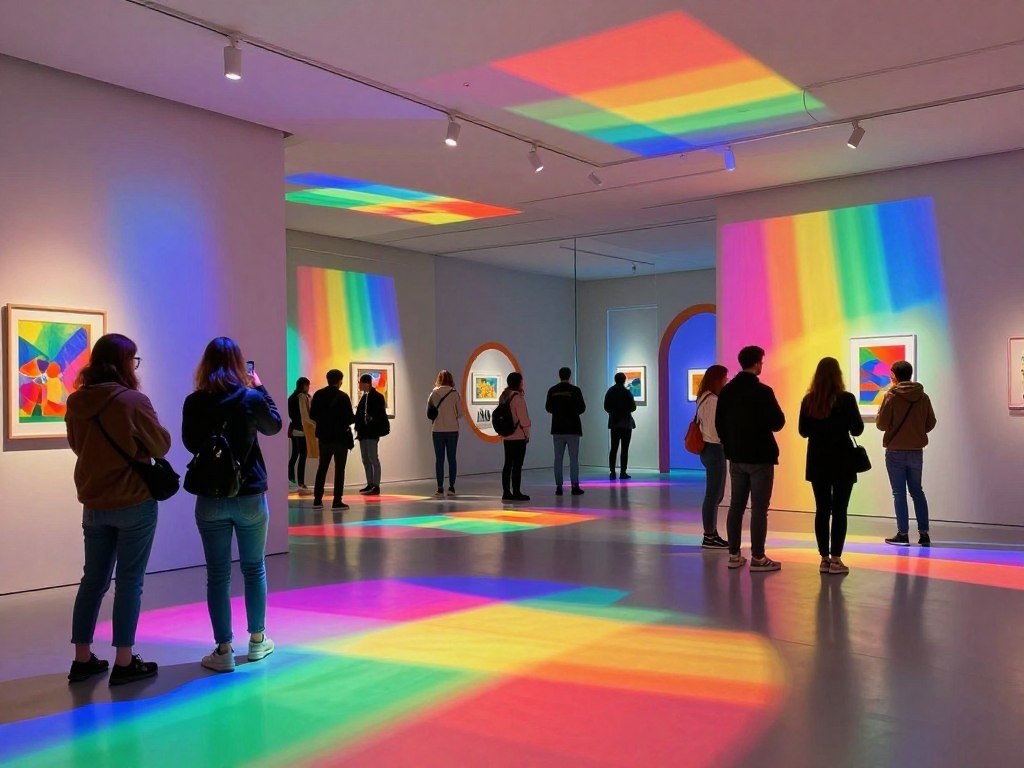
IKONO Berlin: Immersive Art Experience
IKONO Berlin offers an Instagram-worthy journey through interactive art installations. Over 20 themed rooms feature mirror mazes, infinity rooms, optical illusions, and playful setups perfect for creative photography. It’s lighthearted fun rather than serious art, popular with groups and families.
- 60-90 minute self-guided experience
- Unlimited photo opportunities
- All installations interactive
- Perfect for social media content
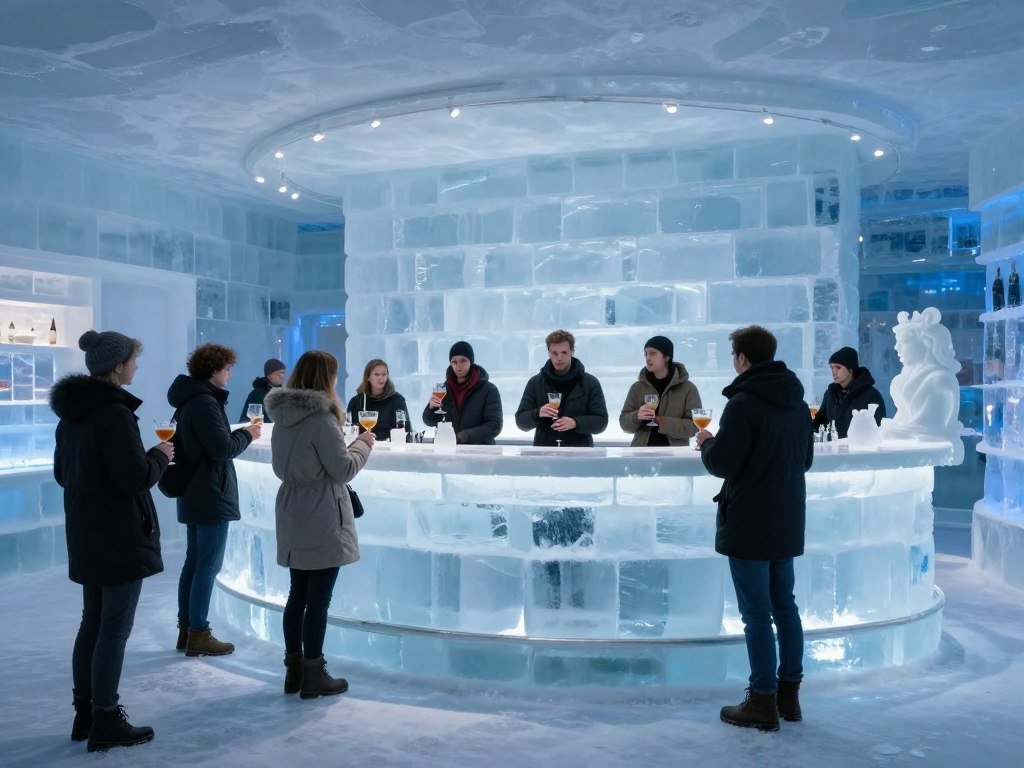
Berlin Icebar Experience
Enter a bar where everything—walls, bar counter, seating, and drinking glasses—is carved from ice. The temperature is maintained at -10°C (14°F). Warm parkas and gloves are provided. Admission includes three cocktails served in ice glasses. It’s kitschy, touristy, and surprisingly fun.
- 45-minute session in -10°C environment
- Three included cocktails
- Winter gear provided
- Great for group celebrations
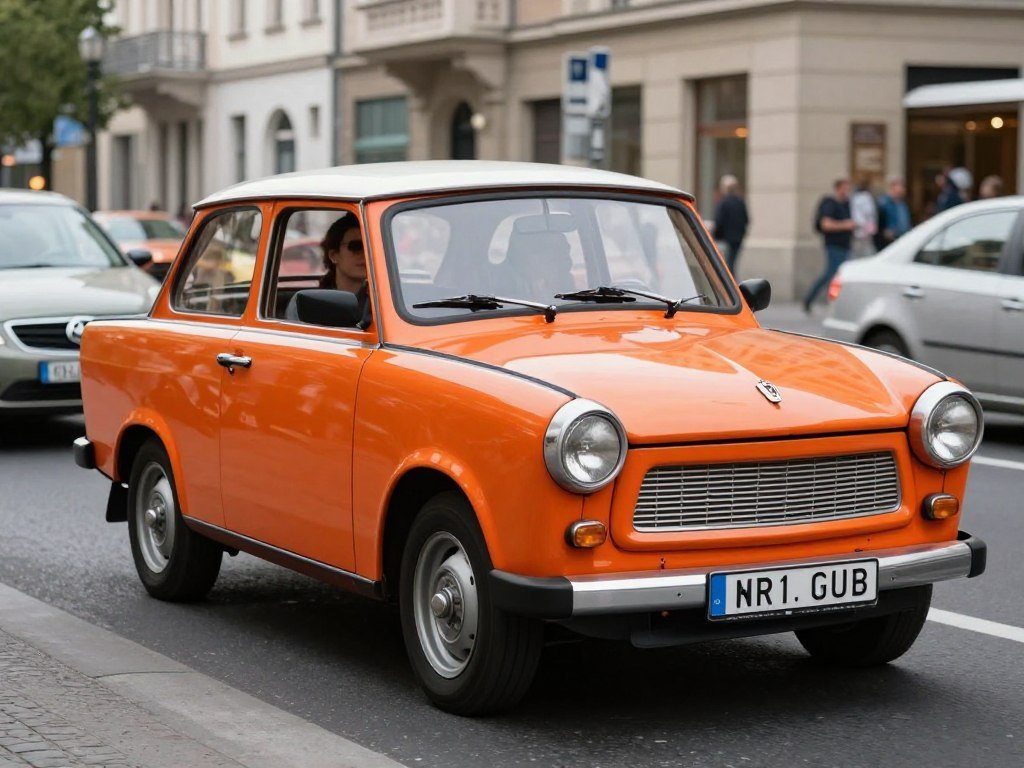
Trabant Safari Tour
Drive a genuine Trabant, the iconic East German car, through Berlin’s streets on this guided convoy tour. The “Trabi” was famous for its plastic body, two-stroke engine, and 10-year waiting list in the GDR. Now you can experience this quirky vehicle while touring Berlin landmarks.
- 75-minute guided driving tour
- Drive your own Trabant (manual transmission)
- Convoy follows lead vehicle
- Valid driver’s license required
Seasonal Events and Festivals in 2026
Berlin’s event calendar bursts with festivals, cultural celebrations, and seasonal happenings throughout the year. The city hosts everything from massive outdoor music festivals to intimate gallery openings, from traditional Christmas markets to avant-garde performance art. Planning your visit around specific events can enhance your Berlin experience significantly.
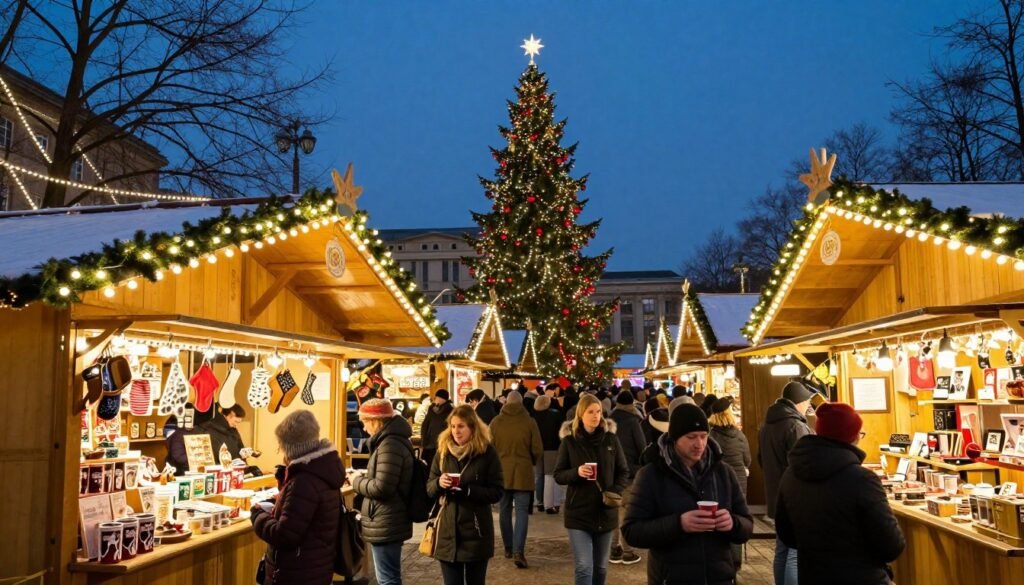
Berlin Christmas Markets (November-December 2026)
Berlin transforms into a winter wonderland during the Christmas season, with over 80 Christmas markets scattered across the city. These markets, called Weihnachtsmärkte, offer handcrafted gifts, traditional decorations, seasonal treats like stollen and lebkuchen, and plenty of glühwein (mulled wine) to ward off the cold.
The Gendarmenmarkt Christmas Market is widely considered Berlin’s most beautiful, set in the stunning square between the French and German Cathedrals and the Concert Hall. Admission costs €1, which keeps crowds slightly smaller. The market features high-quality crafts, gourmet food stalls, and live classical music performances. The lighting creates magical ambiance after dark.
Other notable markets include the traditional market at Breitscheidplatz beside the Kaiser Wilhelm Memorial Church, the alternative “Holy Shit Shopping” market in Kreuzberg with edgy crafts and irreverent attitude, and the medieval market at Alexanderplatz complete with knights, falconry demonstrations, and period costumes. Markets typically run from late November through December 23rd.
- Gendarmenmarkt (most elegant)
- Charlottenburg Palace (romantic setting)
- Alexanderplatz (medieval themed)
- Breitscheidplatz (traditional)
Classic Markets
- RAW Gelände (industrial atmosphere)
- Holy Shit Shopping (edgy crafts)
- Winterfeldt Market (LGBTQ+ friendly)
- Lucia Christmas Market (Scandinavian)
Alternative Markets
- Potsdamer Platz (winter wonderland)
- Kulturbrauerei (traditional activities)
- Spandau (local charm)
- Opernpalais (carousel and shows)
Family-Friendly
Major 2026 Events to Plan Around
| Event | Date 2026 | Description | Why Attend |
| Berlinale Film Festival | February 13-23 | Europe’s largest film festival screening 400+ films from around the world | Star sightings, premiere screenings, industry buzz, cultural prestige |
| Karneval der Kulturen | May 29-June 1 | Multicultural street festival celebrating Berlin’s diversity with parade, music, food | Vibrant costumes, live performances, international cuisine, joyful atmosphere |
| Fête de la Musique | June 21 | Free concerts throughout the city on the summer solstice, all genres | Free music everywhere, discover new artists, perfect summer celebration |
| Christopher Street Day | July 25 | Berlin’s Pride parade and LGBTQ+ celebration, one of Europe’s largest | Massive parade, inclusive atmosphere, celebration of diversity and rights |
| Berlin Festival of Lights | October 9-18 | Historic buildings and monuments illuminated with spectacular light projections | Stunning visual displays, free to view, transforms the city, excellent photos |
| Berlin Marathon | September 27 | World’s fastest marathon course, 45,000+ runners through city streets | Electric atmosphere, free to watch, see world-class athletes, party zones |
| New Year’s Eve at Brandenburg Gate | December 31 | Massive outdoor party with live music, fireworks, celebrating the new year | Epic celebration, free entry, unforgettable experience, Berlin at its best |
2026 Special Event: Berlin celebrates the 35th anniversary of German reunification with special exhibitions, concerts, and events throughout October 2026. Major installations along the former wall path, documentary screenings, and speeches from political figures mark this significant milestone. Many events are free and open to the public.
Practical 2026 Travel Advice: Planning Your Visit
Successfully navigating Berlin requires some practical knowledge about transportation, accommodation, budgeting, and local customs. The city is remarkably tourist-friendly, but understanding a few key points will make your visit smoother and more enjoyable. Here’s essential information for planning your 2026 Berlin adventure.
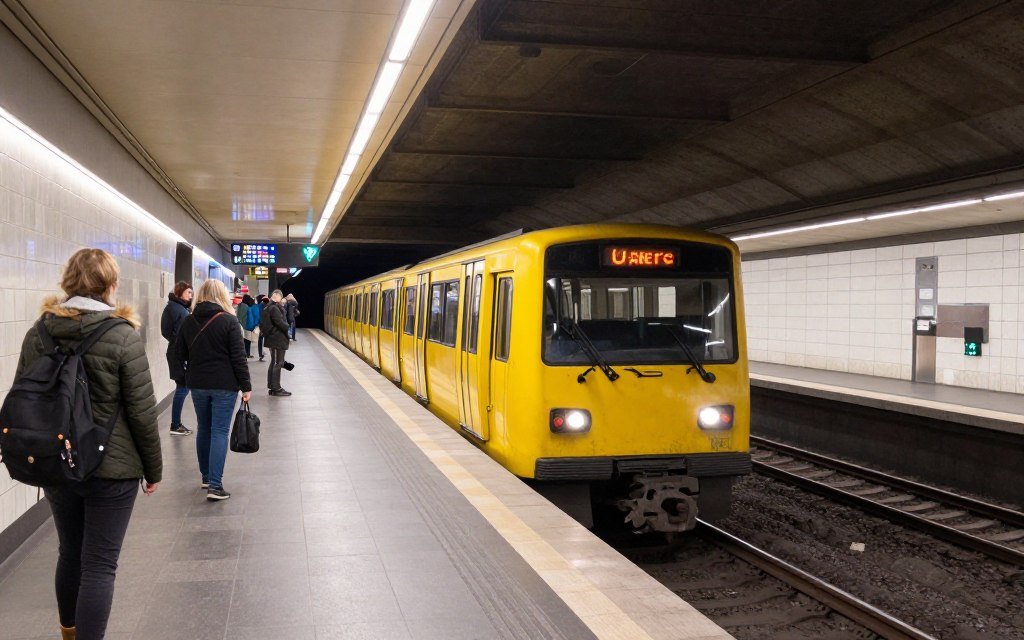
Getting Around: Public Transport Mastery
Berlin’s public transport system (BVG) is extensive, efficient, punctual, and reasonably priced. The network consists of U-Bahn (underground subway), S-Bahn (overground metro), buses, trams, and ferries, all operating on an integrated ticketing system. With the right ticket, you can seamlessly transfer between all transport modes.
The city is divided into zones: AB covers all central areas including major attractions, while zone C extends to outlying areas including Potsdam and Schönefeld Airport. Most visitors need only AB tickets. Single tickets (€3.20 in 2026) are valid for 2 hours of travel in one direction with unlimited transfers. Day tickets (€9.50) offer better value if making 3+ journeys.
For longer stays, the 7-day ticket (€41) provides unlimited travel for a week. The Welcome Card combines unlimited transport with discounts at museums and attractions (€35 for 48 hours, €45 for 72 hours, €59 for 5 days). Purchase tickets from machines at stations—they accept coins, bills, and cards. Always validate your ticket before boarding or face €60 fines from inspectors.
Public Transport Advantages
- Extensive coverage across entire city
- Runs 24/7 on weekends (night buses weekdays)
- Frequent service every 5-10 minutes
- Clean, safe, and reliable
- Much cheaper than taxis/Uber
- Environmentally sustainable choice
- Avoid parking hassles and costs
Things to Know
- Must validate ticket before boarding
- Ticket inspectors fine €60 if caught without valid ticket
- Some delays during rush hour (7-9 AM, 5-7 PM)
- Crowded during peak times
- Station names can be confusing (similar names, German spellings)
- Not all stations have elevators (stairs with luggage)
Where to Stay: Neighborhood Guide
Choosing the right neighborhood significantly impacts your Berlin experience. Central districts like Mitte offer proximity to major sights but come with higher prices and more tourists. Alternative neighborhoods provide authentic local atmosphere, better value, and excellent nightlife at the cost of slightly longer commutes to tourist attractions.
Mitte
- Most central location
- Walking distance to main sights
- Excellent restaurant selection
- Higher accommodation prices
- More tourists, less local feel
- Best for first-time visitors
Kreuzberg
- Alternative, multicultural atmosphere
- Excellent Turkish food
- Great nightlife and bars
- Street art everywhere
- Good value accommodation
- Slightly gritty character
Friedrichshain
- Young, creative vibe
- East Side Gallery nearby
- Legendary club scene
- Budget-friendly options
- Excellent public transport
- Can be noisy at night
Prenzlauer Berg
- Quieter, residential feel
- Family-friendly atmosphere
- Beautiful architecture
- Great cafés and brunches
- Higher prices
- Less nightlife action
Budgeting for Berlin 2026
Berlin remains one of Europe’s most affordable major capitals, though prices have risen in recent years. Budget travelers can comfortably experience the city for €50-70 per day, mid-range travelers should budget €100-150, while luxury travelers might spend €200+ daily. These estimates include accommodation, food, transport, and activities.
| Category | Budget | Mid-Range | Luxury |
| Accommodation (per night) | €20-40 (hostel dorm) | €70-120 (hotel/apartment) | €150-300+ (4-5 star hotel) |
| Food (per day) | €15-25 (street food, supermarkets) | €35-50 (casual restaurants) | €80-150+ (fine dining) |
| Transport (per day) | €9.50 (day ticket) | €9.50-15 (day ticket + occasional taxi) | €30-60 (taxis/private car) |
| Activities/Attractions | €5-15 (free sites, budget tours) | €20-40 (museum pass, tours) | €60-100+ (private tours, premium experiences) |
| Nightlife/Entertainment | €10-20 (clubs, cheap bars) | €30-50 (concerts, nice bars) | €80-150+ (VIP clubs, cocktail bars) |
| Daily Total | €60-100 | €165-275 | €400-700+ |
Money-Saving Tips: Take advantage of free attractions (Brandenburg Gate, Holocaust Memorial, East Side Gallery, parks). Buy groceries from discount supermarkets (Aldi, Lidl, Netto) for picnic lunches. Happy hour deals at bars (typically 5-7 PM). Museum Pass Berlin (€32) saves money if visiting 3+ museums. Avoid touristy restaurants near major sights—walk 5 minutes away for better prices and quality.
Essential Berlin Etiquette and Cultural Notes
Berlin has its own cultural quirks and unwritten rules. Understanding basic etiquette helps you blend in and avoid unintentional faux pas. Berliners have a reputation for directness that can seem rude to visitors from more indirect cultures, but it’s simply efficient communication, not hostility.
Do's
- Stand right, walk left on escalators
- Bring your own bags for grocery shopping
- Greet shop staff when entering (“Guten Tag”)
- Be punctual for reservations and tours
- Recycle properly (color-coded bins)
- Respect quiet hours (10 PM-7 AM, Sundays)
- Join the Ampelmännchen cult (wait for green pedestrian light)
- Try to speak basic German (effort is appreciated)
- Carry cash (many places still don’t accept cards)
Don'ts
- Don’t jaywalk in front of police
- Don’t compare Berlin to Munich (rivalry)
- Don’t expect Sunday shopping (most closed)
- Don’t shout or be overly loud in public
- Don’t take photos in clubs (strictly forbidden)
- Don’t sit/climb on Holocaust memorial
- Don’t assume everyone speaks English (though most do)
- Don’t tip less than 5-10% in restaurants
- Don’t block bike lanes with walking
2026 Sustainability Note: Berlin has accelerated its green initiatives in 2026. The city center now has expanded low-emission zones. More bike lanes have been added, and e-scooters are ubiquitous. Many hotels have eliminated single-use plastics. Consider staying in certified sustainable accommodations, using public transport/bikes, and supporting businesses with environmental commitments.
Start Planning Your 2026 Berlin Adventure
You’ve discovered the ultimate guide to things to do in Berlin in 2026. Now it’s time to turn this inspiration into reality. Whether you’re booking tours, reserving accommodation, or finalizing your itinerary, we’re here to help make your Berlin trip unforgettable.
Book Your Tours Now
Secure your spots on Berlin’s most popular tours with early-bird 2026 pricing. Skip-the-line access, expert guides, and flexible cancellation policies ensure peace of mind for your future travel.
- Walking tours from €24
- Food tours from €118
- Day trips from €36
- Free cancellation available
Find Your Perfect Accommodation
From budget hostels in Friedrichshain to luxury hotels in Mitte, secure your Berlin base now. Early booking guarantees best selection and prices for 2026 travel.
- Compare 1,000+ properties
- Neighborhood guides included
- Verified guest reviews
- Best price guarantee
Custom Itinerary Planning
Want a personalized Berlin itinerary tailored to your interests, budget, and travel style? Our local experts craft custom day-by-day plans that maximize your time in the city.
- Personalized recommendations
- Detailed daily schedules
- Restaurant reservations
- Insider local knowledge
Your 2026 Berlin Journey Awaits
Berlin in 2026 stands poised to offer one of the most dynamic, diverse, and unforgettable urban experiences in the world. This city has mastered the art of honoring its complex history while embracing an innovative, forward-looking future. From the sobering memorials that ensure “never again” to the relentless creativity pulsing through its nightclubs, galleries, and streets, Berlin delivers experiences that challenge, inspire, and transform visitors.
The things to do in Berlin extend far beyond this comprehensive guide. Every neighborhood reveals new discoveries, every visit uncovers different layers, and every season brings fresh experiences. The city rewards exploration, curiosity, and open-mindedness. Whether you’re drawn to world-class museums, cutting-edge food scenes, legendary nightlife, or simply the unique energy that makes Berlin unlike anywhere else, this city will exceed your expectations.
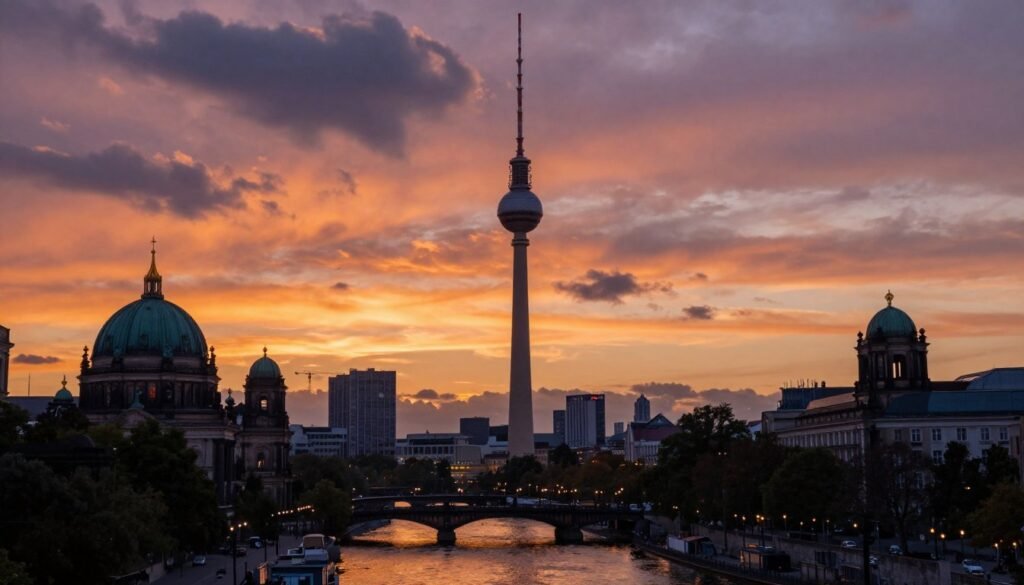
As you plan your 2026 Berlin adventure, remember that this guide provides a foundation, not limitations. The city’s greatest joy comes from unexpected discoveries—the unmarked bar down a dark alley, the impromptu street performance, the conversation with a local that reveals a hidden gem, the moment when Berlin’s special magic reveals itself in ways guidebooks cannot capture.
Berlin has rebuilt itself multiple times from literal and figurative rubble, always emerging stronger, more creative, and more welcoming. The city embodies resilience, freedom, and possibility. Whatever brings you to Berlin in 2026—history, art, music, food, nightlife, or simply curiosity—you’ll leave with stories to tell and a desire to return. This is not just a city to visit; it’s a city that stays with you long after you’ve left.
Start planning now, book early for best availability, but leave room for spontaneity in your itinerary. Berlin rewards those who wander off the planned path. See you in 2026. Berlin is waiting.
