
Nuremberg stands as one of Bavaria’s most captivating destinations. This city offers layers of experience that few European destinations can match. From the imposing medieval castle overlooking cobblestone streets to the sobering courtrooms where history was made after World War II, every corner tells a story worth hearing.
The city reveals itself slowly to those who take time to explore. Walk through the Altstadt and you will find authentic Bratwurst stands beside centuries-old churches. Visit in winter and the famous Christmas market transforms the main square into a wonderland of lights and gingerbread. Come in summer and beer gardens fill with locals enjoying the warm Bavarian evenings.
This guide covers everything you need to experience the city properly. We will explore the castle that dominates the skyline, walk through the Nazi party rally grounds that remind us of darker times, taste the foods that define Franconian cuisine, and discover the neighborhoods where locals actually spend their time. Whether you have one day or one week, these recommendations will help you see Nuremberg beyond the typical tourist experience.
Exploring Nuremberg Old Town: Medieval Architecture and Historic Squares
The heart of Nuremberg beats within its old town walls. This medieval center survived reconstruction after World War II bombings destroyed ninety percent of the historic buildings. Today, the Altstadt represents one of Germany’s most impressive restoration projects, bringing back the character of a city that once served as the unofficial capital of the Holy Roman Empire.
Hauptmarkt: The Central Market Square
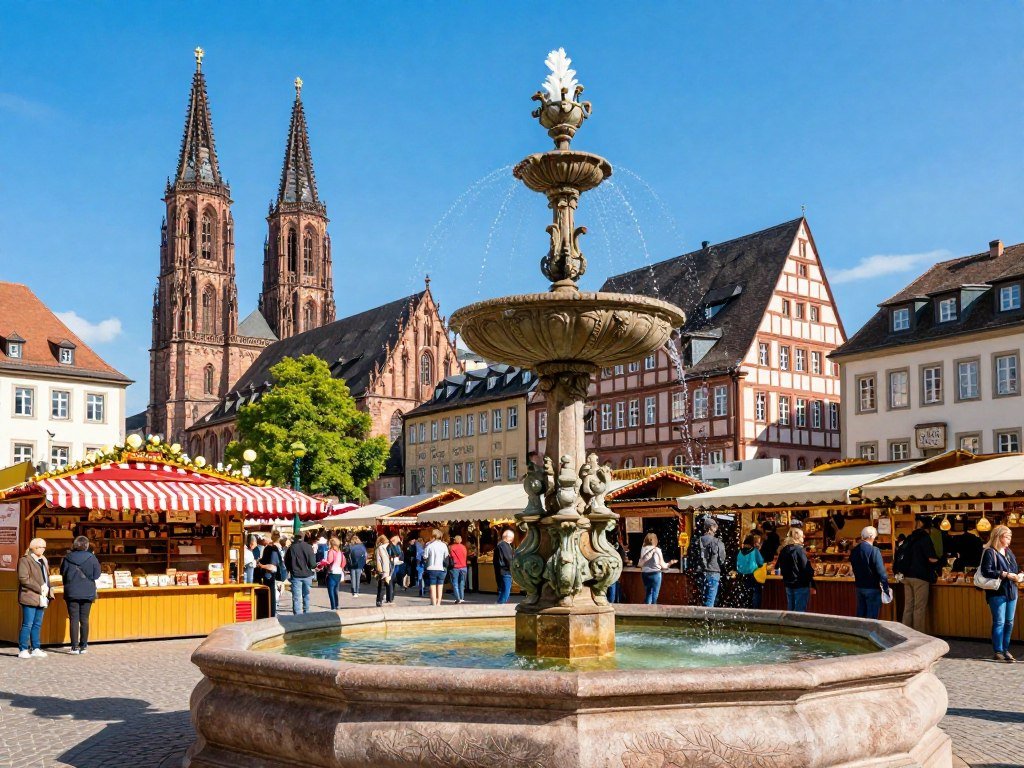
Hauptmarkt serves as the social and commercial center of the old town. Every day except Sunday, vendors set up striped red and white tents selling fresh produce, local cheese, honey, and regional specialties. The market has operated in this location since the fourteenth century, though the surrounding buildings were reconstructed after the war.
The square stretches large enough to accommodate the famous Nuremberg Christmas market, which draws over two million visitors annually during the holiday season. The Schöner Brunnen, a nineteen-meter Gothic fountain, rises from the center of the square. Local tradition says turning the brass ring on its fence three times grants wishes. Most tourists line up at the obvious ring, but locals know to seek the identical ring on the opposite side facing Frauenkirche.
Market vendors worth seeking out include the cheese seller who only appears Friday and Saturday mornings, offering German-style cheesecake varieties. A local beekeeper sets up Friday and Saturday with honeycomb and regional honey varieties. During summer months, a Demeter cart appears Friday mornings with organic vegetables and greens sourced from nearby farms.
Frauenkirche: Church of Our Lady
The Church of Our Lady dominates the eastern side of Hauptmarkt. Built in the fourteenth century under Emperor Charles IV, the church features elaborate Gothic decoration including coats of arms representing the Holy Roman Empire, the seven Electors, Nuremberg, and Rome. The structure served imperial ceremonies during its early centuries.
The west facade showcases the Männleinlaufen, a mechanical clock that comes alive daily at noon. Seven figurines representing the prince-electors circle around Emperor Charles IV, commemorating the Golden Bull of 1356. Visitors gather each midday to watch the performance, which includes bell chimes and the moving figures.
During the Christmas market season, the Christkind appears on the church balcony to read the market prologue, officially opening the festivities. This tradition draws large crowds and marks the beginning of Nuremberg’s most celebrated season.
Weißgerbergasse: The Photogenic Lane
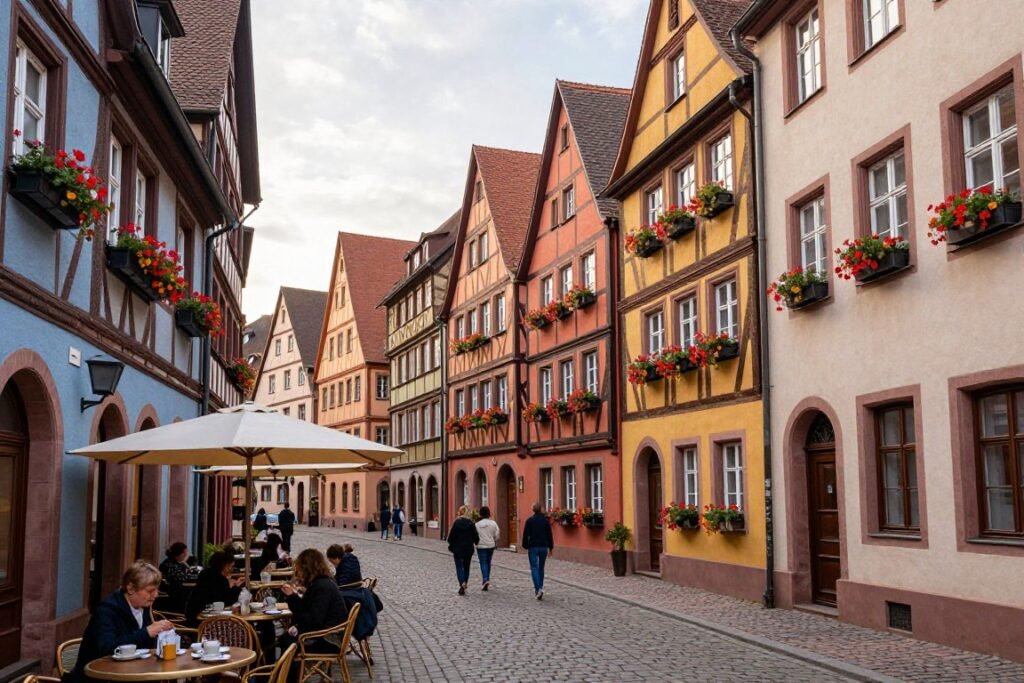
Weißgerbergasse represents Nuremberg’s most intact medieval street. The lane preserves a continuous row of half-timbered houses that once belonged to leather tanners. These structures survived the war and now house cafes, boutiques, and artisan shops.
The street name translates to “white tanners’ lane,” referring to the craftsmen who worked with leather using alum rather than bark. Walking here in early morning provides the best atmosphere, before tourist crowds arrive. Bergbrand coffee shop at the street entrance serves exceptional coffee and provides outdoor seating perfect for people watching.
The architecture demonstrates typical Franconian construction methods. Timber frames filled with wattle and daub, painted in various colors, create the distinctive appearance. Many buildings lean slightly, a characteristic of structures now over five hundred years old.
Hospital of the Holy Spirit
Heilig-Geist-Spital served as the city’s largest hospital when constructed in the early fourteenth century. The complex provided care for elderly residents and people in need. The unique feature of this building is its construction partially over the Pegnitz River, making it one of Nuremberg’s most photographed landmarks.
Today the building houses a restaurant serving Franconian specialties. The bridge facing the hospital offers the best photography angle, capturing the building’s reflection in the water below. The structure demonstrates medieval engineering capabilities, with foundations sunk into the riverbed supporting the timber frame construction above.
Saint Sebald Church
Saint Sebald Church stands as the oldest church in Nuremberg, consecrated in 1275. Named after the city’s patron saint, the church houses the ornate Shrine of Saint Sebald, created by Peter Vischer the Elder in the early sixteenth century. The bronze shrine took eleven years to complete and represents one of the finest examples of German Renaissance metalwork.
The church interior displays characteristics of both Romanesque and Gothic periods. Two towers flank the entrance, while the interior nave stretches impressively long. The church survived bombing during World War II with moderate damage and underwent restoration to return it to its medieval appearance.
Saint Lorenz Church
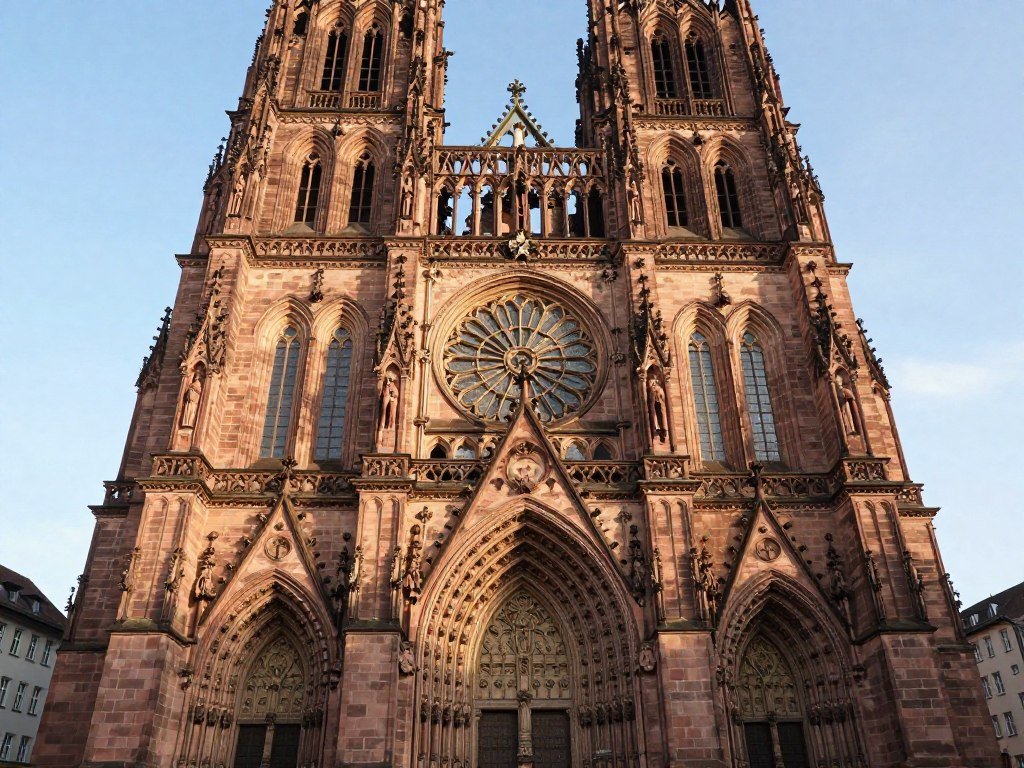
Saint Lorenz Church represents the largest church in Nuremberg. The Gothic structure features twin towers rising over the main square and a nine-meter rose window. Inside, one of Germany’s largest church organs contains over twelve thousand pipes.
The church became Protestant during the Reformation, making Nuremberg one of the first major German cities to adopt the new faith in the early sixteenth century. This historical fact explains why Protestant churches dominate in otherwise Catholic Bavaria.
The Kreuzigungshof courtyard behind the church provides a quiet space away from the busy pedestrian zone. The courtyard features medieval architecture and offers good photography opportunities without the crowds that gather at the main entrance.
Nuremberg Castle: Medieval Power on the Hill
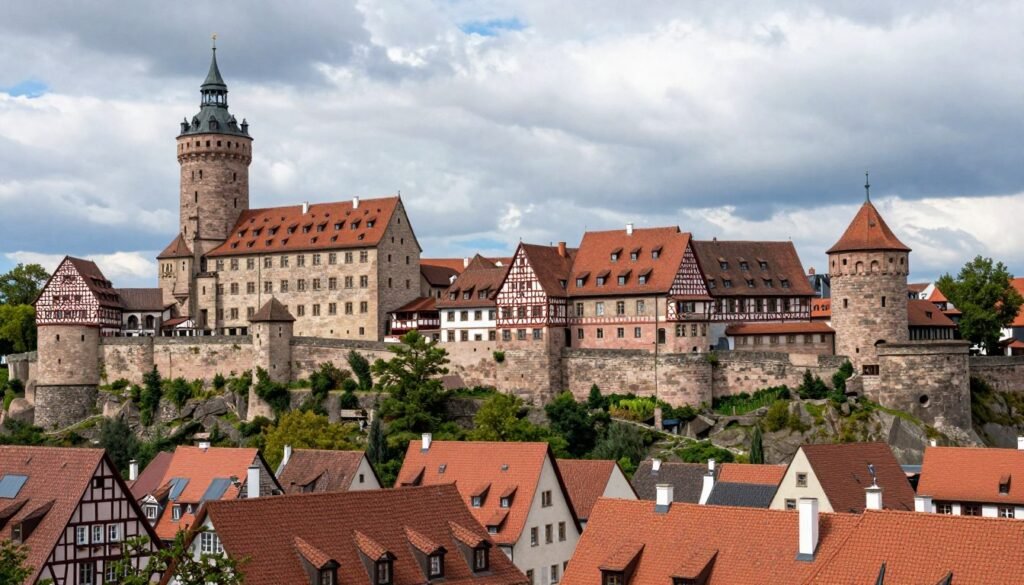
The Imperial Castle of Nuremberg crowns the hill above the old town. This fortress complex served as a key residence for Holy Roman Emperors from the eleventh to sixteenth centuries. The strategic location allowed control over important trade routes, making the castle central to imperial power in medieval Germany.
The Castle Complex
The Kaiserburg consists of three main sections: the Imperial Castle built for emperors, the Burgraves’ Castle built for castellans, and the Imperial City fortifications maintained by the city council. Together these structures create an impressive medieval fortress that remained militarily relevant for centuries.
Walking uphill to reach the castle takes about ten minutes from the main square. The approach passes through residential areas with increasingly impressive views over the city. The climb rewards visitors with panoramic vistas across Nuremberg’s distinctive red rooftops and church spires.
The exterior impresses more than the interior. Timber-framed buildings mix with stone fortifications and towers, creating the layered appearance typical of structures built over many centuries. The Sinwell Tower offers the best viewpoint, though it requires climbing additional stairs.
The Deep Well
The Deep Well demonstration provides one of the castle’s most interesting experiences. This medieval well descends forty-nine meters into the sandstone rock below the castle. During hourly tours, guides lower a lit candle into the darkness, demonstrating the impressive depth while explaining how this water source remained a closely guarded strategic asset.
The water at the bottom of the well is estimated to be eight hundred years old. The well chamber itself creates fascinating acoustic effects. Temperature differences between the top of the castle and the well chamber can exceed one hundred degrees Celsius, making the descent feel like entering another climate zone.
Imperial Apartments and Museum
The Palas building contains the Imperial Castle Museum and reconstructed royal apartments. These rooms display period furniture and decorative arts, illustrating how emperors lived during their stays in Nuremberg. The Double Chapel features two levels, with the upper level reserved for nobility and the lower level for servants and guards.
Unfortunately, signage throughout the castle lacks English descriptions. Visitors relying on English must rent audio guides or use translation apps. This limitation reduces the educational value for international visitors, though the architecture itself communicates much without words.
Castle Gardens
Behind the castle complex, the Castle Gardens provide peaceful green space with additional city views. These gardens remain free to access and offer a less crowded alternative to the main castle areas. The terraced layout follows the hillside contours, creating varied perspectives over different parts of the old town.
The gardens make an excellent spot for a break during castle exploration. Benches positioned along the paths allow rest while taking in the medieval cityscape below. The combination of fortified walls, garden plantings, and distant views creates a memorable setting.
Albrecht Dürer's House: Renaissance Art Legacy
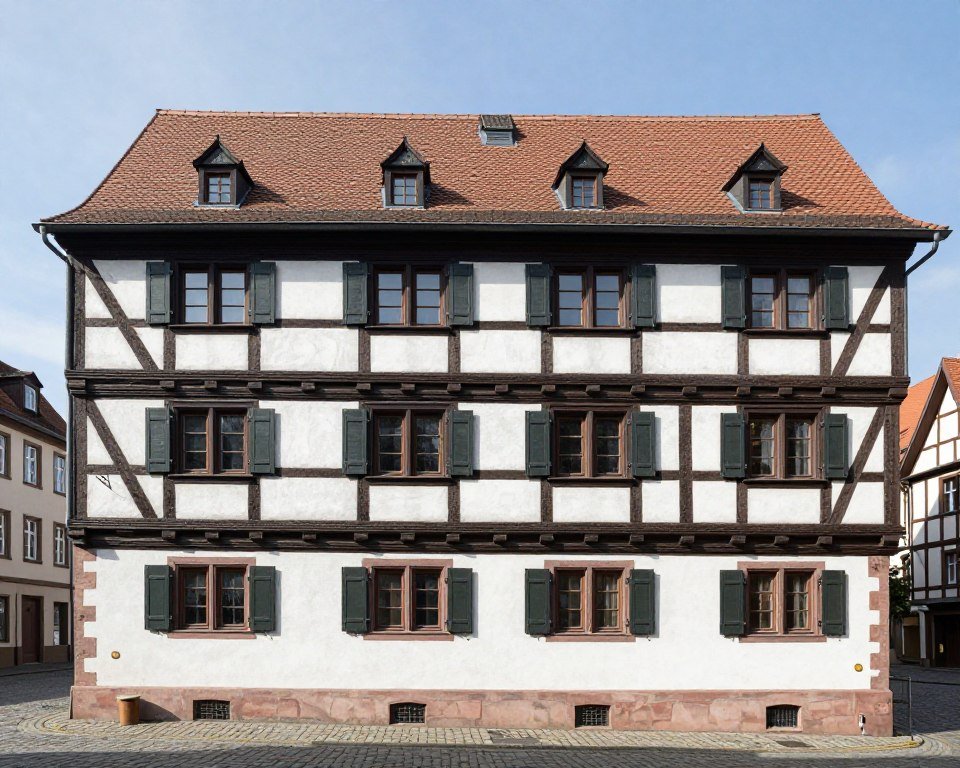
Albrecht Dürer ranks among Germany’s most important artists. This Renaissance painter, printmaker, and theorist lived and worked in Nuremberg during the city’s cultural golden age. His house near the castle preserves the environment where he created some of European art’s most significant works.
The Artist and His Time
Dürer lived from 1471 to 1528, a period when Nuremberg flourished as a center of trade, culture, and innovation. His detailed engravings and woodcuts achieved unprecedented realism through mathematical precision and careful observation. He became one of the first artists to treat his work as a brand, using a distinctive monogram signature on his pieces.
His reputation spread across Europe during his lifetime, unusual for an artist who was not working for royalty or the church. This commercial success allowed him to purchase the substantial house where he lived from 1509 until his death.
House Museum Experience
The five-story building built in 1420 now operates as a museum dedicated to Dürer’s life and work. Period furniture fills the rooms, creating an atmosphere of stepping into the artist’s actual home. A reconstructed workshop demonstrates Renaissance printmaking techniques, showing how Dürer created his famous engravings.
Unfortunately, all artworks displayed are reproductions. The original paintings and prints reside in major museums worldwide, from the National Gallery in London to the Uffizi in Florence. The Germanisches Nationalmuseum in Nuremberg holds some authentic Dürer works, making it worth visiting for those interested in seeing originals.
Guided tours led by an actress portraying Agnes Dürer, the artist’s wife, provide entertainment value beyond typical museum experiences. These theatrical tours add personality to the historical information, though some visitors may find the approach overly whimsical.
Tiergärtnertor Square
The square directly outside Dürer’s house serves as a popular gathering spot for locals and tourists. Cafe Wanderer and Augustiner Zur Schranke provide outdoor seating with views of the castle above. The relaxed atmosphere makes this area feel more authentic than some heavily touristed parts of the old town.
People often sit directly on the cobblestones here, creating an informal outdoor living room effect. The square captures the essence of Nuremberg’s appeal, combining medieval architecture, artistic heritage, and contemporary social life.
World War II History: Rally Grounds and Trials
Nuremberg played a central role in Nazi Germany and its aftermath. Understanding this history requires visiting sites where ideology was promoted and where justice was pursued. These locations provide essential context for understanding twentieth-century European history.
Documentation Center Nazi Party Rally Grounds
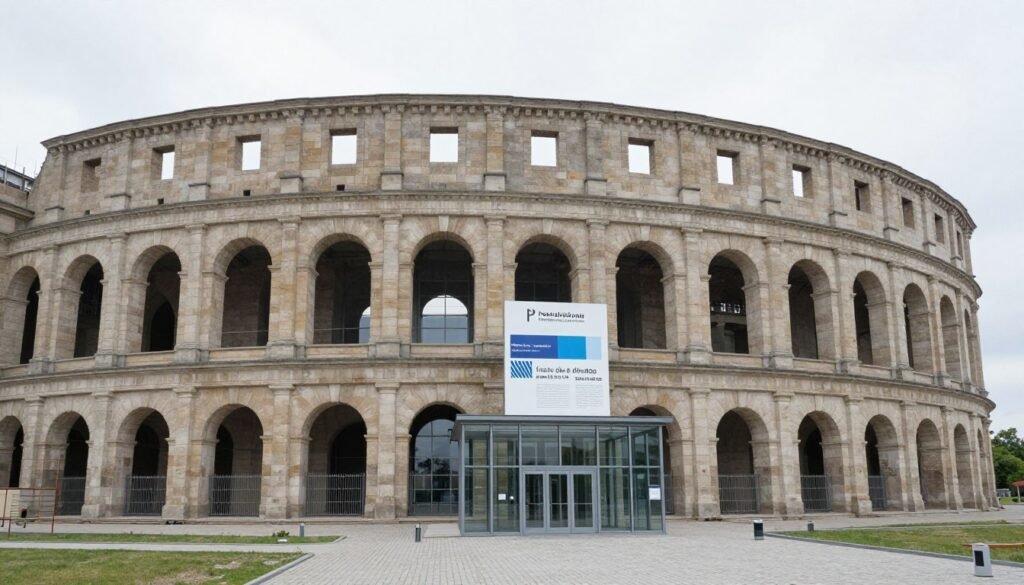
The Nazi Party Rally Grounds cover eleven square kilometers in southeast Nuremberg. This enormous site hosted six massive propaganda rallies between 1933 and 1938, with up to one million attendees. The scale of the architecture was designed to overwhelm and intimidate, reinforcing the party’s power.
The Documentation Center occupies the north wing of the unfinished Congress Hall. This structure, inspired by Rome’s Colosseum, was designed to hold fifty thousand people. Construction halted when war began, leaving the building permanently incomplete. The brutalist architecture communicates the regime’s megalomaniacal ambitions.
The permanent exhibition closed for renovation in 2025, with reopening planned for late in the year. A smaller interim exhibition covers four key periods starting from 1918, explaining the conditions that allowed Nazi ideology to take hold. Even with limited displays, the building itself and the grounds communicate volumes about the period.
Walking the Rally Grounds
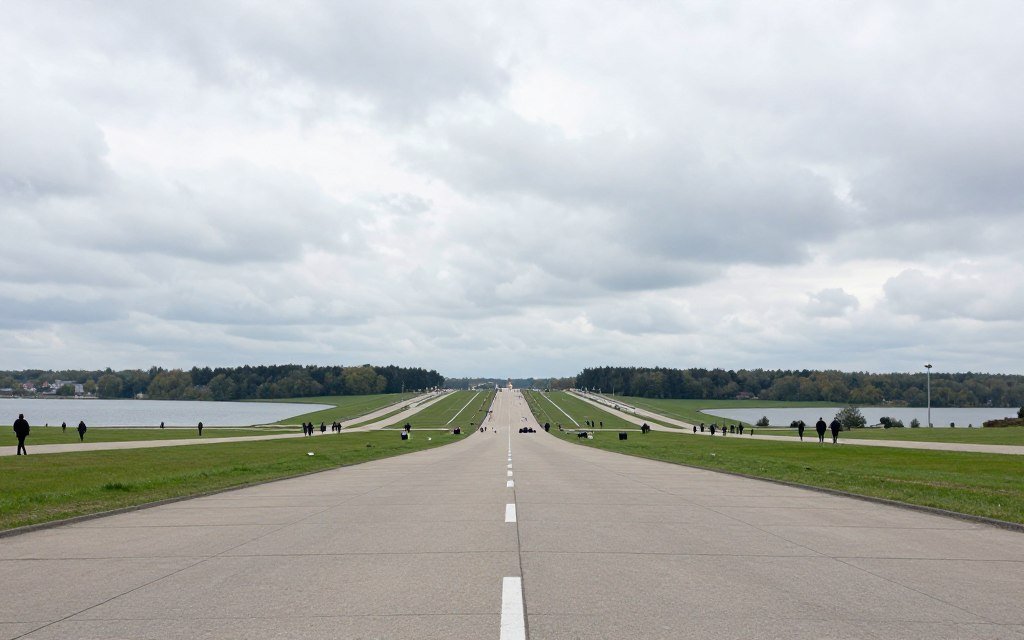
No signs or information boards mark the rally grounds themselves, making self-guided exploration challenging. The site’s massive scale becomes apparent during the twenty-minute walk from the Documentation Center to Zeppelin Field. The path follows the lake, exposed to wind during winter months.
Zeppelin Field served as the main parade ground, capable of holding two hundred thousand people. The grandstand where Hitler and other Nazi leaders addressed rallies remains partially intact. The field itself now functions as a sports stadium, an ironic repurposing of space designed for mass indoctrination.
The Great Road, intended as a parade route for Wehrmacht troops, stretches wide and empty now. Grass grows through cracks in the pavement. The combination of monumental scale and current abandonment creates a powerful reminder of how quickly ideological certainty can crumble.
Memorium Nuremberg Trials
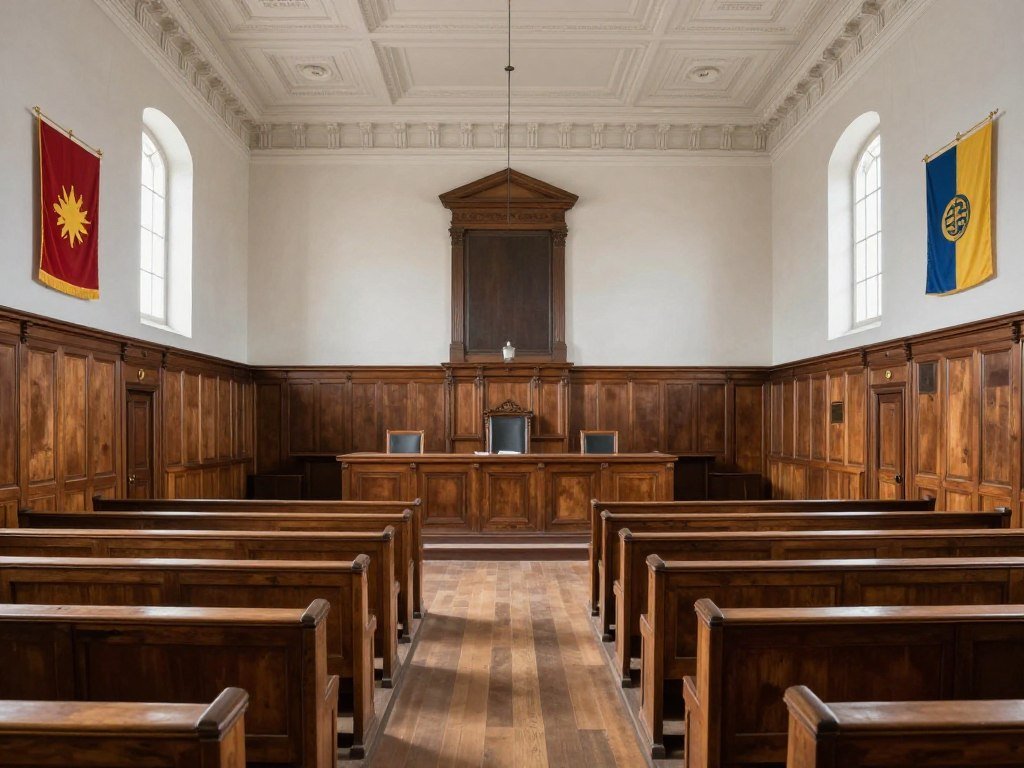
The Nuremberg Palace of Justice hosted the trials of major Nazi war criminals from 1945 to 1949. Courtroom 600, where the International Military Tribunal convicted twenty-four defendants, remains in occasional use for trials today. When court is not in session, visitors can sit in the actual room where Hermann Göring, Rudolf Hess, and other Nazi leaders answered for their crimes.
The courtroom layout has changed over decades of continued use, but the space itself carries immense historical weight. Sitting in those benches, imagining the proceedings that established modern international criminal law, provides a sobering experience.
The Memorium exhibition occupies the courthouse’s top floor. Original film footage, audio recordings, and photographs document the trial proceedings. A media installation in the courtroom recreates the atmosphere of the trials through projection and sound. The exhibition explains how the Nuremberg Principles laid groundwork for future war crimes prosecutions.
The trials marked the first time leaders of a defeated nation faced systematic prosecution for crimes against peace, war crimes, and crimes against humanity. This precedent influenced establishment of the International Criminal Court and shaped modern understanding of individual responsibility for state actions.
Historic Art Bunker
Below the castle hill, medieval beer cellars were adapted during World War II to protect important artworks from bombing raids. These vaults, carved into sandstone as deep as twenty-four meters, successfully preserved treasures while ninety percent of the old town was destroyed above ground.
Guided tours explore these underground chambers, explaining both their original purpose for beer fermentation and storage, and their wartime role in cultural preservation. The temperature and humidity of the sandstone cellars created ideal conditions for both beer and art.
Tours must be booked in advance through the official website or through tour operators offering English-language visits. The bunker spaces remain unchanged from their wartime configuration, providing authentic glimpses of how the city protected its heritage during catastrophic destruction.
Museums in Nuremberg: Culture and History
Nuremberg’s museums cover impressive breadth, from cultural history spanning millennia to specialized collections of toys, trains, and contemporary art. Several deserve extended visits for anyone interested in German culture and history.
Germanisches Nationalmuseum

The Germanisches Nationalmuseum holds the largest collection of German cultural history in the world. Over 1.3 million objects chronicle art, culture, and daily life from prehistoric times to the present. Approximately twenty-five thousand items display at any given time across nearly three thousand square meters.
A former Carthusian monastery forms part of the museum complex. Walking from the bright modern lobby into the dimly lit medieval cloisters creates striking architectural contrast. The monastery spaces alone justify a visit, demonstrating how historical preservation can integrate with contemporary museum design.
Collections include works by Albrecht Dürer and Rembrandt, the earliest surviving terrestrial globe from 1492, and the first pocket watch ever made. The globe particularly interests history enthusiasts because it was completed just weeks before news of America’s discovery reached Nuremberg, so the New World appears absent.
Signage throughout the museum appears only in German, creating challenges for international visitors. Audio guides provide English narration, though constantly stopping to listen reduces the natural flow of exploration. A highlight tour covering major pieces in sixty minutes offers a practical solution for those with limited time.
Neues Museum: Contemporary Art and Design
The Neues Museum occupies a striking modern building that somehow hides within the medieval old town. The glass facade stretches one hundred meters long, yet only reveals itself when standing directly in front. Glimpses appear between historic buildings, creating an architectural game of revelation and concealment.
Inside, a dramatic spiral staircase provides both circulation and a photographic focal point. The museum showcases art and design from the 1950s to present across multiple floors. Rotating exhibitions mean the collection changes regularly, encouraging repeat visits.
The juxtaposition of ultramodern architecture and contemporary art against Nuremberg’s medieval backdrop creates thought-provoking contrast. The museum argues for the city as more than preserved history, positioning it as a place where cultural evolution continues.
DB Museum: German Railway Museum
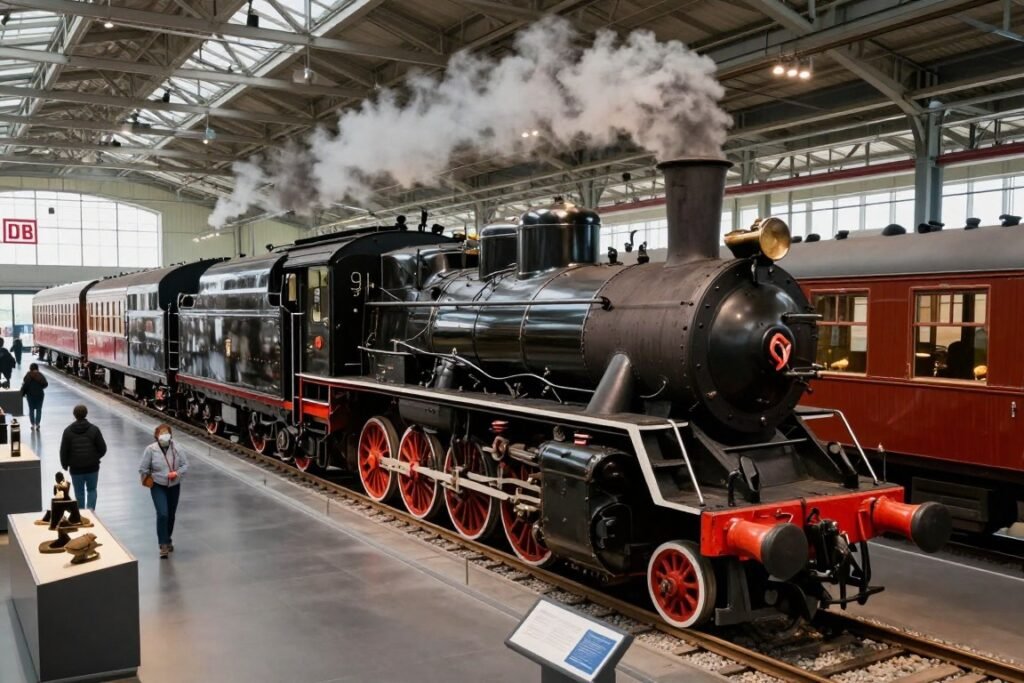
The DB Museum chronicles German railway history from the first line between Nuremberg and Fürth in 1835 through present high-speed rail networks. Deutsche Bahn, Germany’s national railway operator, maintains this museum, providing resources that show in the quality of displays and preservation.
Three floors of exhibitions cover social impacts of rail transport, including how trains accelerated military mobilization before World War I and reduced diplomatic cooling-off periods during international crises. Technical sections explain steam engine development for those interested in engineering history.
Life-size locomotives fill both indoor exhibition halls and an outdoor display area across the street. A detailed model railway installation attracts crowds, while more esoteric exhibits include Otto von Bismarck’s ornate personal railway carriage. Even historical train toilets receive display space, demonstrating German thoroughness in documentation.
Starting on the second floor maximizes engagement with the more interesting exhibits while energy remains high. The museum requires about ninety minutes to two hours for a thorough visit, though railway enthusiasts and families with children may spend significantly longer.
Toy Museum
Nuremberg’s toymaking tradition extends back to the Middle Ages, when the city produced toys for markets across Europe. The Toy Museum displays over sixty-five thousand items tracing toy evolution from simple wooden figures to modern Playmobil sets.
Three floors showcase different eras and toy types. Antique dollhouses demonstrate incredible craftsmanship, with miniature kitchens detailed down to tiny pots and utensils. A section covering toys during the Nazi period provides uncomfortable historical context, showing how propaganda reached even children’s playthings.
The museum targets families with children, including a play area in the attic and large outdoor playground. Adults interested in design history, childhood sociology, or nostalgia will find value, though the experience differs significantly from fine art museums.
Tucher Mansion and Hirsvogel Hall
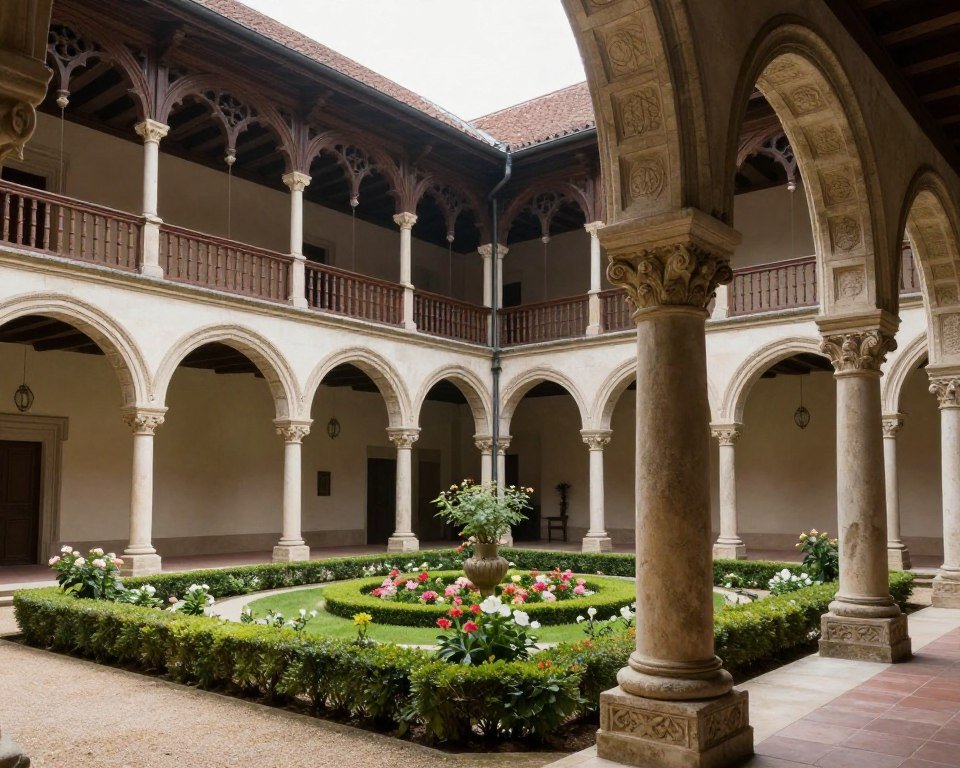
This sixteenth-century merchant mansion receives less attention than it deserves. The Tucher family’s home demonstrates how wealthy Nuremberg families lived during the Renaissance. The unassuming exterior hides an impressive inner courtyard with period gardens and Renaissance architecture.
The Hirsvogel Hall, located behind the garden, features elaborate interior decoration that survived centuries largely intact. The hall’s ornate painted ceiling and carved woodwork represent some of the finest Renaissance domestic architecture in the city.
Limited visitor traffic means the mansion often feels like a private discovery. The combination of period rooms, garden courtyard, and the exceptional Hirsvogel Hall creates an intimate historical experience unavailable at larger, more crowded sites.
City Museum at Fembo House
Fembo House holds the distinction of being the only late Renaissance merchant house in the old town that survived World War II bombing intact. This survival makes it invaluable for understanding how Nuremberg’s buildings actually appeared before destruction.
The City Museum inside covers Nuremberg’s history through artifacts, period rooms, and a remarkably detailed scale model of the medieval city. Carved wooden furniture, painted ceilings, and a recreated historical kitchen demonstrate domestic life across centuries.
The scale model on the top floor ranks among Germany’s most accurate architectural reconstructions. It allows visitors to understand the city’s layout before wartime destruction, showing what was lost and what restoration achieved.
Nuremberg Food and Drink: Franconian Specialties
Franconian cuisine defines Nuremberg’s food culture. The region’s specialties differ from broader Bavarian food traditions, focusing on particular sausages, gingerbread, and local beer styles that developed over centuries of culinary refinement.
Nuremberger Rostbratwurst
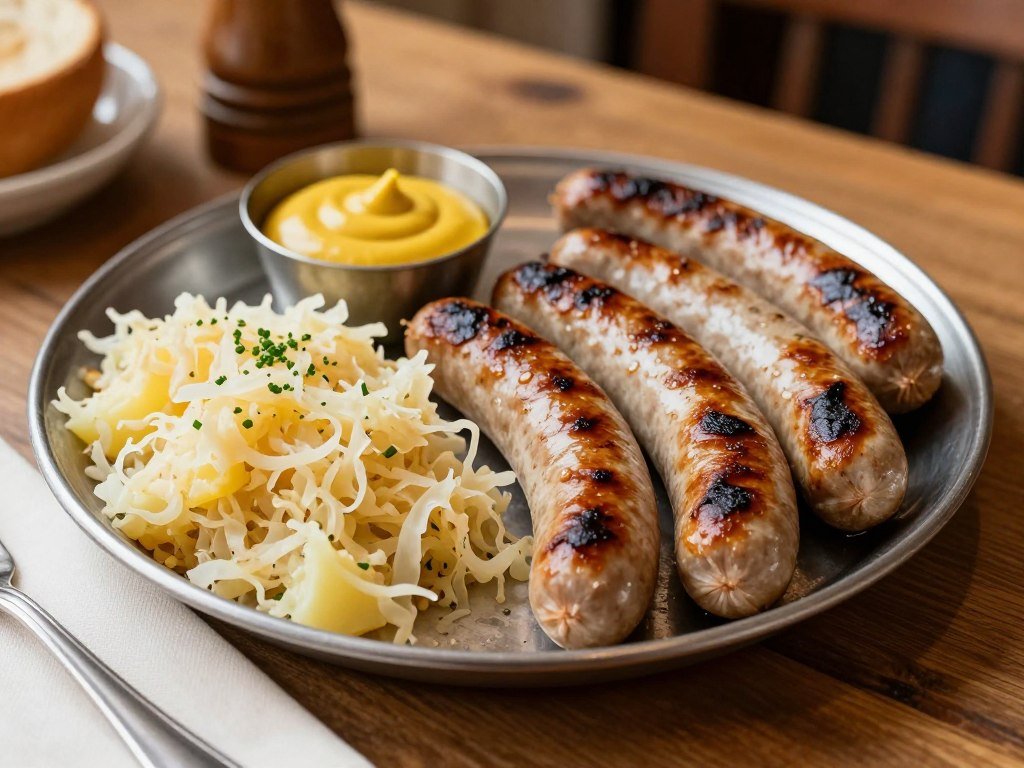
Nuremberger Rostbratwurst holds protected geographical indication status from the European Union. These small sausages must be produced within city limits according to specific recipes. Traditional preparation involves grilling by hand over beechwood fires.
Restaurants typically serve the sausages in groups of six, eight, ten, or twelve, accompanied by sauerkraut, potato salad, or horseradish. The metal plates they arrive on retain heat, keeping the sausages warm throughout the meal.
For a quick version, street stands sell Drei im Weckla, three sausages stuffed into a crusty roll with mustard. This snack provides an authentic taste of local food culture without committing to a full restaurant meal.
Bratwursthäusle near Saint Sebald Church serves excellent traditional versions in a historic setting. The outdoor seating during summer allows dining while viewing the church facade. Quality remains consistently high, making it reliable for visitors seeking authentic preparation.
Elisenlebkuchen: Nuremberg Gingerbread
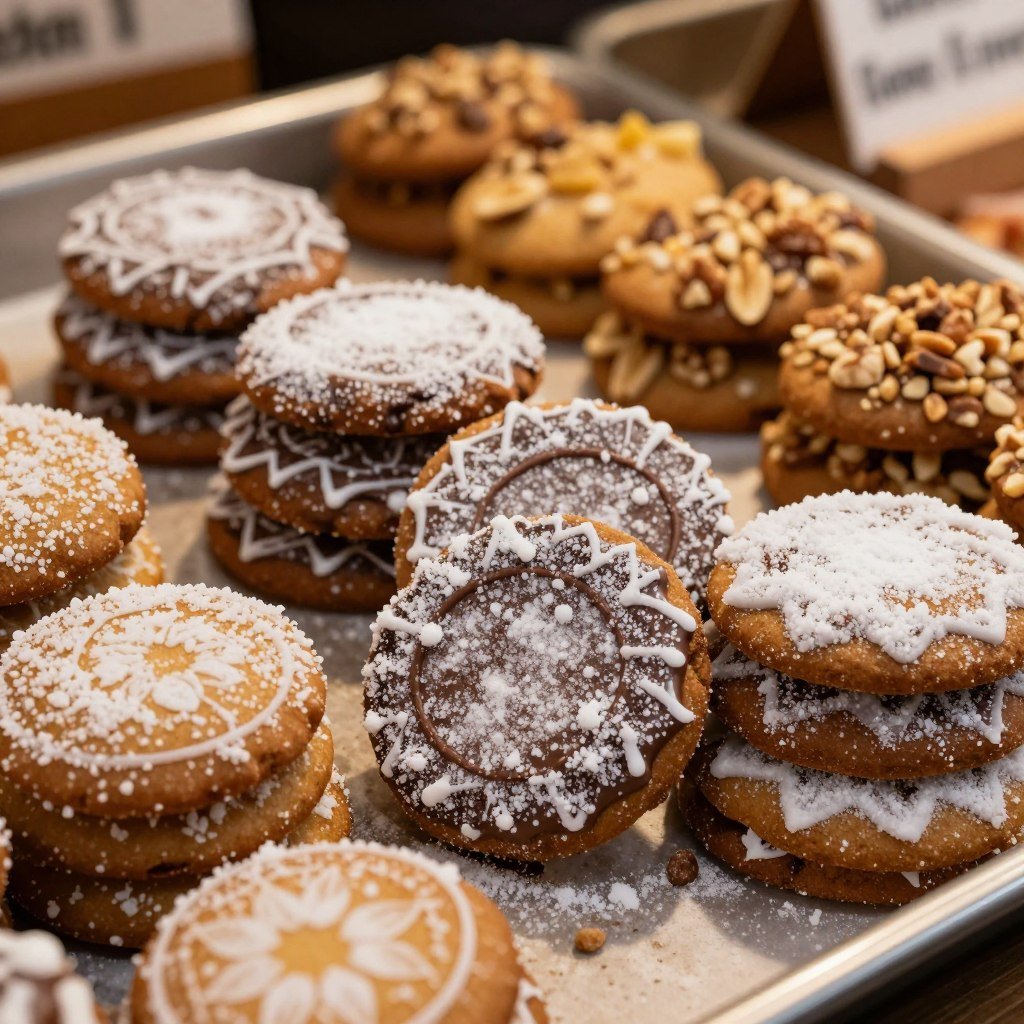
Elisenlebkuchen represents Nuremberg’s most famous contribution to German Christmas traditions. These spiced gingerbread cookies contain higher proportions of nuts than typical lebkuchen, creating richer flavor and softer texture. The recipe dates back centuries, though production methods have modernized.
Traditional consumption focused on the Christmas season, but specialty shops now sell lebkuchen year-round. Wicklein Lebküchnerei at Hauptmarkt bakes fresh cookies daily, displaying them in glass cases by the door. The difference between freshly baked and packaged lebkuchen is substantial, worth seeking out.
Packaged varieties make excellent souvenirs, as the cookies maintain quality for weeks or months. Shops offer countless flavors and sizes, from plain spiced versions to chocolate-covered varieties topped with almonds or marzipan.
Lebkuchen Innovations
Marx Schokolade takes the traditional gingerbread concept in creative directions. Their lebkuchen-flavored chocolate pralines contain soft, melting centers that capture the spice blend in chocolate form. During summer months, they offer lebkuchen ice cream, an unusual flavor that works surprisingly well.
The shop location sits outside the immediate old town area, requiring a short walk or bus ride. The quality justifies the minor detour for those interested in exceptional chocolate and creative takes on traditional flavors.
Pretzels: Brezen Kolb
While pretzels appear across Germany, Nuremberg offers exceptional variety through Brezen Kolb. This family-owned business has baked pretzels since 1957 using stone ovens that create perfectly soft, chewy texture.
The range of fillings and toppings extends far beyond basic salted pretzels. Options include pizza pretzels, pretzels with fried eggs, butter and chive pretzels, brie pretzels, salami pretzels, and pretzels dusted with powdered sugar. Multiple locations across the city, including a drive-through, make Brezen Kolb convenient for breakfast or snacks.
In Franconia, plain salted pretzels receive fine salt rather than the coarse salt common elsewhere in Germany. This regional variation demonstrates how food traditions vary even within relatively small geographical areas.
Coffee Culture
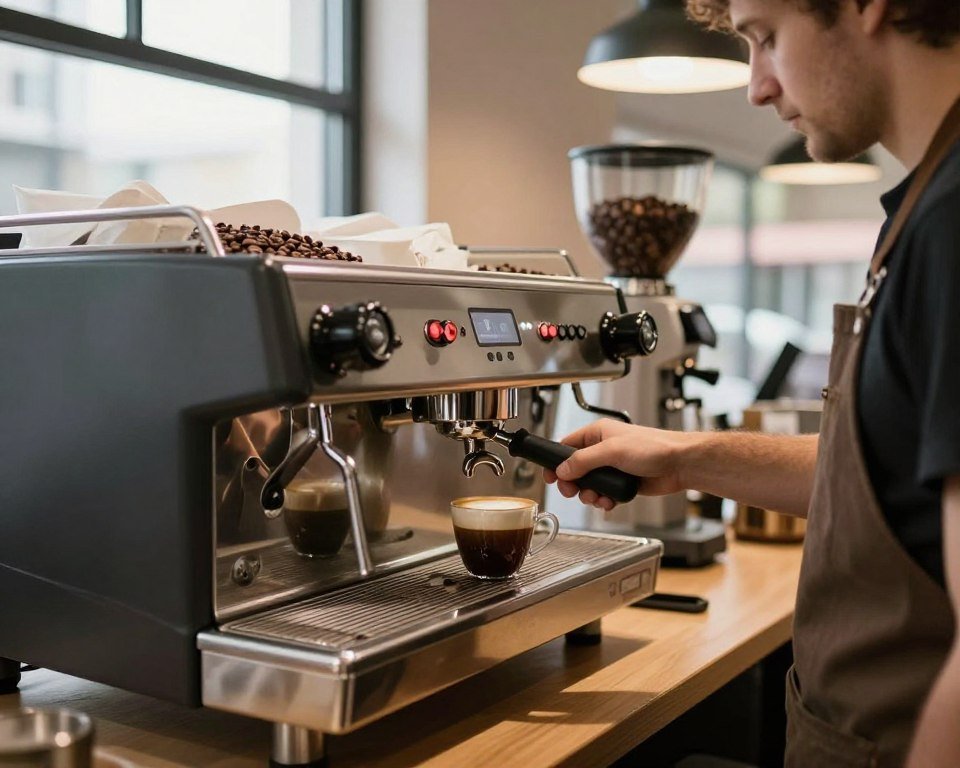
Machhörndl Kaffee operates three locations in Nuremberg, roasting specialty coffee on-site. The owner won the German Brewers Cup championship twice, establishing credibility for serious coffee quality. Rotating selections of single-origin beans from global microlots ensure variety.
The location with its own bakery near Bärenschanze metro station provides the fullest experience, combining excellent coffee with fresh pastries. During winter, a special festive coffee blend appears on the menu.
Bergbrand at Weißgerbergasse offers another excellent coffee option in the heart of the old town. Outdoor seating along the photogenic lane makes this spot perfect for morning coffee while watching the city wake up.
Rotbier: Local Beer Specialty
Nuremberg red beer represents a local style distinct from typical German lagers. Hausbrauerei Altstadthof continues traditional production methods, including aging beer in the historic rock-cut cellars below the old town.
Tours of these medieval cellars end at the brewery’s restaurant, where visitors can taste the fresh beer alongside traditional Franconian food. The red beer’s slightly sweet, malty character differentiates it from the crisp pilsners more common elsewhere in Bavaria.
Handwerkerhof: Artisan Quarter and Souvenirs
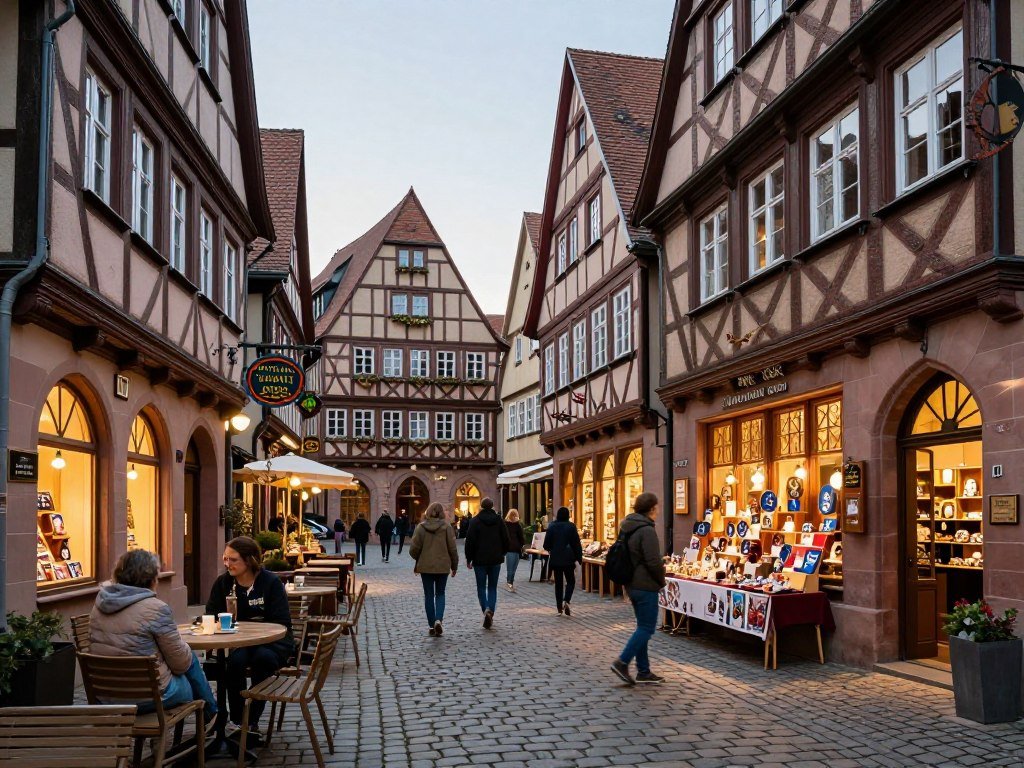
Handwerkerhof recreates a medieval marketplace within the old town walls near the main train station. While built only in 1971 rather than actually medieval, the quarter successfully captures the atmosphere of historical crafts districts.
Artisan workshops sell handmade leather goods, ceramics, wooden toys, glass ornaments, and traditional Christmas decorations. The craftsmanship quality exceeds typical souvenir shops, making this area worthwhile for those seeking authentic handmade items.
Small cafes and restaurants throughout the quarter serve traditional Bavarian food and beer. The intimate scale creates a village-within-the-city feeling, distinct from the more commercialized areas of the old town.
The courtyard gates open daily, though individual shop hours vary. Most businesses operate Monday through Saturday from late morning to early evening. Sunday hours are more limited, with some shops closed entirely.
Experiencing Nuremberg Like a Local
Beyond the major tourist sites, Nuremberg offers neighborhoods, parks, and daily rhythms that reveal how residents actually experience their city. These areas see fewer international visitors but provide authentic encounters with contemporary Nuremberg life.
Wöhrder See: Lake Recreation
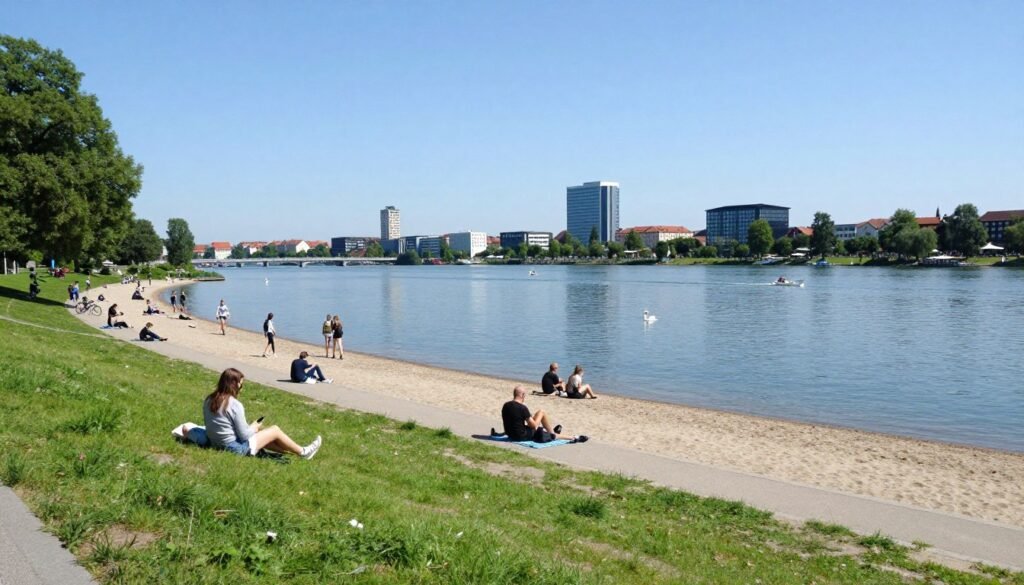
Wöhrder See provides green space and water recreation within city limits. While swimming is prohibited, the lake offers swan boat rentals during summer months. Sandy beach areas along the shore create spaces for sunbathing and picnics.
A trail circling the lake accommodates walking, jogging, and cycling. Meadows attract ducks and geese, making this popular with families. Tante Norris cafe serves refreshments, beer, and ice cream for those wanting sustenance during lake visits.
The area demonstrates how Nuremberg balances urban density with accessible nature. Locals use the lake year-round, with different activities dominating each season.
Stadtpark: City Park
Stadtpark reaches peak beauty during spring blooming and autumn color changes. The park layout includes multiple playgrounds, open meadows, and a central cafe. Well-maintained paths wind through varied plantings, creating peaceful walking routes.
The park serves as a neighborhood gathering spot rather than a tourist destination. This authentic local character makes it valuable for those wanting to experience Nuremberg beyond its medieval identity.
Hesperidengärten: Italian-Style Gardens
The Gardens of the Hesperides bring Mediterranean garden design to St. Johannis neighborhood just outside the old town walls. Small in scale, these formal gardens provide welcome shade and beauty during summer heat.
Neatly trimmed hedges, fountains, and baroque statuary create a refined atmosphere. The gardens demonstrate historical garden design principles while remaining accessible as public space.
St. John's Cemetery
St. Johannisfriedhof earned recognition as Germany’s most beautiful cemetery in 2013. The historical burial ground contains graves of notable Nuremberg citizens, including Albrecht Dürer.
The cemetery showcases German memorial culture, with elaborate monuments and well-maintained grounds. For those comfortable with cemetery visits, this site offers peaceful reflection and impressive stone carving craftsmanship.
Gostenhof: The Hip Neighborhood
Gostenhof, shortened to Go-Ho by residents, represents Nuremberg’s artsy alternative district. Vintage shops, second-hand boutiques, and independent cafes line the streets. The neighborhood attracts younger residents and creative professionals.
Vinty’s sells curated second-hand clothing and accessories. Frenkel and Gostenhofer Buchhandlung specialize in books, both new and used. Goldkind offers custom baby toys and gifts, while bambiboom focuses on fairly sourced textiles.
The area feels distinctly different from the tourist-focused old town, providing glimpses of contemporary German urban culture beyond the medieval narrative.
Katharinenruine: Open-Air Venue
The ruins of St. Catherine’s Church serve as an atmospheric venue for summer concerts, films, and theater performances. Built in the thirteenth century and damaged during World War II, the partially reconstructed structure creates a unique performance space.
The venue calendar includes classical concerts, contemporary music, children’s productions, and outdoor cinema screenings. Attending an event here combines cultural experience with historical setting in ways impossible in conventional theaters.
Seasonal Highlights in Nuremberg
Nuremberg Christmas Market
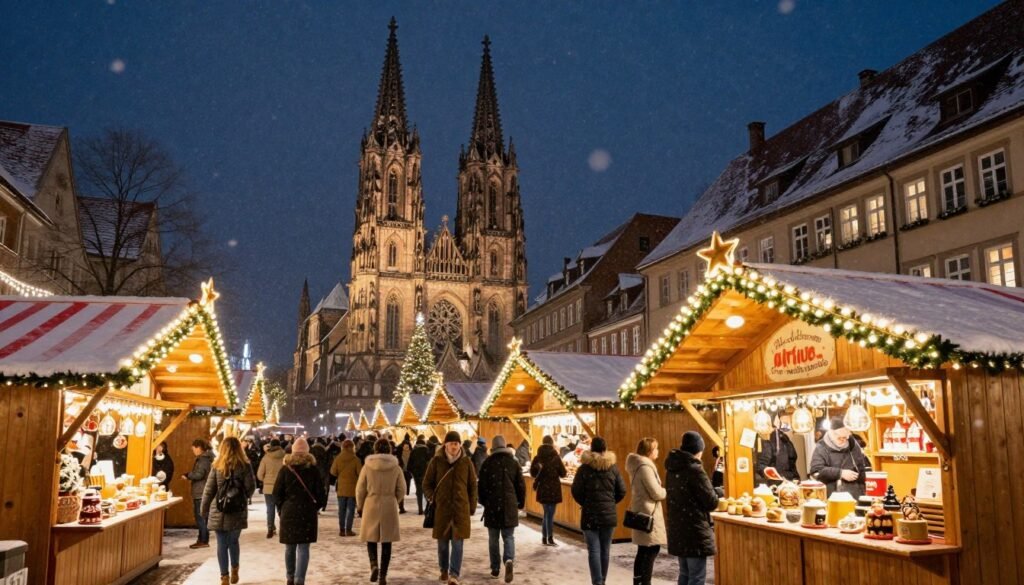
The Nuremberg Christmas Market ranks among Europe’s oldest and most famous. Dating back to the mid-sixteenth century, the market transforms Hauptmarkt and surrounding squares into a winter festival from late November through Christmas Eve.
Over two million visitors attend annually, drawn by traditional atmosphere and authentic regional products. Wooden stalls sell handcrafted ornaments, nativity figures, candle pyramids, and seasonal decorations. Food vendors offer roasted almonds, gingerbread, and various sausage preparations.
Glühwein, hot mulled wine, appears at nearly every beverage stand. The distinctive ceramic mugs used for serving become collectible souvenirs, with new designs issued each year. The market operates daily throughout its season, with evening visits offering the most atmospheric experience when lights illuminate the stalls.
The Christkind opening ceremony occurs from the Frauenkirche balcony, where a young woman dressed as the gift-bringing angel recites a prologue marking the official market opening. This tradition draws enormous crowds and regional media coverage.
Summer Beer Gardens
Warm weather brings outdoor beer garden culture to life. Traditional establishments set up long communal tables under chestnut trees, serving local beer and grilled foods. The atmosphere encourages conversation between strangers, creating social experiences distinct from typical restaurant dining.
Beer gardens remain popular with Nuremberg residents throughout summer, making them excellent locations for observing local social customs. Self-service traditions allow patrons to bring their own food while purchasing beverages from the establishment.
Practical Information for Visiting Nuremberg
Getting to Nuremberg
Nuremberg Airport connects to major European cities, though flight options remain more limited than Munich or Frankfurt. Lufthansa operates express bus service from both Munich and Frankfurt airports, with combined flight and bus tickets available. The bus journey from Munich takes approximately two hours.
ICE high-speed trains connect Munich central station to Nuremberg in just over one hour. Regular regional train service links Nuremberg to cities throughout Bavaria and beyond. The main train station sits just outside the old town walls, making city center access convenient.
Transportation Within the City
The old town remains entirely walkable, with most major sites within fifteen minutes of each other on foot. For destinations outside the city walls, including the Nazi Party Rally Grounds and Nuremberg Trials Memorial, public transportation provides efficient access.
The Nuremberg Card includes unlimited public transport plus admission to most municipal museums. Valid for two days, the card costs twenty-eight euros and provides value for visitors planning multiple museum visits.
When to Visit
Summer offers the most pleasant weather for walking tours and outdoor dining. Parks and beer gardens reach peak activity during warm months. However, summer also brings the largest tourist crowds and highest accommodation prices.
The Christmas market season from late November through December attracts huge crowds but creates magical atmosphere. Booking accommodation far in advance becomes essential, as hotels fill completely.
Spring and early autumn provide moderate weather, smaller crowds, and reasonable prices. These shoulder seasons allow comfortable exploration without summer heat or winter cold.
Time Needed
A rushed visit can cover major old town highlights in one full day. Two days allows a more comfortable pace with time for museums and meal breaks. Three days enables visits to World War II sites outside the city center plus exploration of local neighborhoods.
History enthusiasts, museum lovers, and those interested in thorough exploration benefit from four or five days. This extended timeframe permits deeper engagement with the city’s layered history without feeling rushed.
Language Considerations
English proficiency in Nuremberg varies significantly. Major tourist sites generally have some English-speaking staff, though museum signage often appears only in German. Restaurants in the old town typically offer English menus, while neighborhood establishments may not.
Translation apps prove invaluable for reading museum displays, menus, and signage. Learning basic German phrases enhances interaction with locals and demonstrates respect for the local language.
Day Trips from Nuremberg
Nuremberg’s central Bavarian location makes it an excellent base for exploring surrounding regions. Several significant destinations sit within easy reach by train or car.
Regensburg
Regensburg preserves one of Germany’s best-intact medieval city centers. The UNESCO World Heritage Site sits about one hour from Nuremberg by train. The Danube River flows through the city, adding waterfront character absent in Nuremberg.
Regensburg’s cathedral showcases Gothic architecture, while the stone bridge dates to the twelfth century. The old town escaped World War II damage, making it valuable for understanding how German cities appeared before destruction.
Bamberg
Bamberg’s old town occupies a UNESCO World Heritage designation for its preserved medieval and baroque architecture. Built across seven hills with a river running through the center, the city’s topography creates varied perspectives.
Rauchbier, smoked beer unique to Bamberg, provides a distinctive local specialty. The city remains less touristed than Nuremberg while offering comparable historical depth.
Rothenburg ob der Tauber
Rothenburg ob der Tauber represents the quintessential medieval German town, with intact walls encircling a perfectly preserved old center. The town attracts heavy tourist traffic, particularly during summer and Christmas market season.
Rothenburg offers a more concentrated medieval experience than Nuremberg, though some find it overly commercialized. The town works well as a half-day or full-day excursion for those wanting concentrated historical atmosphere.
Munich
Bavaria’s capital sits under two hours from Nuremberg by train. Munich offers world-class museums, expansive beer gardens, and the annual Oktoberfest. The city’s scale and attractions warrant multiple days, making it potentially worth planning as a separate destination rather than a day trip.
The contrast between Nuremberg’s medieval character and Munich’s metropolitan energy illustrates Bavaria’s regional diversity. Visiting both cities provides a more complete understanding of the region.
Final Thoughts on Nuremberg

Nuremberg rewards those who look beyond surface impressions. The city offers far more than a preserved medieval center or a dark historical chapter. It presents a living community that has confronted its past while building a contemporary identity.
The combination of medieval splendor, sobering twentieth-century history, vibrant food culture, and authentic local neighborhoods creates depth uncommon in European tourist destinations. Nuremberg does not perform for visitors in the way some cities do. It simply exists as itself, inviting discovery on its own terms.
Whether you come for the Christmas market magic, the historical education, the architectural beauty, or the exceptional bratwurst, Nuremberg provides substance. The city demands engagement rather than passive tourism. Those willing to invest time in understanding what makes this place significant will find their efforts rewarded with experiences that extend well beyond typical vacation memories.
Plan thoughtfully, explore thoroughly, and allow Nuremberg to reveal itself gradually. The best things to do in Nuremberg often emerge not from guidebooks but from wandering cobblestone lanes, sitting in neighborhood cafes, and remaining open to whatever the city chooses to show you.
